Short on time?
Pick an AI to summarise this article:
Pick an AI to summarise this article:



For field sales teams, speed to lead doesn't stop at the first phone call. It runs until a rep is standing in the customer's home, and that's where most teams lose the race.
Here's how that plays out. A homeowner fills in your quote form at 7:40 on a Tuesday evening. Your office sees it at 8:30 the next morning and calls back by nine. The earliest visit anyone can offer is Friday afternoon.
By Friday, the homeowner has already signed with another company.
On paper, your team did nothing wrong. They called back within 30 minutes of opening. The delay was the visit, not the call. You've probably heard that on a shared lead, the company that responds first usually wins. But you don't close a roof, a solar install, or a pest contract over the phone. You close it in the home, so the clock keeps running until a rep is in the homeowner's kitchen.
When I review a new team's lost leads, very few were lost at the door. Most went cold between the form and the first visit, while nobody clearly owned them.
In this guide, you'll learn how to measure the time from web form to front door, find where leads stall along the way, and set up a same-day visit workflow your field team can start using this month.
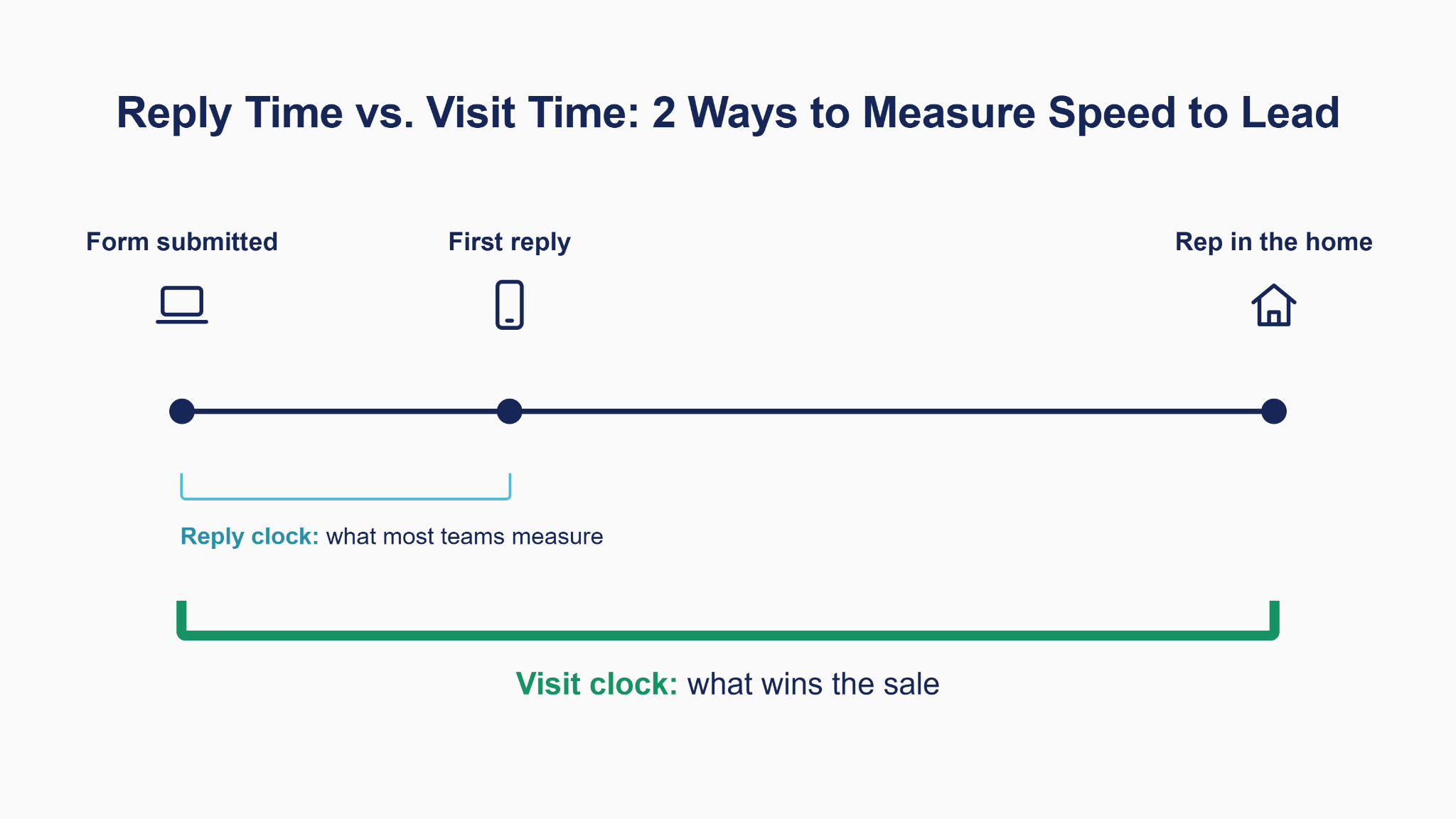
You probably already know how fast your team calls back. Speed to lead is the time between a prospect raising their hand and your team responding. For a team that sells in the home, that one number hides two very different delays. One clock measures your office. The other measures your field team.
The reply clock runs from the moment a form is submitted to the first real human contact. It matters because the homeowner isn't waiting on you alone. Homeowners shopping for heating, cooling, and other home services contacted 2.1 contractors on average, according to Mantel's Homeowner Shopping Attitudes Report.
With a shortlist that small, the first credible reply gets real attention. The reply only stops the clock if it moves the lead toward a visit, though. A "we got your message" email doesn't count. A text that offers two visit times does. Count the reply from the form timestamp, not from when someone first opened the inbox. Every hour of delay gives one of those other contractors a chance to book the visit first.
The visit clock runs from the same form submission to the moment a rep is in the home. For in-home sales, this is the clock that decides the deal. The visit is where the homeowner decides whether to trust you, and where the quote gets given.
Homeowners remember it, too. In the same Mantel report, 70.9% of homeowners said a professional in-home visit stood out about the contractor they chose. No other factor was cited more often.
Put the two clocks side by side, and the trade-off is easy to see. A two-minute callback that books a visit five days out can lose to a slower reply that books one for tomorrow. Your reply time looks great on a dashboard. Your visit time is what the homeowner actually lives through. It's also the clock your current reports probably don't show at all.
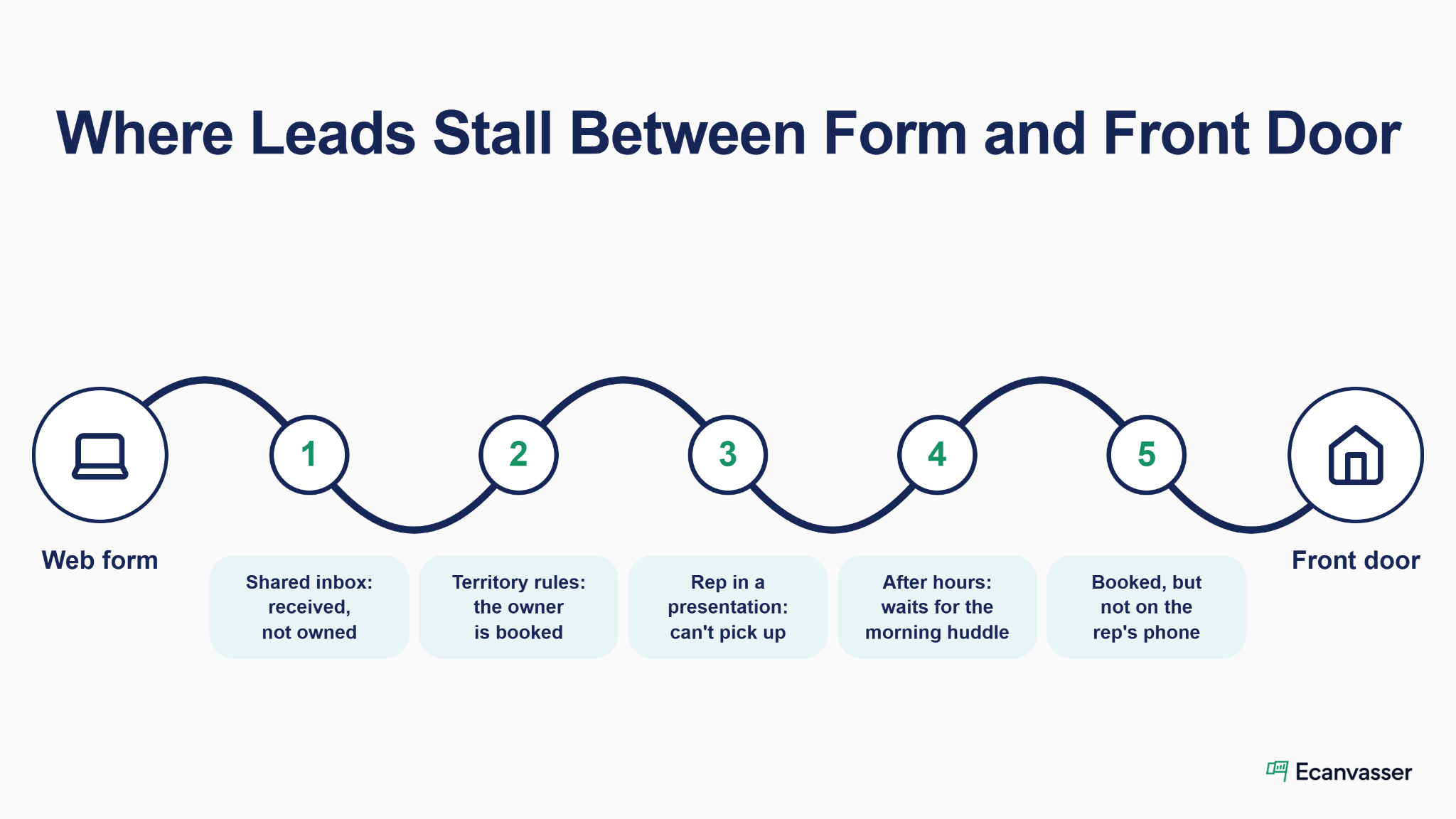
Think about the last ten web leads your team lost. Each stall point below is a handoff, and a handoff is where nobody quite owns the lead. None of them looks like a failure on its own. Together, they explain how a lead with real intent goes cold before anyone knocks. Read them with your own process in mind.
Your web form drops into a shared inbox or a CRM queue. Someone in the office triages it between invoices, reschedules, and phone calls. The lead has been received, but nobody owns it, so the reply clock keeps running.
From the homeowner's side, that feels like being ignored. In Jobber's Recent Homebuyer Reality Check, a survey of 800 recent homebuyers, 15% said they had to follow up with a service provider repeatedly. Another 9% never got a response at all.
Give every new lead a named owner within minutes, even if that owner's only job is the first reply.
Door-knocking runs on turf, and turf ownership keeps it fair. So inbound leads get routed the same way: whoever owns the zip code gets the lead.
That rule slows everything down. The territory owner might be booked solid through Thursday, or off for the day. Your lead waits on one person's calendar while a rep two streets away has a free afternoon.
Fair turf is the right rule for canvassing. For a hot inbound lead, availability matters more than ownership. The workflow section below shows you how to route by who can get there first, without starting a turf war.
The rep who could take your lead is halfway through a kitchen-table presentation. Or they're driving between appointments, phone face down on the passenger seat.
A follow-up process that depends on reps answering calls breaks down in the field. Your reps can't pick up, and they shouldn't have to. The office has to own the first reply, so the rep can stay focused on the homeowner in front of them. Even a two-minute call costs momentum in a presentation the rep has spent an hour building.
Homeowners fill in forms after dinner and on weekends, long after your office closes. If leads only get assigned at the morning huddle, a Friday evening lead might not have a name on it until Monday.
Set up an after-hours reply that stops the clock even when nobody is working. It should:
A reply with real times moves the lead forward. A generic auto-reply just tells them nobody's there.
This is the costliest stall, because it happens after the lead looks handled. The office books Thursday at 2 p.m. Then the appointment lives in a desk calendar, a text thread, or a spreadsheet tab. The rep finds out late, or never.
The fix is easy to describe. The booking has to land in the rep's own app, with the address and notes attached, the moment it's made.
"Before using our platform, our clients struggled to capture and use data effectively. There was inconsistent data entry across teams, lost or incomplete information from the field, and no structured way to follow up with contacts or leads." Aoife Murphy, Customer Success Manager, Ecanvasser
Look at what's missing from that list. Nobody was short of leads. The leads went missing somewhere between the person who took the call and the person who had to show up.
So what should you aim for? Give your team two targets, one for each clock. A reply target on its own means little if the visit is still a week away. One target keeps the homeowner engaged. The other gets you in the door.
Aim for a human reply within minutes during working hours. After hours, send the automated reply with real visit times from the section above.
That alone puts you ahead of a lot of companies. RevenueHero tested this by submitting demo requests to 1,000 B2B software companies. The ones that automated their first response replied in 17 hours and 20 minutes on average. The ones that responded manually took 2 days, 3 hours, and 11 minutes.
Automating the first touch cut the wait by more than a day. Make sure your first reply offers visit times, though. The reply exists to start the visit clock. Give the office a short script with the next three open visit windows, so whoever replies can book on the spot.
Now set your visit target: offer a same-day or next-day visit to every qualified web lead. Pro Remodeler calls this idea speed to sale, meaning getting into the home before your competitors do.
Home improvement consultant Megan Beattie, quoted in Pro Remodeler, has a view on what this is worth. She says companies that normally close 30% to 40% of appointments usually see 50% to 60% on same-day appointments. That's one consultant's estimate from her client work, not a study. Still, it fits what you'd expect from a homeowner with an urgent need and no time left to shop around.
One solar installer was replying to web leads within the hour, but booking visits for the next open slot, often four or five days out. By the time a rep arrived, plenty of homeowners had already signed elsewhere. The team started holding two same-day slots per rep and offering them on the first call. Within a month, far fewer web-lead visits were canceled or found the homeowner already committed.
You don't need a call center to get a rep in the door the same day. You need five habits, set up once and run every day as part of your sales operations rhythm. Each habit closes one of the stall points from earlier in this guide. Set them up in order, because each one depends on the one before.
Route each inbound lead by availability and distance first, and by territory ownership second. Before the morning huddle, and again after lunch, check which reps are nearby with room in their day.
Real-time field tracking shows you where every rep is and how their day is going, so that check takes seconds instead of a round of phone calls. Once the first visit happens, the territory owner can take over the account. Turf stays fair, and the homeowner gets seen.
The change I suggest most often is to route the first visit by who can be there today. The territory owner can take the account from there, and nobody loses a sale to the calendar.
If every slot is full by the day before, a hot lead has nowhere to go. Hold one or two flexible slots in each rep's schedule every day.
The usual worry is wasted time, and Pro Remodeler names it plainly: an unfilled slot costs money. So don't leave it empty. If no inbound lead claims a slot by early afternoon, release it to canvassing or follow-up visits. The time still gets worked. It just gets worked on doors instead of a booked visit. Start with the reps in your busiest territories, where inbound leads arrive most often. Expand once you see how many slots actually get claimed.
Have the office confirm every booked visit by text, not the rep. Include the rep's name, the time window, and a photo if you can.
A name and a face make the knock feel expected. Your rep stays on the road or in the presentation instead of typing messages. It takes the office about a minute per booking. Send a short reminder an hour before the visit too, with the same name and window. If plans change, the homeowner replies to the office, and the office reschedules or reassigns.
A fast visit falls flat if the rep arrives knowing nothing.
Before the knock, your rep should be able to see:
With Ecanvasser's Appointment Scheduler, each appointment is tied to the household and shows up in the assigned rep's planner in the mobile app.
"Reps adopt the software easily and are happy to use it. They're more efficient because they log every interaction, and they're not burning or wasting territory." Thomas Hollingsworth, Enterprise Account Executive, Ecanvasser
Thomas's point is about habit. The history only exists for the next visit if every rep logged the last one.
Same-day visits break the moment one presentation runs long. Watch the day as it happens, and move the next appointment to another rep before the homeowner is left watching the window. In Ecanvasser, managers see every upcoming and overdue appointment in one view and can reassign any of them in a few clicks. Set a simple rule your managers can follow without debate: if a rep is running well behind, the next visit moves.
Panda Recycling, a waste management provider with 201 to 500 staff across the UK and Ireland, struggled to coordinate field agents when demand spiked. With real-time tracking and territory reassignment, managers could see where agents were working and move resources quickly. During a high-demand period, the team reorganized territories, reduced overlap, and achieved faster response times.
You can't shorten a clock you don't record. Your phone system or CRM probably logs the reply. Chances are nothing ties the visit back to the original lead. Without that link, you can see how fast you answered, but not how long the homeowner waited.
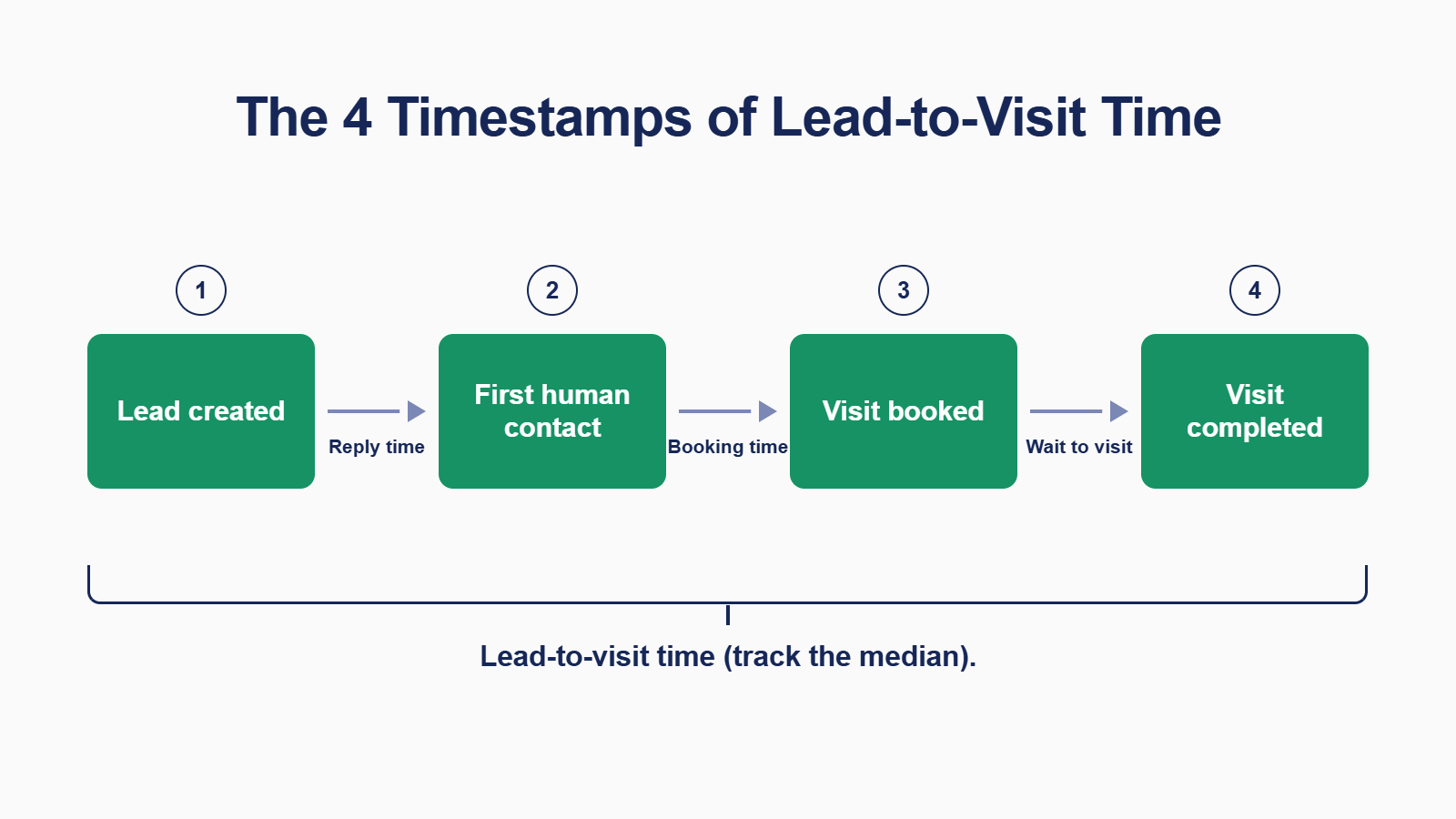
Capture four timestamps for every inbound lead:
The gaps between them are your real metrics. The first gap is your reply time. The second is booking time. The third is how long the homeowner waits to see you. Add all three together and you have lead-to-visit time. The office logs the first three as they happen, and the rep logs the last one at the door, in the same record.
Track the median, not the average. One forgotten lead that sat for three weeks will drag an average out of shape and hide the pattern you're looking for.
Here's what that can look like. Say your median reply time is 20 minutes, which sounds great. But your median wait from booking to visit is four days. Your reply is fine. Those four days are where the jobs go.
Work out your own median before you change anything. That number is your real speed to lead.
Once you have the four timestamps, split lead-to-visit time three ways:
Build this view in dashboards and reports and review it once a week. Fix the biggest gap first, then check again the following week.
The first time a manager sees lead-to-visit time by rep, the conversation changes. It stops being about effort and starts being about which territory has more leads than one person can visit.
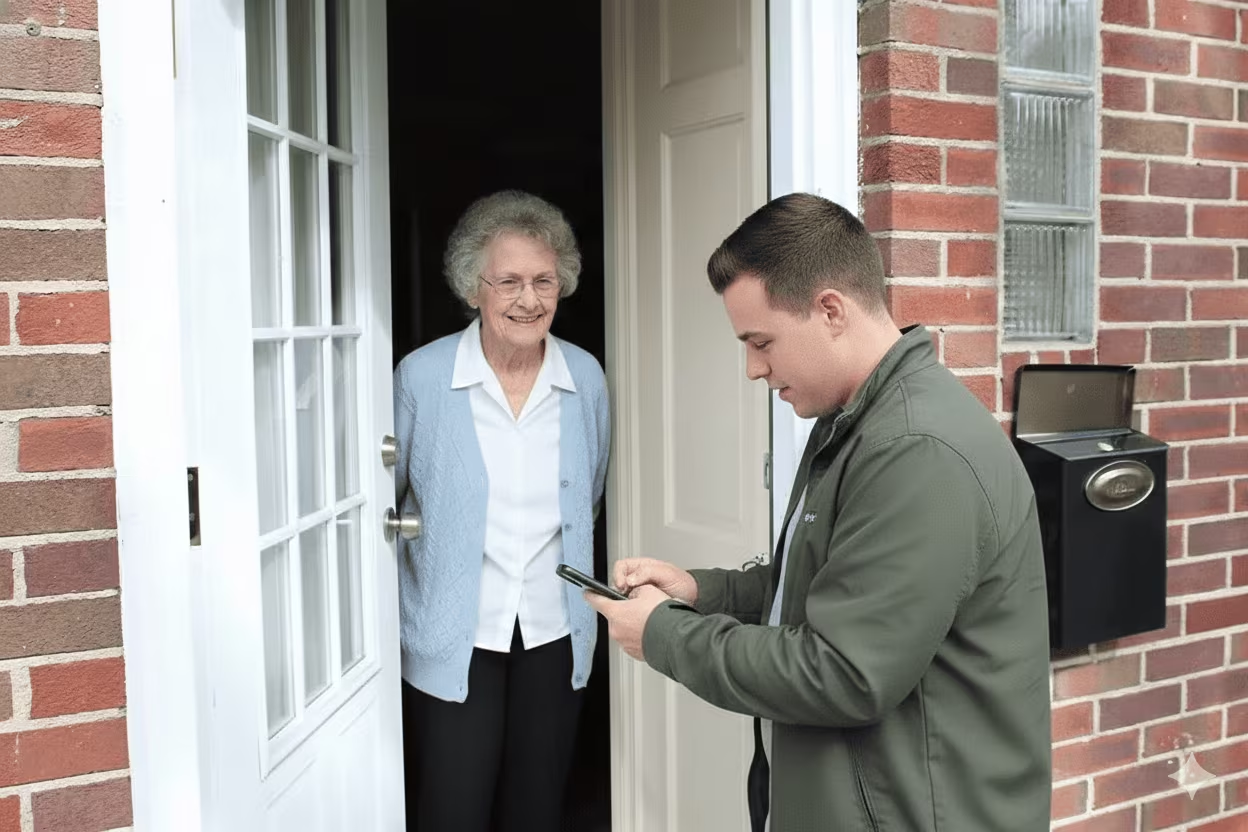
A web form isn't the only lead with a clock running. A homeowner who says "come back when my husband's home" is a warm lead, and that clock starts the second the door closes.
Book that follow-up on the doorstep with the Appointment Scheduler, so it lands in the rep's planner instead of a notebook. If one rep sets the appointment and another closes, the same rule covers the handoff. Our guide to the setter and getter model explains how that split works.
Doorstep leads are easy to lose because they never touch an inbox. Nobody sees them unless the rep records them. A revisit booked in the app shows up in the same upcoming and overdue view as any other appointment. Managers can spot it before it slips.
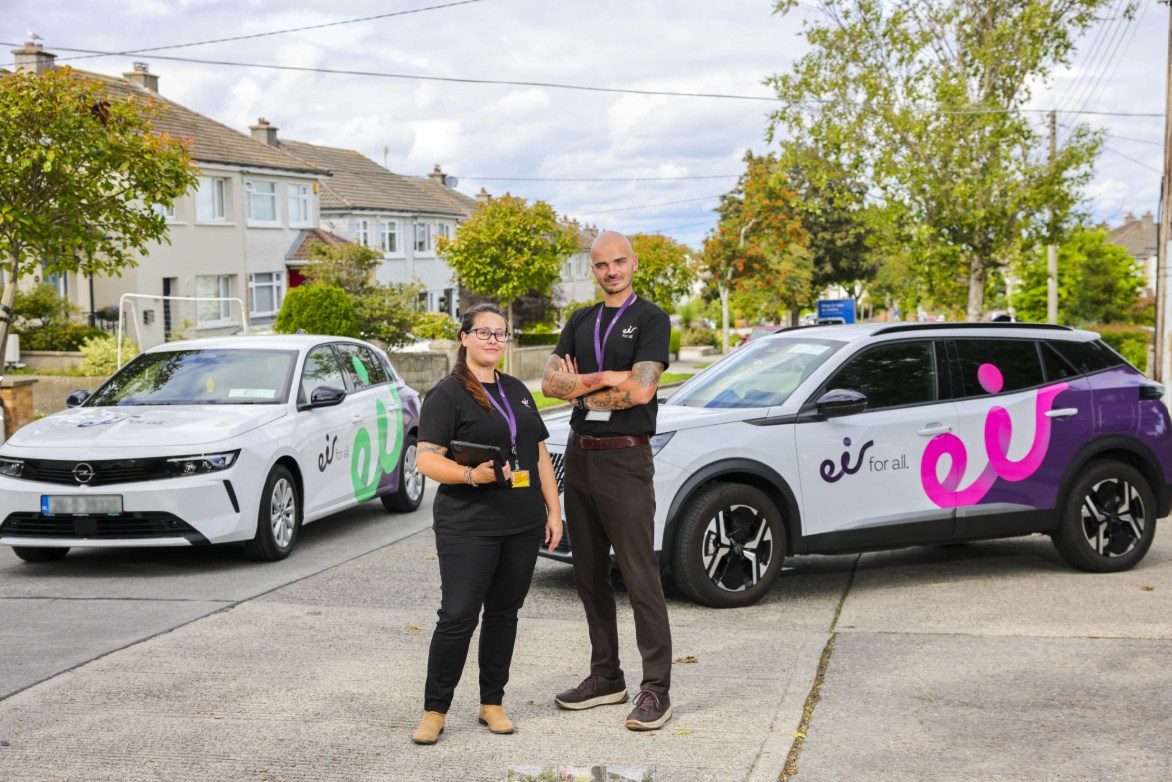
Irish telecom provider Eir runs a field team of more than 500 reps. It moved from spreadsheet-based follow-up to scheduling revisits in Ecanvasser around each household's contract end date. Follow-ups are now tracked systematically instead of being forgotten, so reps reach homeowners when they're ready to switch.
Different source, same discipline. Whether the lead came from a web form or a front step, it needs an owner, a time, and a visit.
The race that matters ends when a credible person walks into the home. Your reply time is only the starting gun.
Try this before Friday. Pull your last 20 web leads and write down the four timestamps for each one. The biggest gap will tell you exactly where to start. Fix that one handoff first, then measure again a week later.
If you want to see how booking, assignment, and live tracking work together, take a deeper look at how Ecanvasser supports home services field teams. Or start a free 7-day trial and book your first same-day visit this week.
Aim for two targets. Reply to new web leads within minutes during working hours, and send an automated reply with visit times after hours. Then offer a same-day or next-day visit to every qualified lead. The reply gets the homeowner's attention. The visit is where you win the job, so track both.
The 5-minute rule says you should contact a new lead within five minutes of their form submission. It comes from lead response research published in the late 2000s and early 2010s, mostly on calls and emails. The core idea still holds, because interest fades fast. For field teams, treat five minutes as the reply target, then set a separate target for the visit.
Subtract the time the lead was created from the time of the first human contact. Do this for every lead, then take the median for the week. For field teams, run the same calculation from lead created to visit completed. That second number shows you how long homeowners actually wait to see a rep.
Make one person in the office responsible for every new lead's first reply. Use an after-hours text that offers specific visit times. Hold one or two same-day slots in each rep's schedule, and route leads to whoever is closest and free. Book every visit straight into the rep's app, so nothing depends on a desk calendar.
Ecanvasser’s real-time tracking completely transformed our field operations. Through the dashboard, we can plan efficient routes, customize interactions, and monitor our canvas stops in real time to support our team the second they need help. The "verified drops" feature adds an extra layer of accountability, while the reporting tools make it seamless to track hourly visit rates and optimize performance on the fly.




Scale your operations, empower your reps, and deliver predictable, profitable growth with Ecanvasser.