Short on time?
Pick an AI to summarise this article:
Pick an AI to summarise this article:

Block walking-or canvassing-is one of the oldest and most effective outreach methods in existence. The premise is simple: show up in person, knock on doors, and have real conversations with the people you're trying to reach. No algorithm, no ad spend, no inbox to compete with.
It's the foundation of political campaigns and increasingly, a core channel for commercial field sales teams in broadband, solar, utilities, and home improvement. The mechanics are the same across both. First, assign a territory. Then, work it systematically, log every interaction, and use what you learn to do it better next time.
This guide covers what block walking is, why it works, and how to run it effectively. I also discuss how the right tools make the difference between a one-off outreach effort and an operation that compounds over time.
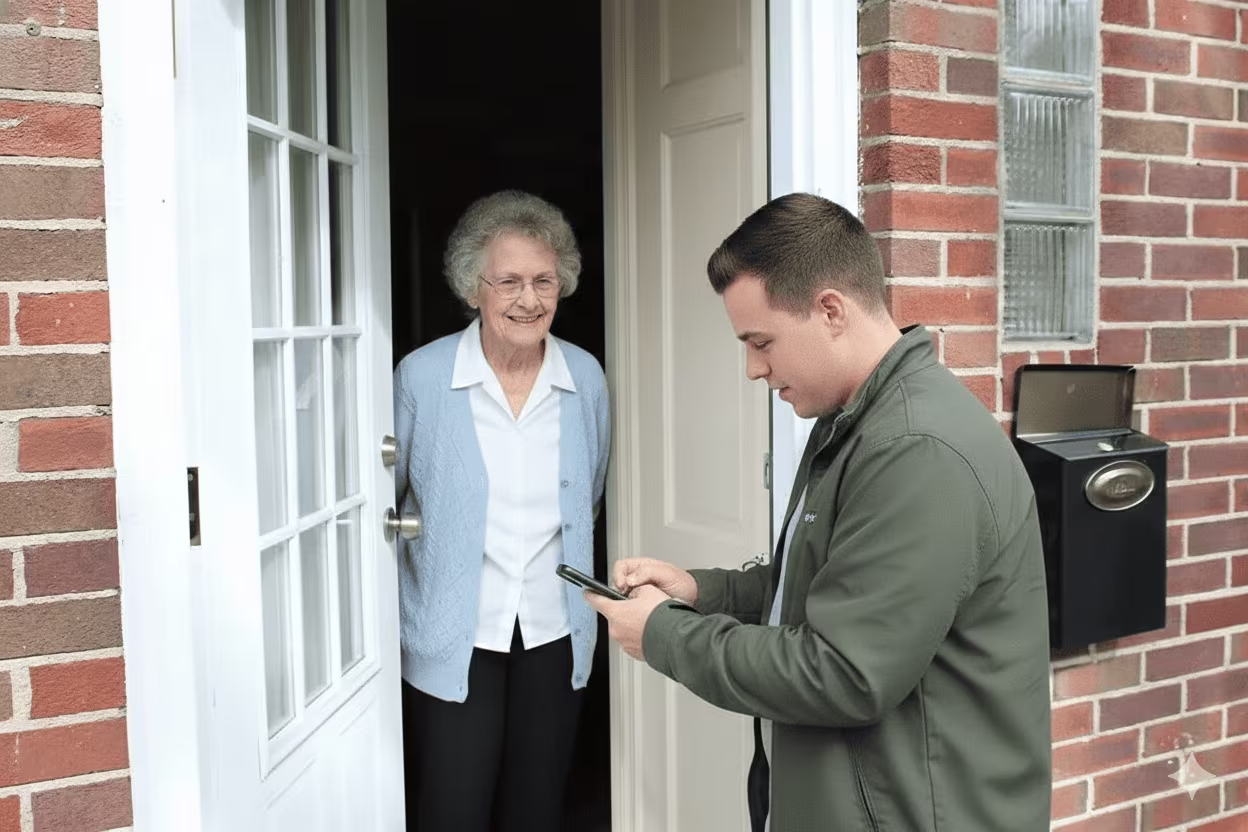
Block walking is the process of going door-to-door in neighborhoods to speak directly with residents. It’s a grassroots method commonly used in political campaigns, community organizing, and local advocacy efforts. The goal is to engage with people on their doorstep, introduce your message, and have meaningful conversations that are often more impactful than any digital outreach.
At its core, block walking is about showing up in the places that matter most—the homes and communities of your voters. Campaigns use this direct approach to meet constituents face-to-face, providing an opportunity to present information, answer questions, and gather feedback in a way that no other medium can offer. It’s about listening to and responding to the concerns that arise during these in-person interactions.
Organizing a block walking campaign involves strategic planning. First, teams identify key neighborhoods or areas where outreach will have the most impact, often using voter data and demographics to guide decisions. Canvassers, equipped with scripts, materials, and often a digital app like Ecanvasser, head out to engage with residents directly. The focus is on personal interaction, tailored conversations, and capturing real-time feedback that can be fed back into the overall campaign strategy.
The logistical side of block walking includes everything from route planning and volunteer coordination to data collection and follow-up actions. Each step is designed to maximize the value of every interaction. Canvassers are not just there to deliver a message; they are there to connect, take notes, and gather valuable insights that can shape the campaign’s approach moving forward.
Unlike other forms of outreach, block walking allows campaigns to adapt in real time. If a particular issue resonates strongly in a neighborhood, teams can adjust their talking points on the spot, ensuring the message feels relevant and responsive. This adaptability is what sets block walking apart; it’s dynamic, immediate, and deeply personal.
In essence, block walking is more than just knocking on doors—it’s about making an effort to meet people where they are and engage on a level that feels genuine and respectful. It’s a cornerstone tactic for any campaign that values direct voter contact and wants to build support through meaningful, face-to-face interactions.
In a digital world, block walking stands out because it offers something online tactics can’t: genuine, human connections. Meeting voters face-to-face builds trust and leaves a lasting impression that digital ads and social media often fail to achieve. Voters remember real conversations, not just campaign slogans or sponsored posts, making your outreach more memorable and impactful.
Block walking provides immediate, unfiltered feedback. Voters share their concerns and priorities directly, giving you valuable insights that can shape your messaging and strategy in real time. This direct line to voter sentiment helps you respond effectively to what matters most to your community, showing that your campaign is listening and adaptable.
These personal interactions drive deeper engagement. Voters who meet your field team are more likely to become active supporters, volunteers, and advocates. The energy of a face-to-face conversation motivates people in a way that digital touchpoints rarely can, turning passive observers into passionate participants.
Moreover, block walking humanizes your campaign, cutting through the polished image of online content to show a real, relatable side of your team. Voters see the effort you’re making to connect, which builds credibility and reinforces your commitment to the community.
At its core, block walking demonstrates that every voter’s voice matters. The best canvassers engage with individuals, listen to their stories, and incorporate their concerns into their overarching platform. This personal approach sets your campaign apart, making it a movement that people want to be part of.
Block walking has its roots in political campaigning, but the technique has become a core channel for commercial field sales teams across broadband, solar, utilities, and home improvement. The teams I work with in these industries are running block walks every day (they just don't always call it that). The methodology is the same: assign a territory, work it systematically, and log every interaction.
The mechanics of a commercial block walk are identical to a political one. It’s door-to-door, systematic coverage of a defined area, direct conversation with the person at the door. What changes is the outcome. Instead of identifying a supporter or persuading a voter, the rep is looking for a sale, a lead, or a signed contract. The door-to-door sales script replaces the campaign talking points, and the field sales CRM replaces the voter database, but the underlying discipline is the same.
The fundamentals are shared, but the operational demands are different in three meaningful ways:
Digital channels are increasingly crowded. Inboxes are full, ad costs are rising, and AI-generated outreach is making it harder to cut through with authenticity. In-person conversation at the door offers something those channels can't: real-time objection handling, genuine human connection, and the ability to read the room and adapt on the spot.
Lightning Fibre, a UK fibre broadband provider, built their customer acquisition strategy around block walking, using Ecanvasser to ensure canvassers only visited serviceable homes, tracked every door knocked, and never revisited an address that had already been contacted. The result was a more coordinated, data-driven operation that directly supported their sales growth.
The channel works. The teams getting the most from it are the ones treating it as a system, not just a tactic.
The same tools that help political campaigns assign turf and track voter contact help commercial field teams avoid double-knocking, prove ROI, and scale without losing visibility. Here's what that looks like in practice.
Ecanvasser's territory mapping and assignment tools let managers divide campaign or sales areas into clearly defined sections and assign them to individual reps or teams. Every canvasser knows exactly where they're working, which eliminates overlap and ensures full coverage across the target area. Territories can be adjusted in real time as campaigns evolve or new areas are added.
Once territories are assigned, sales route optimization happens directly from the contact list — reps don't need to plan their own routes. The field sales app guides them door to door, captures key information at each stop, and keeps them moving efficiently through their assigned area. Route planning handles up to 200 stops, which matters for teams covering dense residential areas across a full shift.
Real-time field tracking gives managers live visibility into coverage and activity as it happens — which streets have been worked, which reps are active, and how outcomes are trending across the team. There's no waiting for an end-of-day update or chasing reps for progress reports.
Interactions are logged at the door and immediately available for follow-up planning. Warm leads can be flagged for callbacks, revisit schedules can be built from the data, and nothing falls through the cracks between the initial contact and the close.
Most guides on block walking cover the what and the why. Fewer cover the operational decisions that determine whether a block walk actually delivers results. These three things make the biggest difference.
Effective block walking starts with clear territory boundaries — before anyone leaves. Reps working overlapping or undefined areas waste time, frustrate residents who get knocked twice, and produce data that's too inconsistent to act on. Whether you're running a political campaign or a broadband rollout, every canvasser needs a clearly assigned area with defined boundaries. That single step eliminates most of the coordination problems that derail block walking operations.
The data collected during a block walk is only valuable if it's captured accurately and immediately. Logging interactions at the door—before moving to the next stop—produces clean, consistent records you can build on. Logging from memory at the end of the day produces approximations. Over time, approximations compound into a dataset you can't trust, and a dataset you can't trust can't improve your operation.
[Blockquote] "Visibility offers clarity and consistency. Managers who can see what's happening in real time go from guessing and reacting to seeing and optimizing." - Aoife Murphy, Customer Success Manager at Ecanvasser
Block walking gets better over time when the data from each shift informs the next one. Which streets had the highest contact rates? Where did conversations convert? Where is it worth going back, and when? Teams that treat each block walk as a data-gathering exercise as well as an outreach effort build a progressively clearer picture of what works, and deploy their time accordingly.
This is the difference between block walking as a tactic and block walking as a system. The tactic gets you doors knocked. The system gets you results that compound.
Ecanvasser is built for block walking operations at any scale—from small political campaigns to commercial field sales teams managing hundreds of reps across multiple regions. Whether you're running a voter contact program or a broadband rollout, the platform handles territory assignment, route planning, real-time tracking, and follow-up management in one place.
The practical advantage is visibility. Managers can see what's happening in the field as it happens, make adjustments mid-campaign, and build on what the data shows rather than waiting for end-of-week reports. For teams investing seriously in outside sales software, that real-time feedback loop is what separates a block walking operation that improves over time from one that just repeats the same effort.
Block walking works because human conversation is hard to replicate at scale through any other channel. Whether you're running a political campaign or a commercial field sales operation, the fundamentals are the same: show up in person, have a genuine conversation, and make sure every interaction is captured and acted on.
Ecanvasser is built for teams that take block walking seriously—from territory assignment and route planning to real-time tracking and follow-up management. Start a free trial or book a demo.

Ecanvasser’s real-time tracking completely transformed our field operations. Through the dashboard, we can plan efficient routes, customize interactions, and monitor our canvas stops in real time to support our team the second they need help. The "verified drops" feature adds an extra layer of accountability, while the reporting tools make it seamless to track hourly visit rates and optimize performance on the fly.




Scale your operations, empower your reps, and deliver predictable, profitable growth with Ecanvasser.
.avif)