Short on time?
Pick an AI to summarise this article:
Pick an AI to summarise this article:


Digital channels are more crowded than ever. Buyers are overwhelmed with ads, emails, and automated outreach, and most of it gets ignored. At the same time, attention has become harder to earn and trust harder to build. 88% of customers say the experience a company provides is as important as its products, making real, face-to-face conversations more valuable than ever. That’s exactly why door-to-door sales is seeing a resurgence. A real conversation at the doorstep still cuts through the noise in a way digital channels can’t.
This guide explains what door-to-door sales looks like today, the most effective tips for door-to-door sales, and how to run and scale a high-performing team.
You’ll learn how modern, data-driven canvassing differs from outdated approaches, what actually works when you’re face-to-face with a prospect, how to manage territories and teams effectively, and the tools that make it all scalable.
Let’s start with what door-to-door sales actually looks like today, and why it’s making a comeback.
Door-to-door sales is a direct sales approach where representatives engage potential customers in person, typically at their homes or businesses, to generate leads, build relationships, and close deals. It's widely used across industries like solar, telecommunications, roofing and home improvement, fundraising, and political canvassing, or anywhere trust and local presence matter. Each vertical runs differently underneath, though. Our guide to door-to-door solar sales covers the longer decision cycle that makes solar unique.
What’s changed is the techniques. Modern door-to-door sales is no longer driven by guesswork or volume alone. High-performing teams use data to plan territories, prioritize the right households, and track performance in real time. Instead of knocking on every door, they focus on the doors most likely to convert.
This shift is happening at the same time as a broader market change. Digital channels are saturated, AI-generated outreach is easy to ignore, and buyers are becoming more selective about who they engage with. A face-to-face conversation feels more credible and more human, which gives door-to-door sales a clear advantage.
With the right tools in place, teams can combine that human connection with structure and visibility, turning what was once unpredictable into a repeatable, scalable growth channel.
Most advice about door-to-door sales focuses on individual performance: perfecting your pitch, building confidence, or handling rejection. While those skills matter, they only tell part of the story. The reality is that even the best reps struggle without the right structure behind them. If you are still deciding whether the channel deserves budget at all, our guide to whether door knocking works sets out the four conditions that predict the answer for your business.Results don’t come from effort alone. They come from how that effort is directed, measured, and improved over time.
A lot of this advice is wrong because it treats it as an individual skill, not a scalable system.
You’ll often see guidance centered around:
High-performing teams take a different approach. They build systems around their reps, including clear territories, defined workflows, and consistent performance tracking. Instead of guessing what works, they use data to refine their approach and improve results over time. That’s what turns door-to-door sales from an unpredictable activity into a repeatable, scalable channel.
Success in door-to-door sales comes down to more than effort or persistence. The highest-performing teams combine strong fundamentals at the door with clear systems behind the scenes. These tips focus on what actually drives results in modern, data-driven canvassing.
Where you knock matters just as much as how you sell. Too many teams focus on covering as much ground as possible, instead of focusing on the right ground. The result is wasted time, low-quality conversations, and inconsistent performance across reps.
High-performing teams take a more targeted approach. They use data to identify high-potential areas, avoid oversaturated neighborhoods, and prioritize households that are more likely to convert. This kind of planning increases efficiency and improves close rates without increasing effort.
Effective sales territory management ensures reps are working smarter, not just harder. When territories are clearly defined and strategically assigned, teams can reduce overlap, track performance more accurately, and continuously refine where they focus next.
[In-text CTA block]
The first few seconds at the door determine whether you get a conversation or a quick rejection. Strong opening lines feel natural, direct, and easy to respond to. They lower resistance and create just enough curiosity to keep the interaction going. Weak openings, on the other hand, sound scripted, overly sales-driven, or too long, which makes people disengage almost immediately.
Effective openings usually follow a few simple principles:
Examples like “Hey, quick question, are you the homeowner?” or “Hi, I’m just speaking with a few neighbors about this…” create space for a real conversation.
Get the first 10 seconds right, and everything else becomes easier.
Door-to-door sales works best when it feels like a conversation, not a presentation. Reps who jump straight into a pitch often lose people quickly, because it creates pressure before any context or trust is established. High-performing reps take a different approach. They focus on understanding the person first, then guiding the conversation based on what they learn.
This starts with asking simple, relevant questions early. Questions help qualify whether someone is a good fit, while also keeping them engaged. Instead of delivering the same message to every door, you can adapt your approach in real time based on their responses.
When you focus on conversations over pitching, you naturally build rapport, uncover real needs, and create a more comfortable path toward a decision.
When you knock matters more than how much you knock. Many teams focus on volume, but timing has a direct impact on who answers the door and how receptive they are. Hitting the right households at the right time leads to more conversations and better outcomes without increasing effort.
The most effective teams plan their schedules around when people are actually available:
Strategic timing also helps reps stay consistent and productive throughout the day. Instead of wasting time knocking on empty homes, they focus their energy on high-response windows that lead to more meaningful interactions.
Rejection is built into door-to-door sales, but top-performing teams don’t treat it as a personal setback. They treat it as data. Every “no” provides insight into what’s not working, whether it’s the timing, the messaging, or the type of household being approached.
Instead of reacting emotionally, strong reps and managers track patterns across interactions. Common objections, repeated concerns, and consistent drop-off points all point to areas that can be improved. Over time, this creates a feedback loop that sharpens both individual performance and overall strategy.
When rejection is measured and analyzed, it becomes a tool for improvement rather than a barrier to progress.
People buy from people, not scripts. In a world where most outreach feels automated or impersonal, a genuine, face-to-face interaction stands out immediately. Door-to-door sales gives you a rare opportunity to create a real connection in a short space of time, and that’s often what makes the difference.
Strong reps focus on being present, adaptable, and authentic in each conversation. Instead of delivering the same message at every door, they respond to the person in front of them, adjusting their tone and approach naturally. This builds trust faster and makes the interaction feel more relevant.
As digital fatigue continues to grow, that human connection becomes a competitive advantage, one that’s difficult to replicate through any other channel.
Every conversation at the door is an opportunity to gather valuable information, not just close a deal. Too many teams rely on memory or rough notes, which leads to lost insights and missed follow-ups. Capturing the right data in the moment allows you to build a clearer picture of your prospects and improve performance over time.
At a minimum, reps should be recording:
When you consistently capture leads in the field, you create a foundation for better targeting, smarter follow-ups, and more predictable results.
Most door-to-door interactions don’t end in an immediate sale, but that doesn’t mean the opportunity is lost. In many cases, the first visit simply opens the door for a future decision. Teams that consistently follow up are the ones that turn initial interest into actual revenue.
A strong multi-touch strategy builds on the first conversation. That might include a follow-up visit, a call, or a message at the right time based on what the prospect shared. The key is to stay relevant and timely, not repetitive.
When follow-up is treated as part of the process—not an afterthought—conversion rates increase significantly, and more of the effort put in at the door pays off.
What gets measured gets improved, and in door-to-door sales, daily visibility is critical. Without clear tracking, it’s difficult to understand what’s working, where reps are struggling, or how to improve results. High-performing teams rely on consistent data to guide decisions rather than gut instinct.
At a minimum, teams should be monitoring:
When you track field sales performance consistently, patterns become clear and coaching becomes more effective. Over time, this turns individual effort into a structured system that drives predictable results.
Manual door-to-door sales relies heavily on memory, paper notes, and guesswork, which makes it difficult to stay organized or scale effectively. As teams grow, this lack of visibility leads to missed opportunities, duplicated effort, and inconsistent performance across reps.
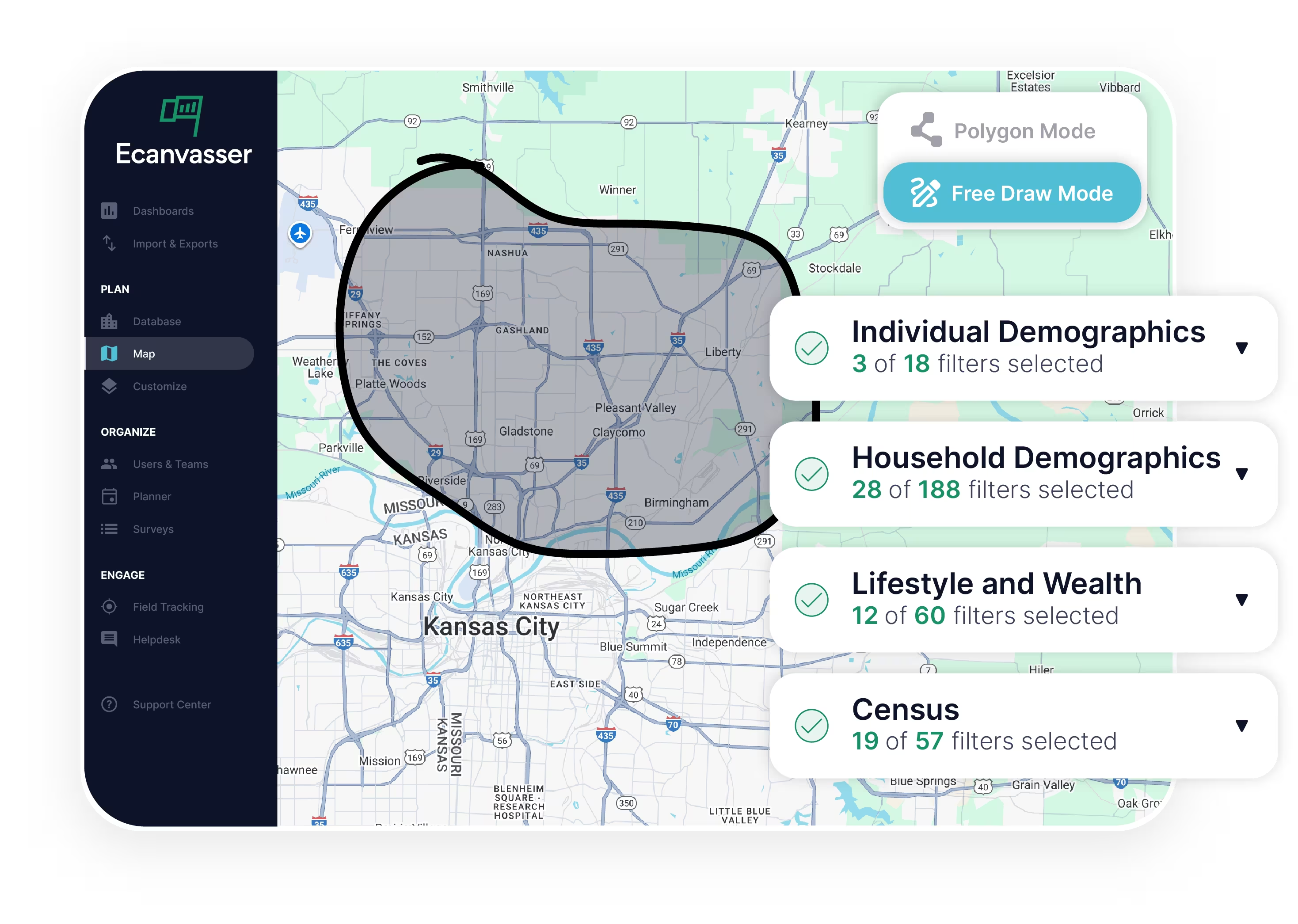
Tech-enabled sales changes that. Platforms like Ecanvasser give teams the ability to map and assign territories, capture data at the door, track rep activity in real time, and monitor performance through centralized dashboards. Managers can see exactly what’s happening in the field, while reps have clear direction and tools to stay productive.
With the right technology in place, teams move faster, make better decisions, and turn door-to-door sales into a structured, scalable operation.
Doorknocking is one of the most effective outside sales tactics. Running a successful door-to-door sales operation requires more than strong reps in the field. It depends on clear structure, consistent processes, and the ability to manage performance at scale.
Strong operations start with clear, well-defined territories. Without structure, teams waste time covering the wrong areas or overlapping with each other.
When territories are planned properly, reps spend more time selling and less time navigating.
As teams grow, structure becomes essential to maintain performance and accountability.
Without the right structure, communication breaks down, and performance becomes harder to manage.
Consistency in daily execution drives consistent results. High-performing teams follow a clear rhythm each day.
A defined workflow keeps reps focused and gives managers the insight they need to improve outcomes.
Training is an ongoing process that improves performance over time. The best teams build coaching into their daily and weekly routines.
When coaching is consistent and tied to real data, reps improve faster and results become more predictable.
Many of the challenges teams face in door-to-door sales come down to a lack of structure and visibility. Poor territory planning leads to wasted time in low-value areas. Without tracking, it’s difficult to understand what’s working or where reps need support. Missed follow-ups result in lost opportunities, and over-reliance on scripts makes interactions feel repetitive and ineffective. The right tools address these issues directly by bringing clarity, consistency, and accountability to every part of the process.
At a minimum, teams need a combination of mapping, mobile, and reporting tools to operate effectively. Mapping tools help define and assign territories so reps focus on the right areas. Mobile apps give reps the ability to navigate routes, capture data at the door, and stay organized throughout the day. Reporting tools provide managers with real-time insights into activity and performance, making it easier to identify trends and improve results. Together, these tools replace guesswork with structure and allow teams to operate more efficiently.
As teams grow, manual processes quickly become a limitation. Managers need visibility into what’s happening in the field, and reps need clear direction to stay productive. Technology enables both. It provides a centralized view of performance, ensures consistency across teams, and makes it possible to scale operations without losing control. Without it, growth often leads to inefficiency and missed opportunities.
Ecanvasser brings these capabilities together in one platform, giving teams everything they need to plan territories, manage reps, capture data, and track performance in real time. By combining mapping, tracking, mobile tools, and reporting into a single system, it helps organizations run more efficient and scalable field sales operations. For teams looking to move beyond manual processes, investing in the right door-to-door sales software is a critical step toward consistent, measurable growth.
Door-to-door sales delivers results when it’s built on the right foundation:
With the right systems in place, door-to-door sales becomes predictable and scalable. Ecanvasser helps teams bring structure, visibility, and growth to every field operation.
Ready to close more opportunities? Canvass your territory with Ecanvasser, the most scalable field sales solution. Explore our pricing or book a demo.

Ecanvasser’s real-time tracking completely transformed our field operations. Through the dashboard, we can plan efficient routes, customize interactions, and monitor our canvas stops in real time to support our team the second they need help. The "verified drops" feature adds an extra layer of accountability, while the reporting tools make it seamless to track hourly visit rates and optimize performance on the fly.




Scale your operations, empower your reps, and deliver predictable, profitable growth with Ecanvasser.
.svg)