Short on time?
Pick an AI to summarise this article:
Pick an AI to summarise this article:

.svg)
Sales teams aren’t what they used to be. Inside sales has exploded with the rise of digital tools that enable faster outreach, larger pipelines, and greater automation. But those same channels are now crowded, and results are getting harder to predict.
At the same time, outside sales hasn’t gone away. It’s still where relationships are built, trust is earned, and higher-value deals are won.
The reality is, this isn’t a simple choice between remote and in-person selling. How you balance inside and outside sales has a direct impact on revenue, efficiency, and your team's ability to scale. Get it right, and you create a predictable growth engine. Get it wrong, and you end up with disconnected efforts and missed opportunities.
This guide breaks down the real difference between inside and outside sales, when to use each approach, and how to structure them for better results.
You’ll learn how inside and outside sales differ in practice, where each model performs best, and how leading teams combine both to create a more effective sales system. You’ll also see what tools are needed to bring visibility and structure to field sales.
Let’s start with what inside and outside sales actually look like today—and how they’ve evolved.
Inside sales refers to selling products or services remotely via channels such as phone, email, and video. Reps typically work from a central location and engage with a high volume of prospects each day, moving quickly through outreach, qualification, and closing. This model is designed for speed and efficiency, allowing teams to manage large pipelines and shorter sales cycles. Inside sales is commonly used for lower to mid-value deals where responsiveness and consistent follow-up drive results.
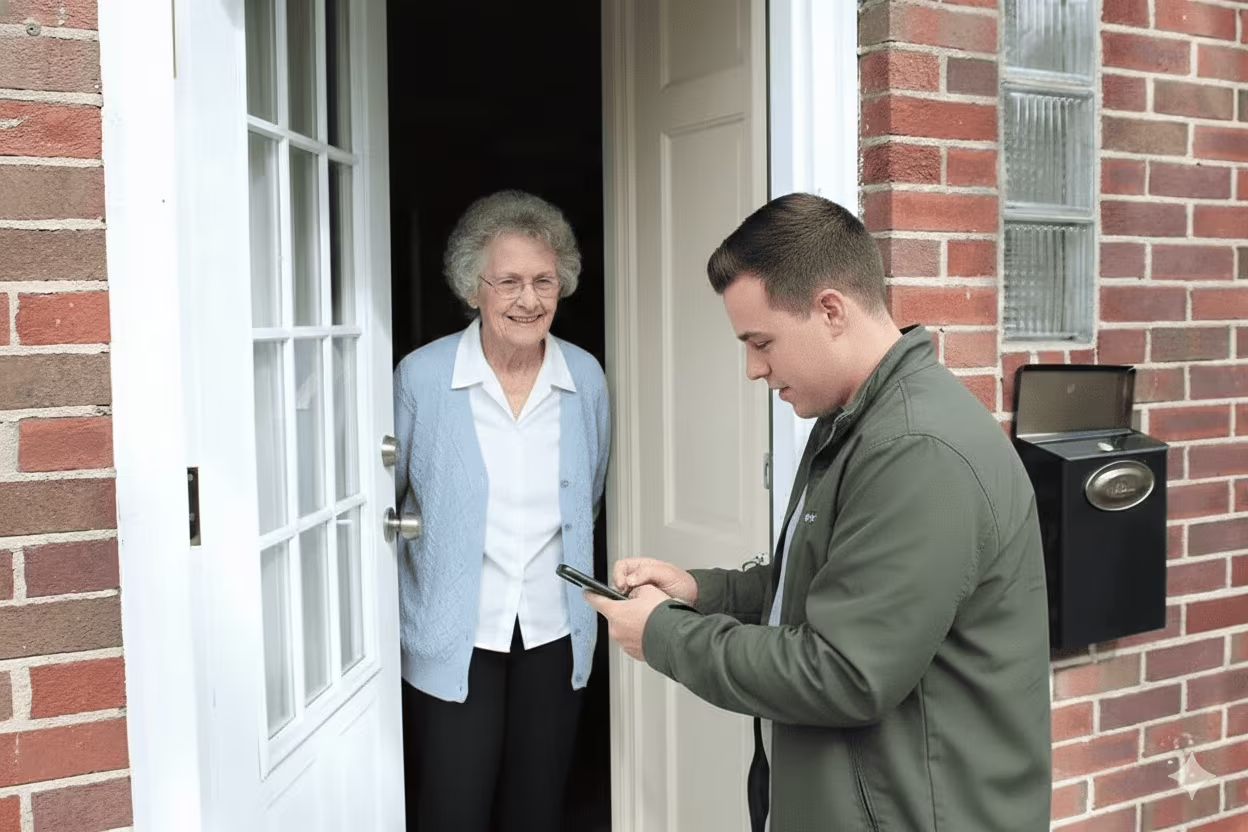
Outside sales focuses on in-person selling, where reps meet prospects face-to-face in the field through doorknocking or during scheduled office meetings. It is built around relationship-building, deeper conversations, and managing more complex or higher-value deals.
In practice, outside sales is now hybrid. Reps combine in-person meetings with calls, email, and video to move deals forward. The difference is in how value is created.
Inside and outside sales follow different models, each designed to drive results in specific situations. Understanding how they differ helps you choose the right approach and structure your team effectively.
At a high level, inside sales acts as an efficiency engine that drives volume and speed, while outside sales serves as a revenue driver focused on larger, more complex deals.
Inside sales is designed for speed, efficiency, and scale. It allows teams to manage large volumes of prospects and move deals through the pipeline quickly. When structured well, it creates a predictable, repeatable sales engine. The downside is that it’s harder to build deep relationships, which can limit success in more complex deals.
Outside sales is built for depth, trust, and higher-value opportunities. It allows reps to build stronger relationships and navigate complex buying processes more effectively. When executed well, it drives larger deals and higher conversion rates. The challenge is that it requires more time, coordination, and structure to scale efficiently.
Choosing between inside and outside sales comes down to how your team creates value. Each model is designed for a different type of sales motion, and aligning the right approach to the right situation is critical. Choosing the wrong model creates inefficiency before your team even starts selling.
A simple way to think about this is speed vs. depth, and volume vs. complexity. Inside sales is built for speed and volume, while outside sales is designed for deeper, more complex engagements.
Inside sales works best when your team needs to move quickly and handle a high number of opportunities. It’s ideal for environments where efficiency and responsiveness drive results.
Use inside sales when:
This model allows teams to scale outreach and maintain consistent pipeline activity without adding high cost.
Outside sales is the right choice when deals require stronger relationships and more time to close. It’s built for situations where trust, customization, and multiple stakeholders play a role in the decision.
Use outside sales when:
In these scenarios, investing time in fewer, higher-quality opportunities leads to better outcomes and higher conversion rates.
Inside vs outside sales is often framed as a choice, but high-performing teams approach it differently. They combine both models to create a more efficient and effective sales system. Each plays a specific role in advancing deals.
Inside sales focuses on generating and qualifying opportunities to ensure a steady flow of leads into the pipeline. Outside sales then takes over for higher-value or more complex deals, where deeper engagement and relationship-building are needed to close.
The goal isn’t choosing just one. Instead, it’s to structure both into a single system. That only works when the handoff between teams is clear and supported by shared data. Without that alignment, opportunities are lost. With it, teams move faster, close better deals, and scale more effectively.
Most companies don’t struggle because inside or outside sales are ineffective. They struggle because the two aren’t structured to work together. The biggest inefficiencies happen between teams, not within them.
Fixing these issues requires a system that connects both teams, aligns their roles, and provides visibility across the entire sales process.
Managing outside sales teams introduces greater complexity than managing inside sales teams. Once reps are in the field, visibility becomes limited, making it harder to track activity, understand performance, and ensure consistency across the team. This often leads to uneven results, where some reps perform well while others fall behind.
Territory overlap can create inefficiencies, with multiple reps targeting the same areas while others are under-covered. At the same time, missed follow-ups are common when interactions aren’t captured accurately in the moment. Outside sales is harder to scale than inside because it depends on coordination and real-world execution.
To solve this, teams need tools that bring structure and visibility to what’s happening in the field.
Scaling sales operations requires the right tools to support each model. Inside and outside sales rely on different systems, but both need structure and visibility to perform consistently.
Inside sales runs on digital efficiency, so tools focus on managing volume and communication. A CRM tracks leads and pipeline, automation supports outreach and follow-up, and communication tools like phone, email, and video keep deals moving. Together, these systems create a fast, measurable sales environment.
Outside sales only works if reps are set up properly in the field. They need to know where to go, who to focus on, and how to make the most of their time. That’s where tools like territory mapping, mobile apps, and route planning come in. They help reps stay organized, work smarter, and cover more ground.
For managers, real-time tracking brings everything into view. Instead of guessing what’s happening on the ground, they can see activity, performance, and progress as it happens. With the right setup, outside sales becomes much easier to manage and scale, turning what used to feel unpredictable into something structured and measurable.
Ecanvasser brings these capabilities into a single platform, designed specifically for managing field sales teams at scale.
By connecting these elements, Ecanvasser turns outside sales into a structured system that removes guesswork and improves consistency. It also connects field activity back to the broader sales pipeline, making it easier to align inside and outside sales in a hybrid model.
The right model depends on how you sell. Consider deal size, sales cycle length, product complexity, and available resources when deciding your approach. A simple framework helps: small, fast-moving deals fit inside sales, while larger, more complex opportunities belong in outside sales. Many teams operate somewhere in between, where a hybrid model is the most effective.
Inside sales drives speed. Outside sales builds depth. Success comes from structuring both into a system that works together.
Ready to bring structure to your field sales team? Use Ecanvasser to improve visibility, organize territories, and scale performance. Explore our pricing or book a demo.

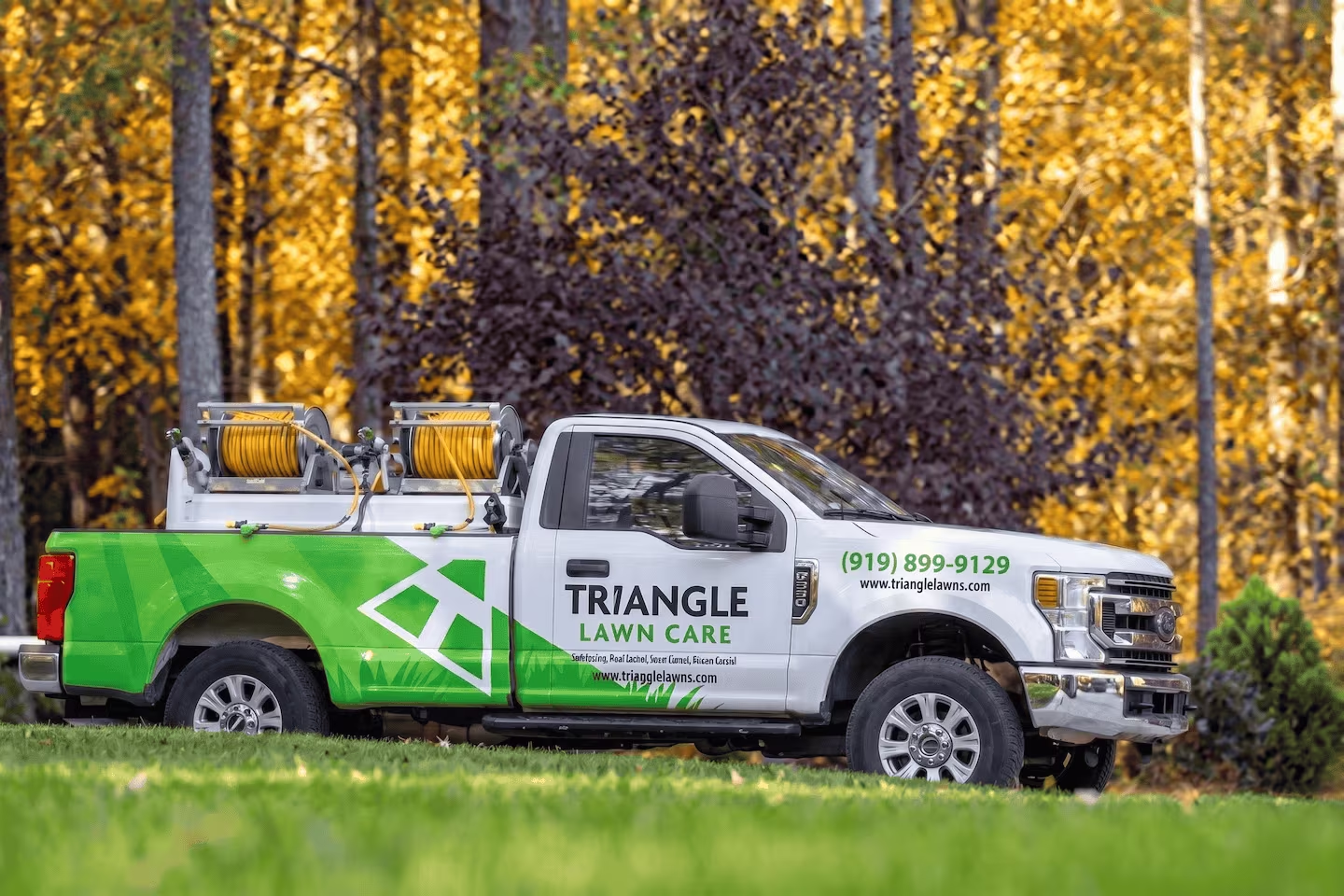
Ecanvasser’s real-time tracking completely transformed our field operations. Through the dashboard, we can plan efficient routes, customize interactions, and monitor our canvas stops in real time to support our team the second they need help. The "verified drops" feature adds an extra layer of accountability, while the reporting tools make it seamless to track hourly visit rates and optimize performance on the fly.




Scale your operations, empower your reps, and deliver predictable, profitable growth with Ecanvasser.