Short on time?
Pick an AI to summarise this article:
Pick an AI to summarise this article:



Sales teams are feeling the limits of digital channels. Inbox fatigue is real, response rates are dropping, and it’s getting harder to stand out.
More teams are returning to the field because real conversations still convert. Sales canvassing has evolved from clipboards and guesswork into a measurable growth engine that drives pipeline and revenue when it’s done right.
At its core, sales canvassing comes down to two approaches: lead generation and direct sales. This guide explains how each model works, when to use them, and how to scale canvassing into a predictable, high-performing channel.
We’ll break down the differences between lead generation and direct sales canvassing, introduce the setter/getter model, and show how high-performing teams differ. You’ll also see how to choose the right approach for your business—and how to scale it without losing visibility, wasting effort, or creating operational chaos.
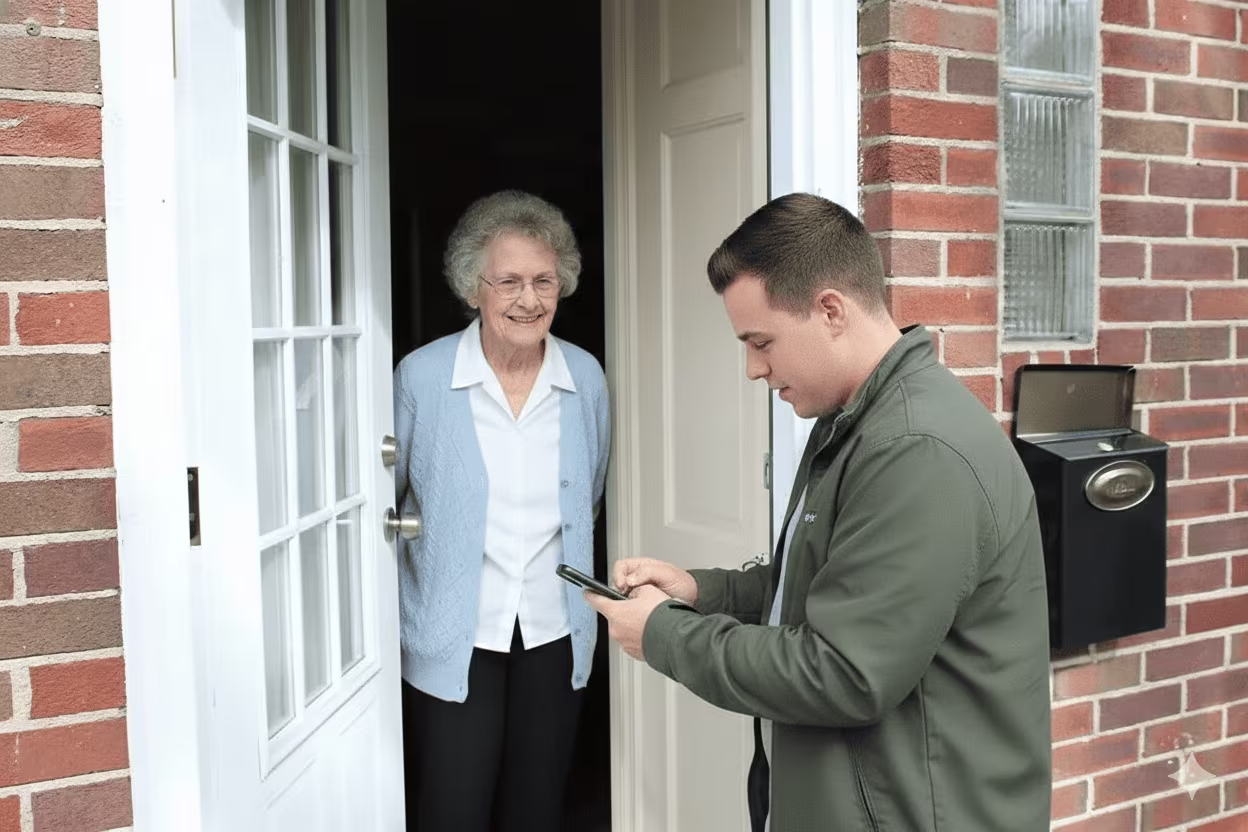
Sales canvassing is a field sales strategy where reps engage prospects directly—at their homes, in neighborhoods, or at events—to generate leads or close deals. It’s a structured approach to starting real conversations with potential customers, capturing insights, and moving opportunities forward in the moment.
In modern field sales, canvassing goes beyond knocking on doors. It’s a planned, trackable, and repeatable process built around targeting the right areas, prioritizing the right prospects, and capturing data from every interaction. High-performing teams treat canvassing as a system they can measure and improve over time, not just an activity reps carry out in the field.
That distinction matters. Not all canvassing delivers results. Without clear territories, consistent data capture, and visibility into rep activity, effort gets lost, and opportunities are missed. With the right structure in place, sales canvassing becomes a reliable way to build pipeline, increase conversions, and drive predictable growth.
Sales canvassing is gaining momentum again because it delivers what digital channels increasingly struggle to provide: attention and trust.
Buyers are overwhelmed with emails, ads, and automated outreach, which has driven down engagement across many channels. A face-to-face conversation stands out. It creates a moment of focus, builds credibility faster, and gives reps the chance to adapt in real time.
For field sales teams, this shift presents a clear opportunity. Canvassing allows you to reach prospects directly, qualify interest on the spot, and move deals forward without waiting for inbound engagement. When it’s backed by data and structure, it becomes a scalable way to generate pipeline and revenue, even as digital channels become more saturated.
Sales canvassing works well early on. A small team can cover ground, generate leads, and close deals without much structure. The problems start when you try to scale.
At around 10 to 20 reps, complexity increases fast. Territories overlap, high-value areas go missed, and reps work the same streets without realizing it. Managers lose visibility into what’s actually happening in the field. Activity becomes hard to verify, and performance varies widely from rep to rep.
This is where “scaling chaos” sets in. Teams rely on spreadsheets, disconnected tools, and manual updates to manage growing operations. Data becomes inconsistent or incomplete, making it difficult to track progress or identify what’s working.
For sales leaders, the impact is clear. You can’t prove ROI, you can’t confidently optimize performance, and you can’t scale what you don’t fully understand. Without structure, sales canvassing becomes harder to manage as it grows, when it should be doing the opposite.
Lead generation canvassing focuses on starting conversations and capturing interest rather than closing a deal on the spot. The goal is to identify qualified prospects, collect their contact details, and generate a direct lead for your team to follow up on.
This approach works especially well when sales require more time, context, or trust. Instead of pushing for an immediate decision, reps focus on asking the right questions, understanding needs, and setting up the next step. Done well, it creates a steady flow of high-quality opportunities that your sales team can convert over time.
Most teams structure lead generation canvassing around a simple progression:
This creates consistency in the field and ensures that every interaction contributes to pipeline growth.
Lead generation canvassing is most effective when the sale benefits from multiple touchpoints or deeper consideration. You’ll typically see it used in:
In these scenarios, separating the initial conversation from the close allows each step to be more focused and effective.
Performance in lead generation canvassing comes down to consistency across a few key metrics. While results vary by industry, most teams track:
What makes the biggest difference is what happens after the conversation. Strong follow-up processes turn interest into revenue. When follow-ups are delayed or unstructured, even high-quality leads lose momentum.
The setter/getter model splits the process into two focused roles, which helps teams operate more efficiently as they grow.
This structure allows each role to specialize. Setters focus on volume and qualification, while getters focus on conversion. As teams scale, this model becomes critical for maintaining quality and consistency across the pipeline.
Ecanvasser helps teams run lead generation canvassing with structure and visibility. Reps can capture lead details in real time, log interactions consistently, and schedule follow-ups directly from the field.
All data is centralized and instantly accessible, enabling seamless handoffs between setters and getters. Managers can see where leads are coming from, how territories are performing, and which reps are driving results.
With clear data capture and full visibility into follow-ups, teams can scale lead generation without losing control of the process.
Direct sales canvassing focuses on closing deals during the first interaction. Reps approach prospects with a clear offer, deliver a concise pitch, handle objections in real time, and move the conversation toward a decision before they leave.
This approach works well when the value is easy to communicate and the decision process is straightforward. Reps guide the conversation with confidence, answer questions on the spot, and create momentum that leads directly to a sale.
You’ll often see direct sales canvassing used for services like home security systems or telecommunications services like internet packages, where the offer is clear, and customers are ready to make a quick decision. In these environments, speed and timing play a major role in conversion.
Direct sales canvassing performs best in situations where simplicity and timing align:
In these cases, a well-executed conversation can move from introduction to close in a single interaction.
Ecanvasser gives teams the tools to execute direct sales canvassing quickly and precisely. Reps can track their activity in real time, update interaction statuses instantly, and capture outcomes as they happen.
When a deal is closed, it’s recorded immediately, along with any relevant details or next steps. This keeps data accurate and ensures nothing falls through the cracks. Managers can see performance as it unfolds, identify high-performing areas, and adjust strategy based on live results.
With real-time tracking, instant updates, and clear visibility into outcomes, teams can move faster, stay organized, and close more deals in the field.
Lead generation and direct sales canvassing serve different purposes, but both play an important role in field sales. The right approach depends on your product, your sales cycle, and how you want to build revenue—whether that’s through immediate wins or a steady pipeline.
At a high level, lead generation focuses on creating opportunities you can convert later, while direct sales focuses on closing deals in the moment. Both can drive strong results when they’re aligned with your strategy and executed with the right structure.
Here’s how they compare:
In practice, many teams use both approaches. Lead generation builds volume and consistency, while direct sales captures immediate opportunities when timing and intent are aligned. The key is understanding when to apply each model, so your team can work efficiently and convert more of the doors they knock.
Most teams don’t start with a clear canvassing strategy—they evolve into one. As they gain experience, they begin to combine lead generation and direct sales to get the best of both approaches.
The hybrid model balances scale with speed. Lead generation builds a consistent pipeline of qualified opportunities, while direct sales captures revenue when prospects are ready to act. Together, they create a more flexible and efficient field sales operation.
Top-performing teams use a hybrid approach to adapt in real time. They don’t treat canvassing as a fixed process—they adjust based on what’s happening in the field.
The best teams switch based on territory and timing, which allows them to maximize every opportunity and drive more consistent results.
High-performing canvassing is consistent, structured, and measurable. It turns daily activity into repeatable results that managers can track and improve over time.
A strong day in the field follows a clear plan. Reps move through optimized routes, focus on high-quality doors, and stay in rhythm. Every interaction is logged in real time, so nothing gets lost. When interest is there, reps book follow-ups on the spot to keep momentum going. By the end of the day, there’s a clear record of activity, outcomes, and next steps.
Performance drops when the structure breaks down. Reps spend time moving between low-value areas, knock on the wrong doors, and miss key opportunities. Conversations happen, but details aren’t captured, so there’s no usable data. The effort is there, but it doesn’t translate into pipeline or revenue.
Top reps approach canvassing with discipline and intent:
That consistency is what drives results at scale.
Scaling sales canvassing requires structure, not just more reps. Growth comes from planning territories effectively, tracking activity clearly, and turning field data into decisions. When you build visibility, you create accountability—and that’s what drives consistent ROI.
As teams grow, a few core areas start to strain:
Without a system in place, these issues compound quickly, making it harder to manage performance.
Scaling successfully means putting the right structure in place:
When everything is visible and connected, teams move from hustle to a system that can scale predictably.
Choosing the right approach depends on how your product is sold and how your team operates in the field. Most teams start with one model, then evolve into using both as they scale.
This approach creates consistency and scale, especially when paired with a structured follow-up process.
As teams grow, many adopt a hybrid model. They use lead generation to build pipeline and direct sales to capture immediate opportunities. This flexibility helps teams adjust by territory, maximize rep productivity, and scale more effectively.
Both lead generation and direct sales canvassing can deliver strong results. The difference comes down to how quickly you want to generate revenue and how your sales process is structured.
Lead generation canvassing focuses on building future opportunities. Reps prioritize starting conversations, qualifying interest, and capturing the information needed to move prospects into the sales pipeline.
Advantages:
Disadvantages:
Direct sales canvassing focuses on closing in the moment. Reps lead with a clear offer, guide the conversation, and work toward a decision during the first interaction.
Advantages:
Disadvantages:
Most teams use both approaches to balance short-term results with long-term growth.
Tracking performance is what turns sales canvassing into a repeatable, scalable system. When you measure the right inputs, you gain the visibility needed to improve results and forecast outcomes with confidence.
The most effective teams focus on a few core metrics:
These metrics work together. More importantly, they show where performance can improve. If doors are high but conversations are low, targeting or timing may need adjustment. If conversations are strong but conversions lag, it points to messaging or follow-up.
Tracking inputs—not just final sales—gives you control over the process. You can coach reps more effectively, optimize territories, and identify what’s driving results.
Over time, this creates predictability. You understand how activity translates into revenue, which makes it easier to plan, scale, and prove ROI across your field sales operation.
Ecanvasser brings inside sales precision to the field. It connects every door, conversation, and outcome in one place, giving teams full visibility into performance. With real-time tracking, structured territories, and centralized data, managers can scale operations without losing control. Activity becomes measurable, performance becomes predictable, and ROI becomes clear—turning sales canvassing into a reliable growth engine.
{{cta-light-demofirst}}
Sales canvassing delivers results when it runs as a system. Structure, visibility, and consistent processes turn daily activity into predictable revenue. As teams grow, the most effective ones combine lead generation and direct sales to maximize every opportunity.
If you want to scale with confidence, Ecanvasser gives you the visibility and control to make it happen. Explore our pricing or request a demo.
{{faq-1}}
{{faq-2}}
{{faq-3}}
{{faq-4}}
{{faq-5}}
Lead generation focuses on capturing and qualifying prospects for follow-up, while direct sales focuses on closing deals during the first interaction. The right approach depends on your sales cycle and product complexity.
The setter engages prospects and schedules follow-ups, while the getter closes the deal. This structure improves efficiency by allowing each role to specialize.
Ecanvasser helps teams capture leads, track activity, and manage follow-ups in real time, giving full visibility into performance and helping teams scale with structure.
Switch in high-intent areas or when timing supports immediate decisions. Strong reps adjust their approach based on signals during the conversation.
Sales canvassing is a field sales approach where reps engage prospects directly to generate leads or close deals, turning in-person conversations into measurable pipeline and revenue.
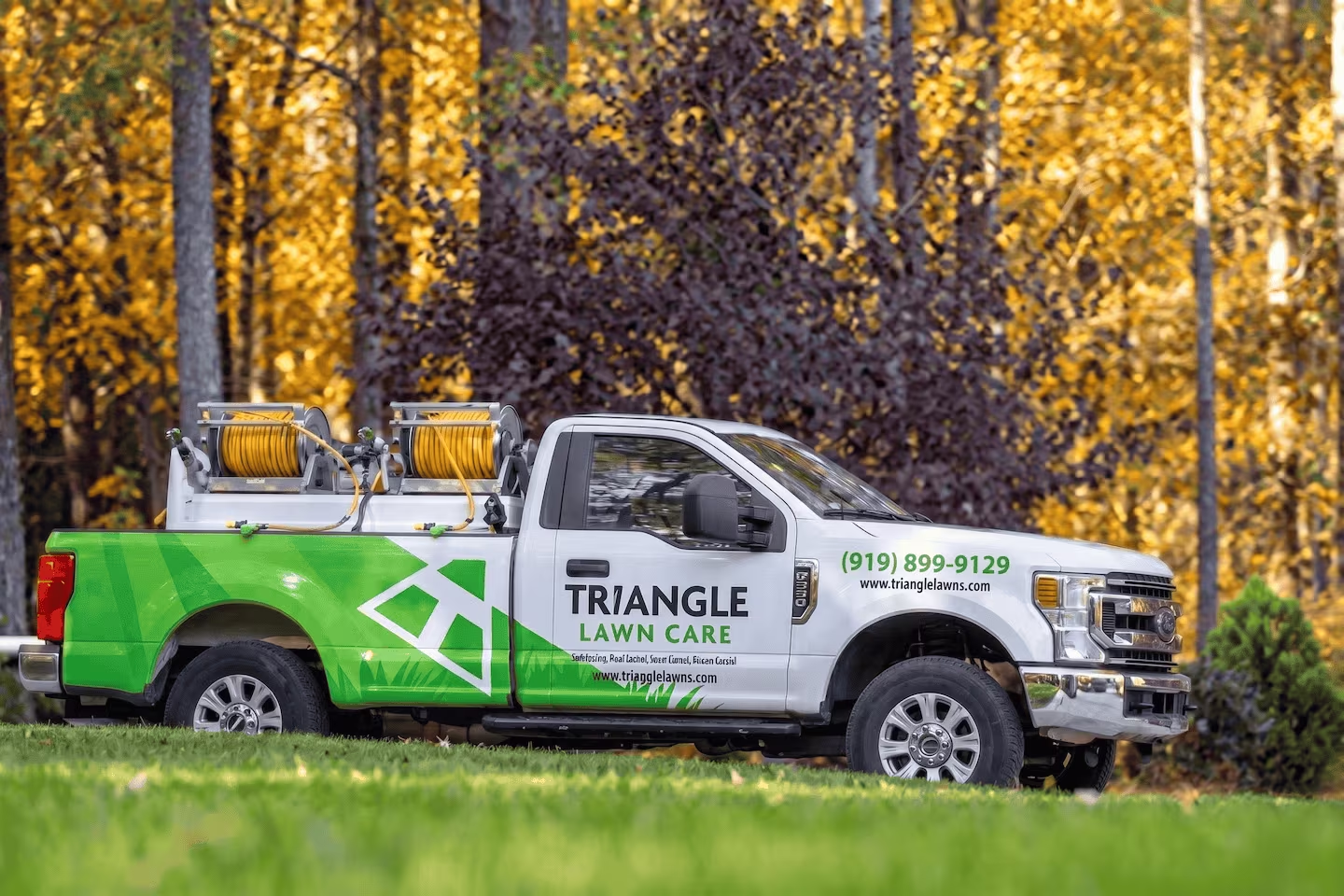
Ecanvasser’s real-time tracking completely transformed our field operations. Through the dashboard, we can plan efficient routes, customize interactions, and monitor our canvas stops in real time to support our team the second they need help. The "verified drops" feature adds an extra layer of accountability, while the reporting tools make it seamless to track hourly visit rates and optimize performance on the fly.




Scale your operations, empower your reps, and deliver predictable, profitable growth with Ecanvasser.
.svg)