Short on time?
Pick an AI to summarise this article:
Pick an AI to summarise this article:

.svg)

Managing field sales reps comes with a unique challenge. You’re responsible for performance, but you don’t see what happens day to day. Activity gets reported after the fact, results are inconsistent, and it’s hard to know where the problem actually is.
You’ll see reps logging activity at the end of the day, missing follow-ups, or blaming a “bad territory” when numbers drop. The effort might be there, but without visibility, it’s difficult to separate real issues from assumptions.
This creates a tension. Push too hard, and it feels like micromanagement. Step back, and accountability starts to slip.
Strong field sales accountability comes from structure and visibility. When expectations are clear and activity is tracked in real time, reps can manage themselves and managers can coach effectively.
In this guide, we’ll break down how to hold field sales reps accountable with practical steps you can apply immediately, without adding unnecessary oversight.
Accountability starts with clarity. If reps don’t know what a strong day looks like, performance becomes subjective and difficult to manage. You’ll often hear managers say a rep is underperforming, but when you ask what the expectation was, it’s not clearly defined.
In field sales, expectations need to be tied to daily activity, not just end-of-month results. Quota matters, but it doesn’t guide what a rep should do today. Activity does.
A clear “good day” should include:
These expectations should be consistent and measurable across days and weeks.
Without this level of clarity, accountability breaks down. One rep might think knocking 50 doors is a strong effort, while the manager expects 100. Both believe they’re right, but the gap creates frustration and inconsistent performance.
Reps can’t be accountable to vague goals like “perform better” or “hit quota.” They need clear, daily standards they can execute against.
Results tell you what happened. Activity tells you why it happened. In field sales, that difference is critical. You’ll see two reps miss quota, but for completely different reasons—and without the right metrics, you won’t know where to step in.
If you focus only on outcomes, you miss the opportunity to track how performance builds throughout the day. Strong accountability comes from understanding the flow of activity:
This view gives you context.
For example, one rep might not be generating enough activity to create chances in the first place. Another might be active but failing to turn conversations into opportunities. Both miss target, but the coaching approach is completely different.
Visibility is the foundation of accountability in field sales. When you can see what’s happening as it happens, you can manage performance with clarity. When you can’t, everything becomes reactive.
Most managers only find out there’s a problem at the end of the week. By then, the opportunity to fix it has already passed. A rep might report strong activity, but if it’s logged at the end of the day or filled in from memory, it rarely reflects what actually happened. Conversations get overestimated, follow-ups get missed, and patterns are easy to hide.
Real-time visibility changes that dynamic. Instead of relying on summaries, you see how the day is unfolding. You can spot low activity early, identify gaps in conversations, and step in with guidance before performance drops further.
Without that visibility, managers are left guessing. And when decisions are based on assumptions, accountability becomes inconsistent and difficult to enforce.
Ecanvasser's Real-Time Field Tracking gives managers live oversight of what's happening in the field. Every door knocked, conversation logged, and conversion closed syncs instantly from your reps' mobile devices to your dashboard at HQ.
That means you can:
This is where most managers struggle. You need to know what your reps are doing, but you don’t want to hover over every move they make. The balance comes down to tracking the right signals instead of trying to control behavior.
When managers lack data, they compensate with meetings and check-ins. You’ll see questions like “what did you do today?” or requests for constant updates. That approach creates friction and slows reps down. Visibility removes the need for that.
Focus on tracking the activity that directly drives performance:
What to track:
What not to track:
The goal is to create transparency, not pressure. Too much control reduces autonomy and performance. Too little leaves managers guessing. The right level of visibility allows reps to operate independently while still being accountable.
Accountability improves when data is used for coaching, not just reporting. I’ve seen most managers review numbers after the fact and focus on whether a rep hit target. That approach highlights the problem, but it doesn’t explain how to fix it.
The shift is simple. I moved from evaluating results to diagnosing behavior. Instead of asking what happened at the end of the week, look at what reps are doing during the day and where performance starts to drop.
You’ll see the difference in how conversations are handled.
Example 1:
Example 2:
This approach gives reps something specific to act on. It turns accountability into a process of improvement, not just evaluation. When behavior improves, results follow more consistently.
Accountability becomes consistent when there’s a clear system behind it. Reps need to know where they’re going, what they’re expected to do, and how their activity is measured. Without that structure, performance varies from day to day.
Most reps don’t fail because they’re lazy—they fail because the system is unclear. When the process isn’t defined, activity becomes inconsistent and hard to manage.
A simple accountability system should include:
When these pieces are in place, reps can execute without guesswork. Managers can track performance without chasing updates. Simplicity is what makes the system work.
Territory plays a bigger role in accountability than most managers realize. Where a rep works directly impacts how many conversations they can have, how efficient their day is, and how likely they are to generate leads. Without proper sales territory planning, performance becomes difficult to measure fairly.
You’ll see a top rep struggle in a weak territory and an average rep thrive in a strong one. When that happens, it’s easy to misjudge performance. The issue isn’t always execution—it’s the opportunity within the territory.
Strong territories are built around:
When territories are designed well, expectations become realistic and performance becomes comparable across reps. That’s what makes accountability fair and actionable.
Accountability becomes sustainable when reps take ownership of their performance. Compliance comes from being told what to do and doing it when someone is watching. Ownership comes from understanding the goal and managing your own activity to achieve it.
In field sales, this change matters. Reps work independently, and strong performance depends on how they use their time, not just whether they follow instructions. I’ve seen reps perform at a high level with minimal oversight because they understood exactly what they were working toward. When reps take ownership, they track their own numbers, adjust their approach, and stay focused without needing constant direction.
You’ll see the difference in behavior. One rep waits for a manager to point out missed targets. Another checks their own activity throughout the day and adjusts before it becomes a problem. I’ve also seen teams where that second behavior becomes the norm once expectations and visibility are clear.
This is where structured systems, like those used in sales canvassing, make an impact. When expectations are clear and performance is visible, reps can manage themselves with confidence.
Compliance is doing the work when watched. Ownership is doing it because it matters.
Check-ins are where accountability turns into action. Done well, they help reps improve. Done poorly, they become routine updates that don’t change anything. Most check-ins turn into status updates instead of problem-solving, which is why performance stays flat.
The goal of a check-in is simple: understand what’s happening, identify what’s getting in the way, and agree on what changes next.
A strong structure looks like this:
This keeps the conversation focused and practical.
You’ll see the difference immediately. Instead of a rep saying, “It was a slow week,” you’re looking at conversation rates, lead quality, and follow-up activity to understand what actually happened.
Consistency matters here. Weekly or regular one-on-one check-ins create a rhythm where performance is reviewed, adjusted, and improved over time. That’s what makes accountability part of the process, not just something addressed when results drop.
A UK field marketing agency struggled to hold reps accountable as they scaled across commercial and charity campaigns. Managers lacked reliable door-level data, territory structure was inconsistent, and activity was difficult to verify in real time. This made it hard to understand performance or coach effectively.
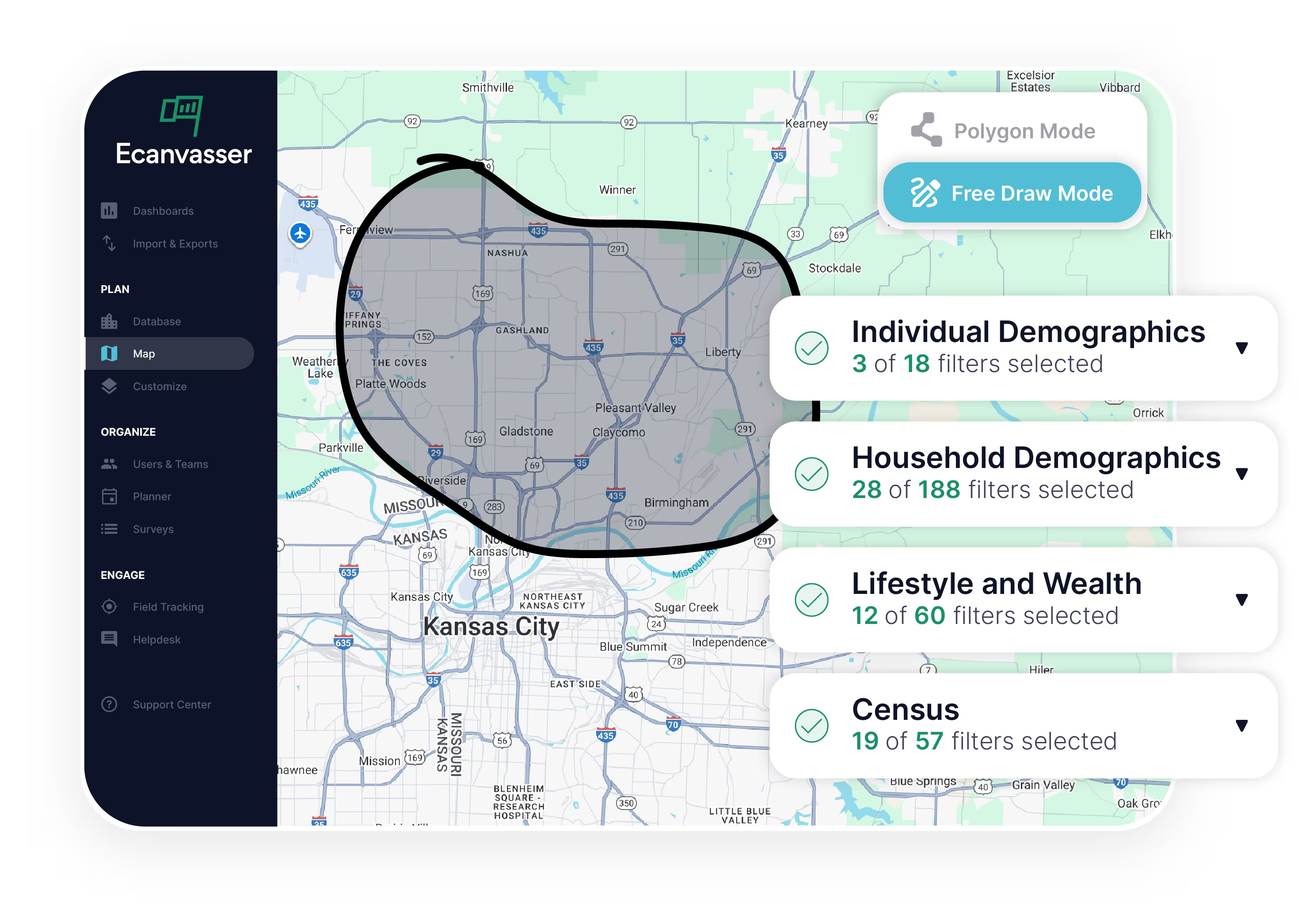
By introducing structured territories, real-time field tracking, and consistent data capture, the team gained full visibility into rep activity. Managers could see what was happening in the field without chasing updates, which improved accountability and decision-making.
The impact was immediate. Sales more than tripled, increasing from around 80–90 per week to over 300, while attrition also decreased. As their Operations Manager put it: “The user-friendly interface and robust functionality have made Ecanvasser an indispensable tool for our operations.”
Strong field sales accountability comes down to clarity, visibility, and a system that turns daily activity into consistent performance. Ecanvasser helps teams manage reps at scale with the structure and visibility needed to stay accountable.
{{cta-dark-demofirst}}



Scale your operations, empower your reps, and deliver predictable, profitable growth with Ecanvasser.