Short on time?
Pick an AI to summarise this article:
Pick an AI to summarise this article:

.svg)
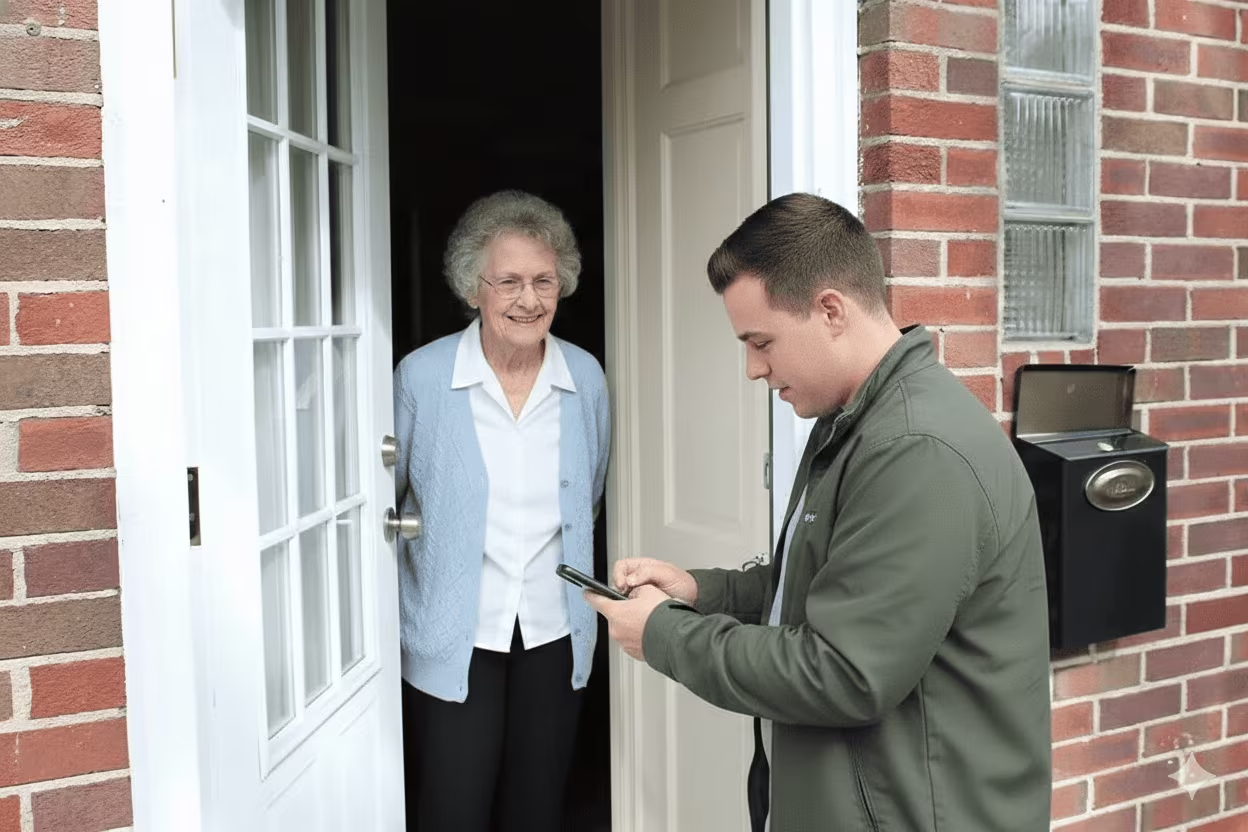
Picture a rep, let's call her Sarah. She's knocking 60 doors a day across a territory she's covering from memory, logging visit notes into a WhatsApp group at the end of each shift, and working off a spreadsheet her manager last updated three weeks ago. It’s not that she’s not working hard. She's just working blind.
Her manager isn't in a much better position. He has no idea which streets have been covered, which leads are worth following up, or whether Sarah's numbers are strong because of her territory or despite it. He finds out at the end of the week, when the spreadsheet gets updated again.
This isn't an edge case. It's how a lot of field sales operations actually run, and it's why outside sales software exists.
I've worked with teams across telecoms, solar, home improvement, and utilities, and the same problem comes up constantly: the CRM that works fine for the inside sales team gets abandoned the moment someone steps out the door. The tools don't fit the work.
This guide covers what outside sales software actually does, how it differs from a CRM, what to look for before you buy, and which tools are worth your time in 2026.
Outside sales software, also called field sales software or field sales management software, is purpose-built for reps who sell face-to-face, on the move, away from a desk. The terminology varies but the category is the same: tools designed to handle the workflows that are unique to field selling.
That means territory assignment, route planning, door-level data capture, rep activity tracking, and real-time visibility for managers. The things a CRM wasn't designed to do, and a spreadsheet can't scale.
Two groups use it, and they need different things from it.
Reps in the field need a mobile-first app that works offline, routes them efficiently, and captures visit data fast, without adding admin that slows them down between doors. Every extra tap is a tap they'll eventually stop doing.
Managers and leaders need visibility into what's actually happening in the field without waiting for end-of-day reports or chasing reps for updates. They need territory oversight, performance data, and reporting they can take to stakeholders.
Both groups are underserved by general-purpose CRMs. That's the gap outside sales software fills, and it's a meaningful one.
A CRM is a system of record. It tracks deals, contacts, pipeline stages, and communication history. It's built on the assumption that the person using it has time to sit down, think through what happened, and log it carefully. For an inside sales rep at a desk, that's a reasonable assumption.
For a rep knocking 80 doors a day in a neighborhood with patchy connectivity, it isn't.
That rep isn't sitting down to log anything. They're moving between doors, managing rejection, trying to remember which streets they've covered, and figuring out where to go next. If your CRM requires careful manual entry to function, it won't get used in the field. And data that doesn't get captured doesn't exist.
One of the most common mistakes I see field sales teams make is treating their CRM as a field execution tool. It doesn't work, and reps abandon it within weeks. The UI isn't designed for one-handed use between doors. There's no route optimization. There's no territory mapping. There's no offline mode worth using.
Outside sales management software fills that gap. Here's how the two compare:
The important nuance: outside sales software isn't a CRM replacement. It's a layer that sits on top of your CRM and handles the field-specific workflows your CRM can't. The best tools sync cleanly with Salesforce, HubSpot, and others, so data flows both ways without double entry, and nothing falls through the cracks between the field and the office.
Most software buying decisions go wrong the same way: someone demos the desktop dashboard, ticks the feature boxes, and signs. Then the reps get it on their phones and stop using it within a month. Here's what to actually evaluate before you buy.
No tool on this list is right for everyone, and any guide that tells you otherwise is selling something. What follows is an honest look at the tools worth evaluating in 2026, with a genuine take on who each one is built for and where it falls short. Start with the use case that matches your team, not the one with the best marketing.
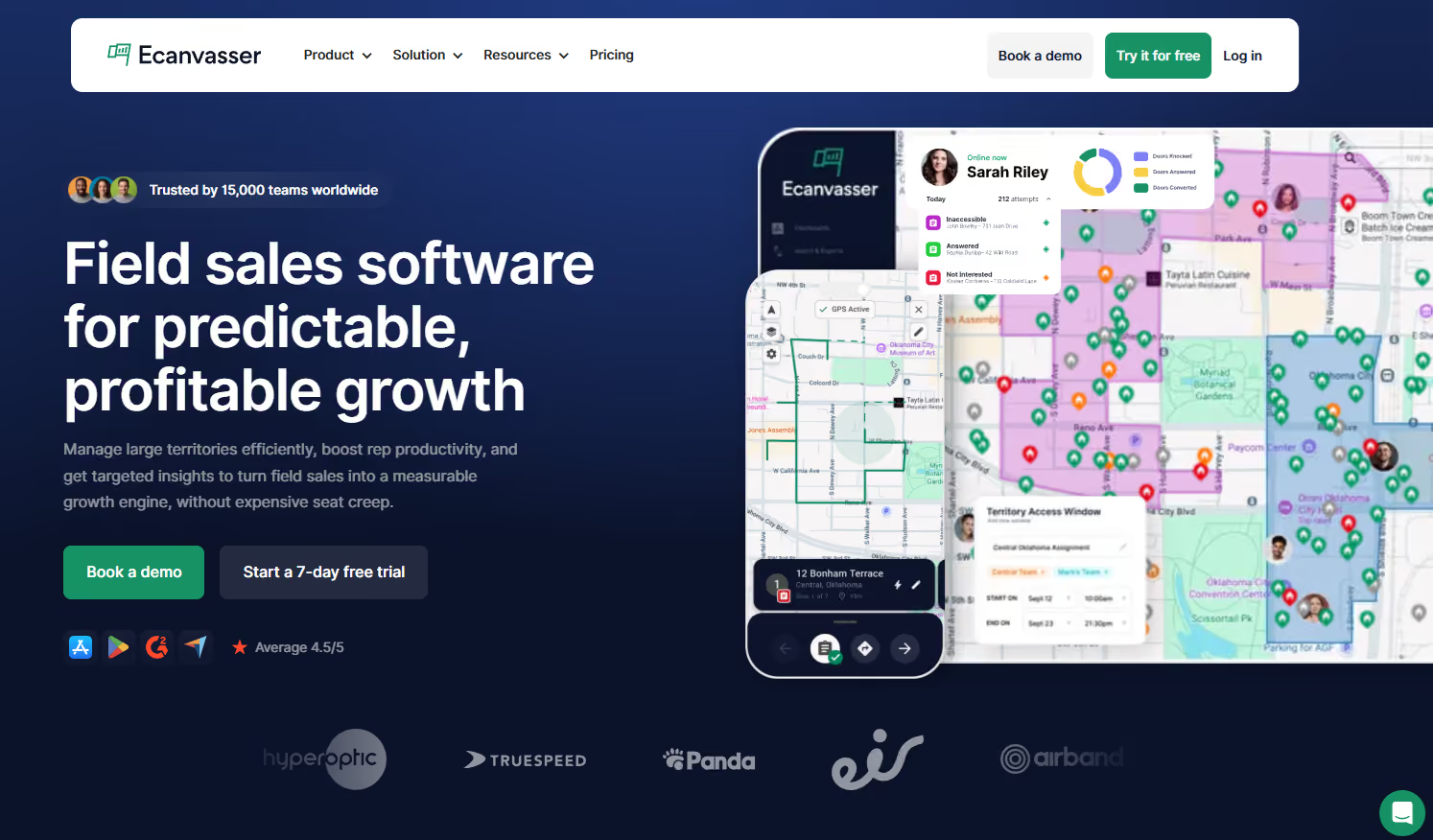
Best for: field sales teams that need to scale territory operations without per-user pricing penalties
Ecanvasser does territory management at scale particularly well. Route optimization handles up to 200 stops where most competitors cap at 25, and the lead-based pricing model means costs scale with your database size, not your headcount. Onboarding is fast, which matters when your team turns over regularly, and it integrates cleanly with existing CRMs without trying to replace them.
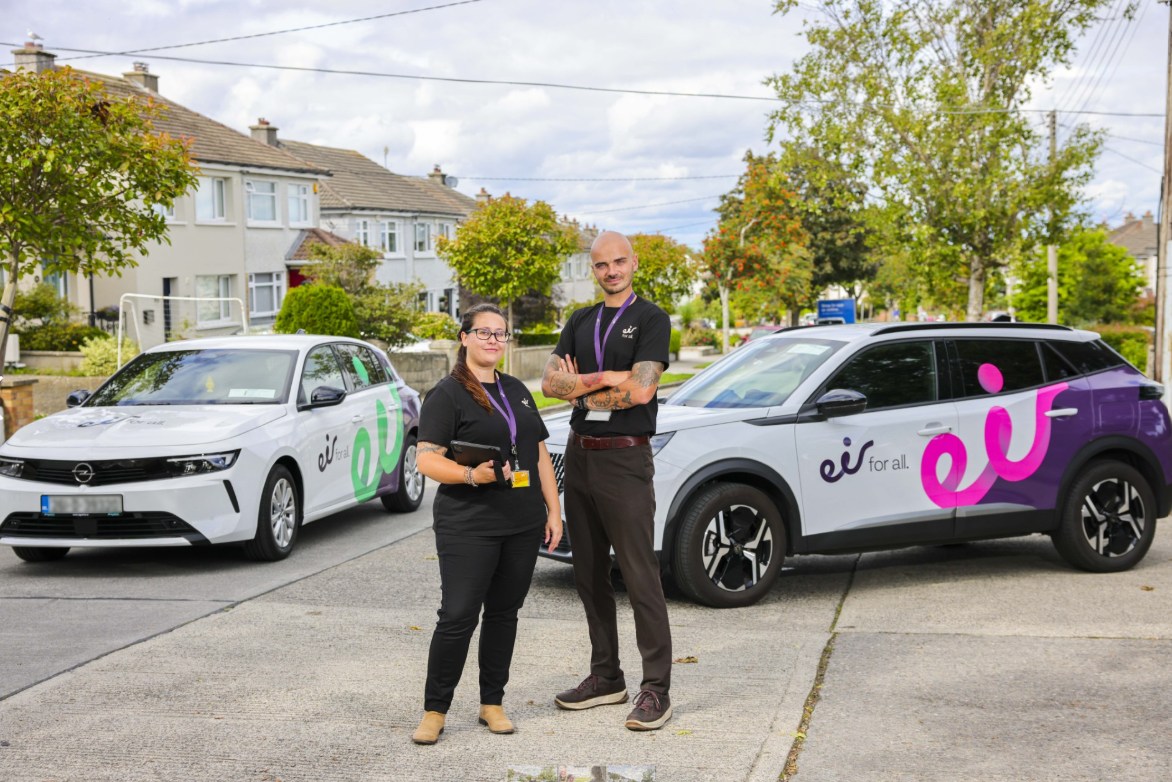
eir, Ireland's largest telecoms provider, moved their 500+ rep field sales operation off Excel spreadsheets and onto Ecanvasser, eliminating the problem of reps knocking at the wrong times and getting pulled into customer support conversations instead of selling.
Where it's less strong: the platform's strengths are most visible at team scale. If you're a solo rep just getting started, it may be more than you need. Non US-based teams should also check Lead Prospecting feature availability on their plan.
Pricing: lead-based, not per-user. Costs scale with your database size, not your headcount. More affordable as your team grows. Plans from Core to Enterprise.
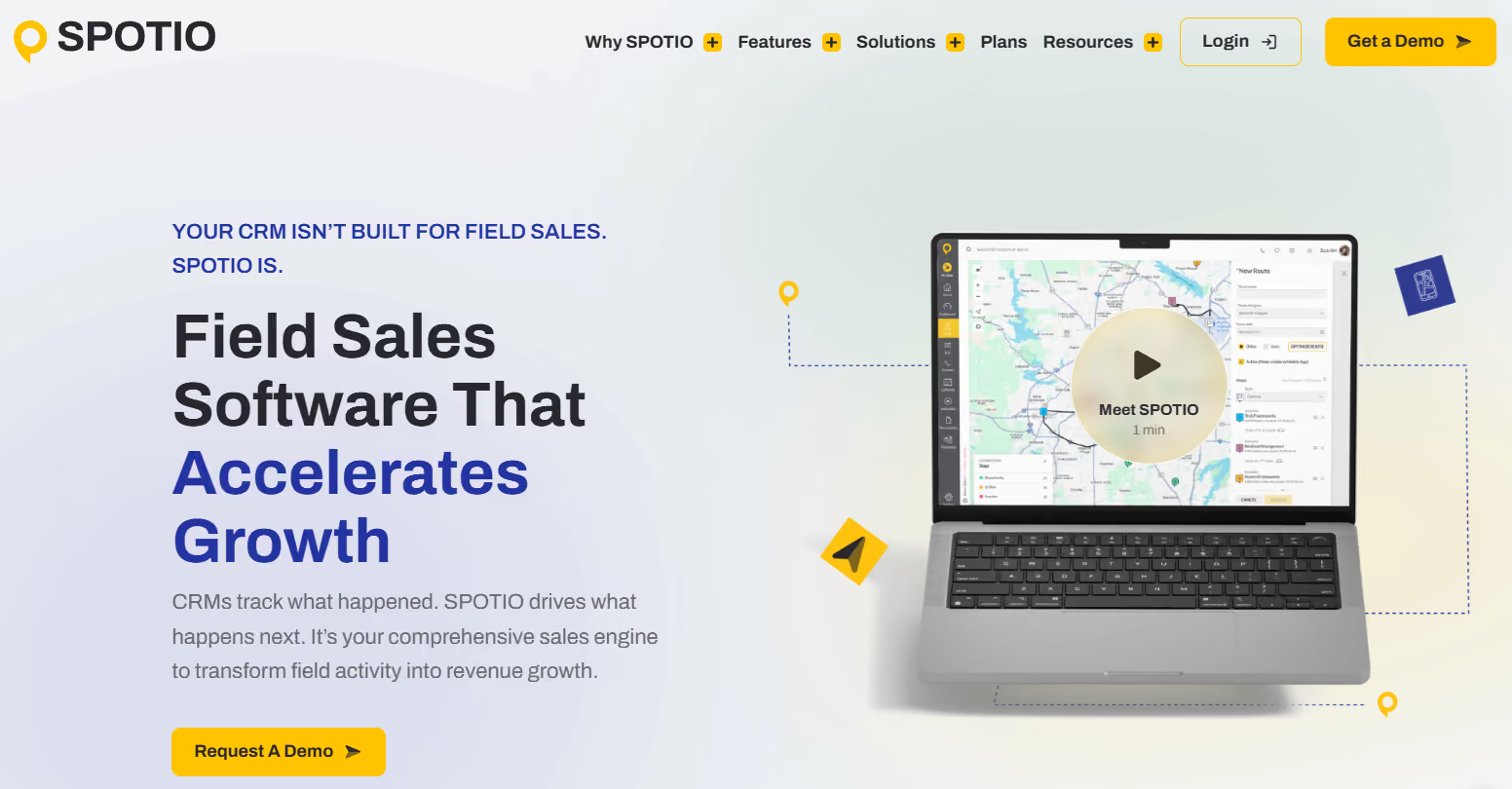
Best for: B2B and B2C field teams that need territory management, route planning, and mobile execution in one platform
SPOTIO is purpose-built for outside sales and covers a lot of ground in one place: territory visualization, one-tap activity logging, route planning, gamification features, and a recently launched AI co-pilot (DASH) that helps reps in the field. It's well established in solar, roofing, pest control, and home services.
The main thing to model before committing: per-user pricing. It's manageable at smaller team sizes but becomes significant as you scale. SPOTIO works best for teams with relatively stable headcount. If you regularly bring in contractors or have high turnover, the cost structure can work against you.
Pricing: per user.
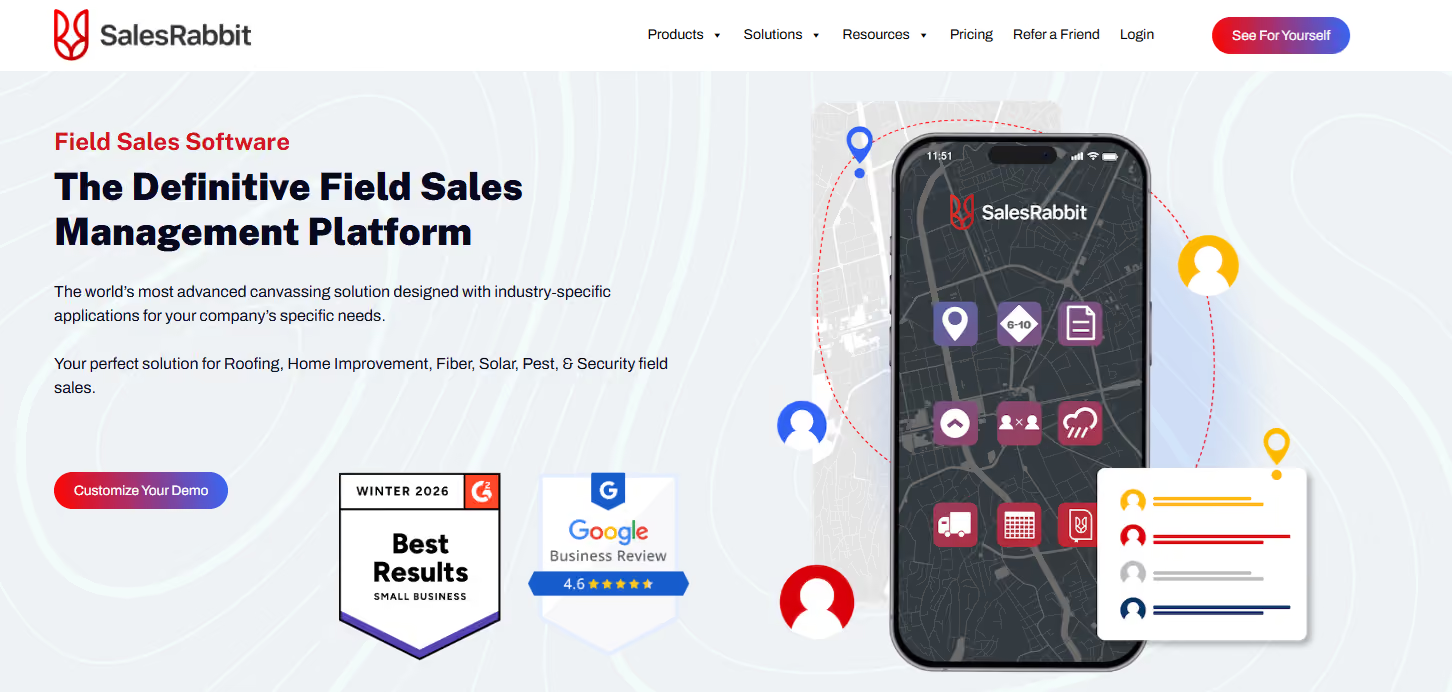
Best for: door-to-door sales teams in solar, roofing, and home services that want gamification and a strong mobile app
SalesRabbit is well established in the D2D sales community, particularly in solar, roofing, and home security. It has strong gamification features that help with rep motivation, digital contracts for closing on the spot, and a solid mobile app built around the door-to-door workflow.
The main thing to be aware of: SalesRabbit positions itself as an all-in-one platform and CRM for certain verticals. If you already have a CRM, that overlap can add complexity rather than remove it. It's also feature-heavy, which some teams love and others find gets in the way of simple, fast adoption.
Pricing: per user.
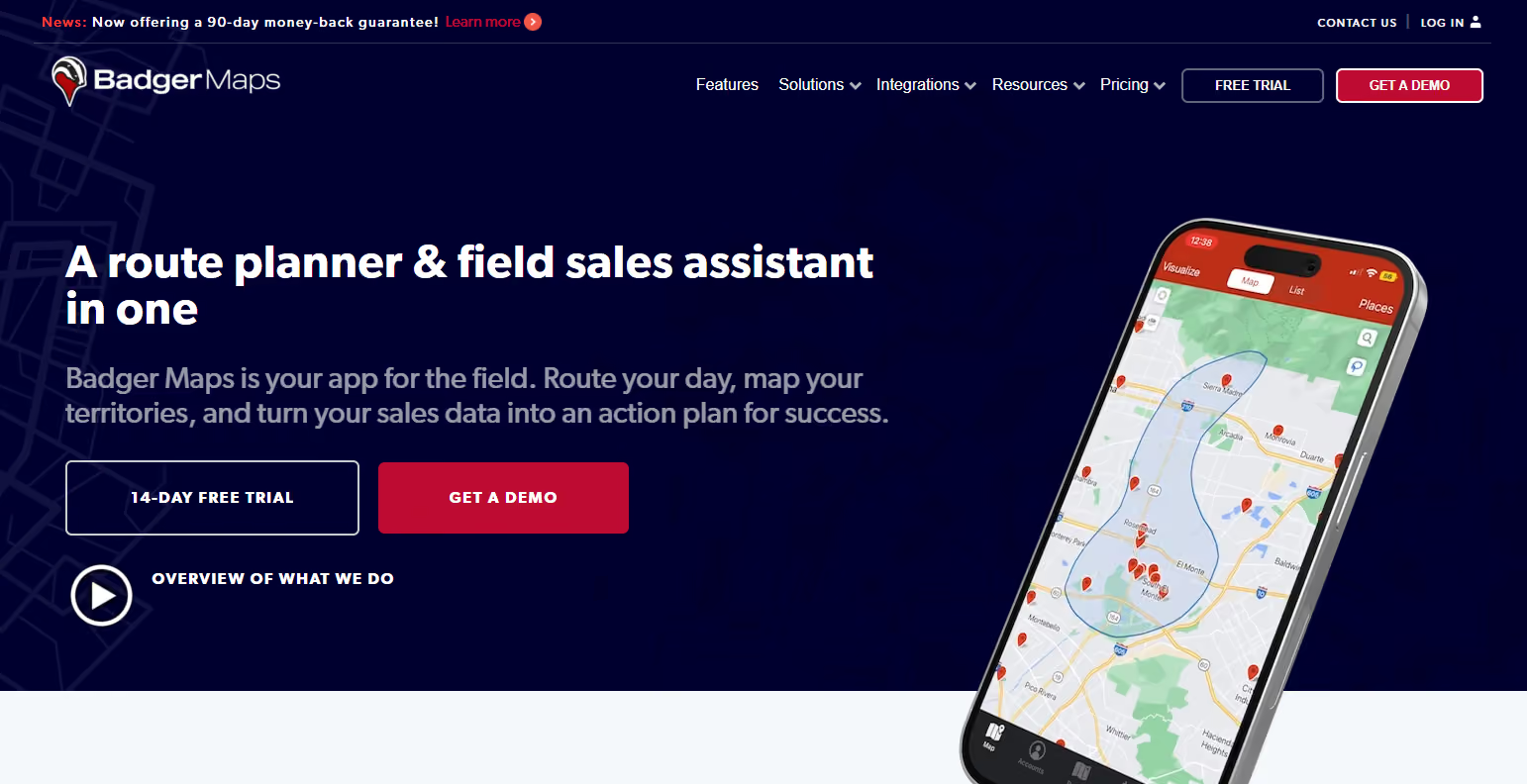
Best for: B2B reps with large geographic territories and high daily stop counts who need route optimization layered onto CRM data
Badger Maps does one thing and does it well: route optimization for reps managing a lot of stops across a wide geography. It layers onto your existing CRM rather than replacing it, and handles 100+ stop optimization cleanly, which is genuinely useful for account-based field reps covering large territories.
The limitation is scope. Badger Maps is a route optimization tool, not a full field sales management platform. There's no territory assignment, no rep activity tracking, and no prospecting capability. It works best as a supplement to a CRM or field sales platform rather than a standalone solution.
Pricing: per user.
Best for: enterprise organizations already on Salesforce that want to add field execution capability without changing their system of record
Salesforce is the deepest CRM on the market. It has an unmatched integration ecosystem, strong reporting and forecasting, and a mobile app that gives reps access to full pipeline data in the field. If your organization is already built around Salesforce, it makes sense to keep it as your system of record.
What it isn't is a field execution tool. There's no native territory mapping, no route optimization, and no location-verified activity logging. Enterprise teams running high-volume door-to-door operations typically pair Salesforce with a dedicated field layer. Ecanvasser or SPOTIO being the most common, so the two systems handle what they're each actually built for. Since Salesforce retired the standalone Maps mobile app on 31 August 2026, teams on that stack have had a forced decision to make about what their reps carry. We covered the field sales mobile app options worth evaluating, including what the migration does and does not change.
Pricing: per user. Significant at scale.
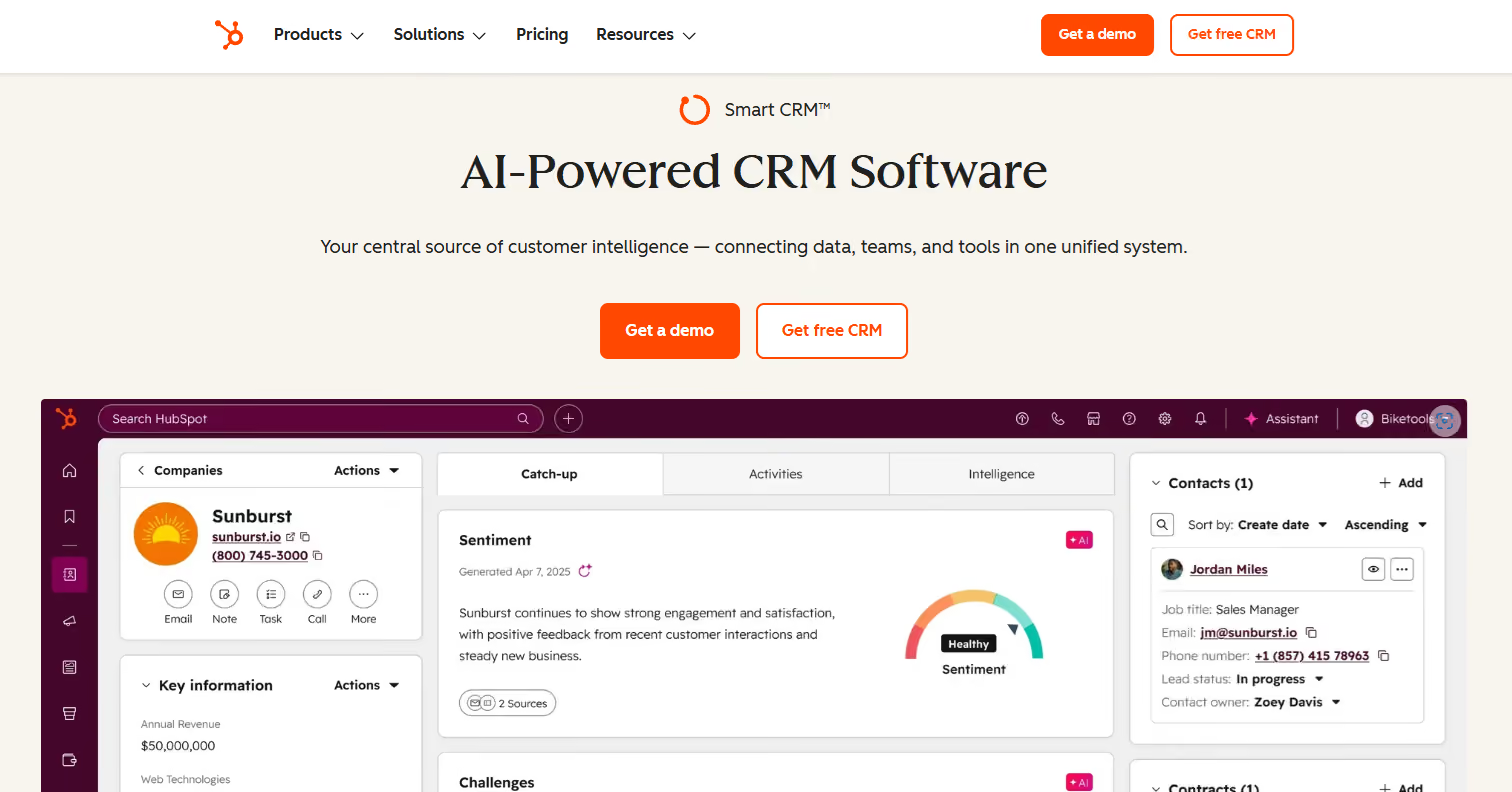
Best for: SMBs that want marketing-sales alignment and a usable mobile app, with a lighter field motion
HubSpot's strengths are its intuitive interface, strong free tier, and a mobile app that works well for reps who split time between field and office. If your team does a handful of outside meetings a week alongside a lot of digital outreach, HubSpot handles that motion well and the marketing-sales alignment is genuinely useful.
Where it falls short is high-volume field work. There's no native territory management, no route optimization, and no location-verified activity tracking. For teams doing full-territory canvassing or door-to-door at scale, HubSpot alone won't cut it. You'd need a dedicated field execution layer on top, which adds cost and complexity.
Pricing: free tier available. Paid plans per user.
The teams I see struggle most with adoption aren't the ones with bad tools — they're the ones with too many tools that don't talk to each other. Research consistently shows that high-turnover field teams tend to run more disconnected systems, not fewer. More apps means more switching, more manual reconciliation, and more places for data to get lost.
The goal isn't to find six best-in-class point solutions. It's to find one core platform that handles the daily field workflow and supplement it with two or three targeted tools that fill genuine gaps.
A practical stack for most field sales teams looks like this:
If your reps need more than four or five apps to do their jobs, something in the stack isn't working. Consolidate before you add.
Three things worth avoiding: buying tools that overlap in functionality with what you already have, paying for CRM features that your field platform already covers, and letting a long feature checklist override the more important question, will your reps actually use this every day?
Most bad software decisions don't happen because someone chose the wrong tool. They happen because the right questions didn't get asked early enough. Here are the five most common ones we see.
The right outside sales app won't change what happens at the door—that still comes down to your reps and your process. But it will give your managers the visibility to know what's working, your reps the tools to work efficiently, and your organization the data to make confident decisions about where to invest next.
If you're running or scaling a field sales team, Ecanvasser is built for exactly this. Book a demo or explore our pricing.

Ecanvasser’s real-time tracking completely transformed our field operations. Through the dashboard, we can plan efficient routes, customize interactions, and monitor our canvas stops in real time to support our team the second they need help. The "verified drops" feature adds an extra layer of accountability, while the reporting tools make it seamless to track hourly visit rates and optimize performance on the fly.




Scale your operations, empower your reps, and deliver predictable, profitable growth with Ecanvasser.