Short on time?
Pick an AI to summarise this article:
Pick an AI to summarise this article:



Distributed organizing has changed dramatically over the last few years. What began as a grassroots strategy for empowering local chapters has become a core part of modern campaign organizing at scale. Today’s political campaigns rely on distributed organizing to coordinate thousands of volunteers across regions, manage voter outreach more efficiently, and build stronger connections within local communities.
Modern campaigns cannot scale through centralized field teams alone. Successful political organizing now depends on volunteer-led, locally coordinated outreach supported by strong systems, clear communication, and real-time visibility into field activity.
That shift has accelerated alongside the rise of hybrid online and offline organizing. Campaigns are combining traditional canvassing with relational organizing, distributed voter contact programs, texting campaigns, virtual events, and community-led mobilization efforts. Rather than relying entirely on top-down structures, campaigns are empowering supporters to organize within their own neighborhoods and networks.
For campaigns trying to grow quickly without losing authenticity, distributed organizing offers a scalable and sustainable approach to grassroots organizing.
In this guide, we walk you through it step by step.
Distributed organizing is a campaign organizing strategy that empowers local volunteers and regional teams to lead outreach efforts in their own communities. Instead of relying only on centralized field staff, campaigns give supporters the tools, training, and structure to organize at scale.
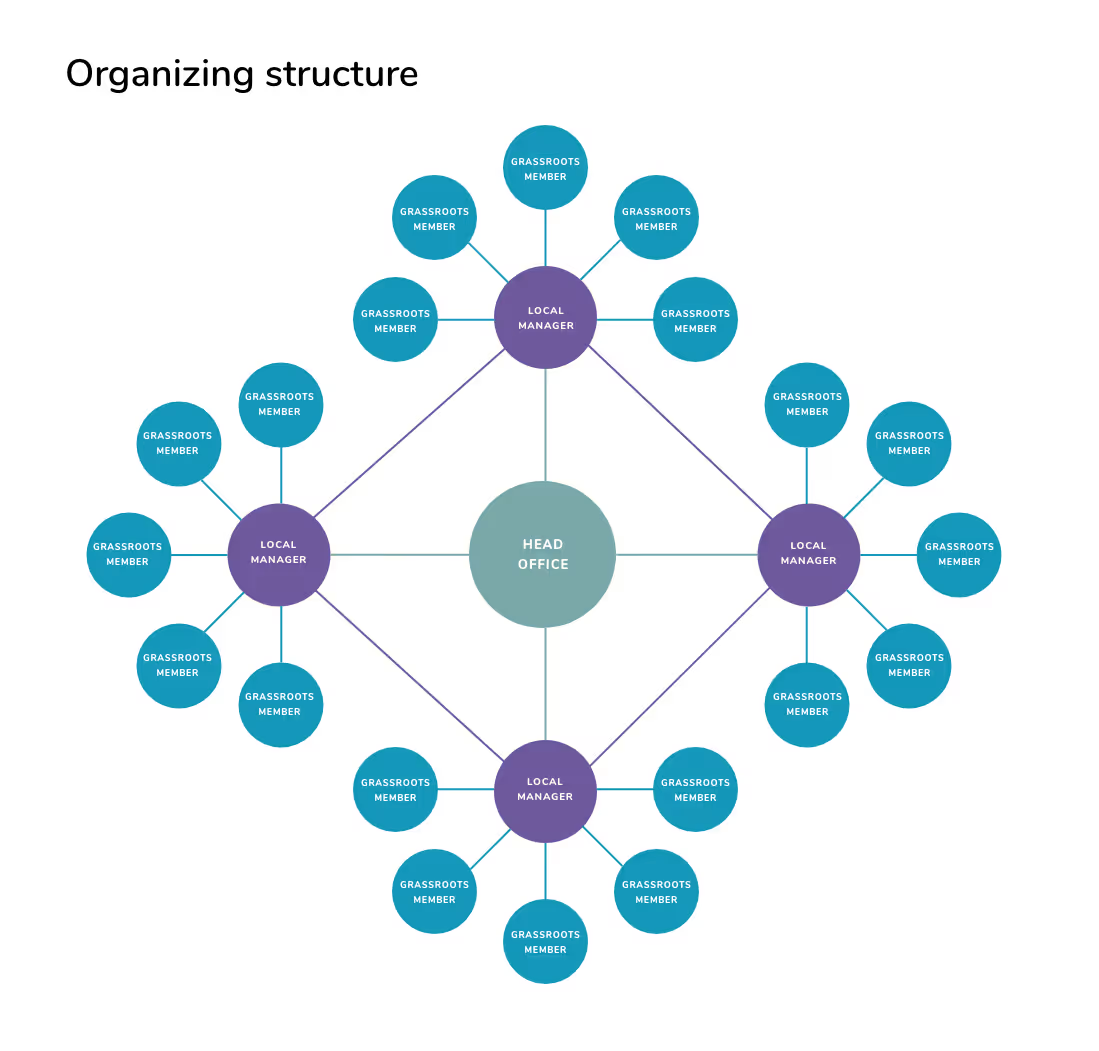
In a distributed organizing model, the central campaign team usually manages messaging, data, and overall strategy, while local organizers handle voter outreach on the ground. That creates a more flexible and scalable approach to political organizing, especially across large regions or national campaigns.
Distributed goes beyond canvassing. Campaigns use volunteer text banking, relational organizing programs, distributed canvassing teams, and local coordination through tools like Slack and WhatsApp to stay connected and organized.
The result is a more modern form of grassroots organizing that helps campaigns grow quickly while keeping outreach local and community-driven.
There are a number of reasons why the distributed organizing model has become such an important part of modern campaign organizing. As campaigns grow larger and voter outreach becomes more complex, distributed structures help teams stay scalable, responsive, and locally connected.
One of the biggest reasons distributed organizing has become more effective is that voters respond better to people they know and trust. Local volunteers understand the concerns, language, and priorities of their own communities far better than a centralized campaign office ever could. Face-to-face conversations and community credibility remain at the heart of successful political organizing.
The strength of distributed organizing comes from local trust and community connections.
Campaigns are also seeing declining returns from digital-only outreach. Open rates are lower, online advocacy is more crowded, and social platforms are saturated with competing messages. Many voters are experiencing fatigue from constant online and AI-generated communication. Local organizing and real conversations increasingly cut through that noise more effectively than mass digital outreach alone.
Traditional organizing across large regions or diverse memberships often creates communication disconnects. As campaigns grow, centralized teams struggle to coordinate every volunteer, event, or voter interaction. Distributed organizing solves this by allowing campaigns to scale quickly through regional chapters and volunteer-led teams. Once a few local groups are operating successfully, the model becomes highly repeatable and easier to expand.
Today’s campaigns combine canvassing, texting, phone banking, local events, and relational organizing into coordinated outreach efforts. Distributed organizing gives campaigns the flexibility to manage these activities across multiple regions while keeping outreach locally relevant and community-driven.
A successful distributed organizing program still needs strong coordination at the center. The difference is that responsibility and leadership are shared across local teams instead of flowing through one centralized field structure.
The national or central campaign team usually oversees the overall strategy and operational structure of the campaign. This includes campaign messaging, data infrastructure, volunteer systems, compliance, training resources, and reporting processes.
Their role is to create consistency across the organization while giving local teams the tools and support they need to organize effectively in their own communities.
Regional organizers act as the bridge between the central campaign team and local volunteers. They help keep campaign operations coordinated across different territories while adapting outreach to fit local communities and voter concerns.
Their responsibilities often include:
Strong regional leadership helps distributed organizing programs stay organized, scalable, and connected across multiple regions.
Local volunteer teams are the foundation of distributed organizing. These teams lead direct voter engagement within their own neighborhoods and communities, helping campaigns build trust and maintain a strong local presence.
Their responsibilities often include:
Because these teams understand their local areas best, they can create more authentic conversations and stronger voter connections than centralized outreach alone.
Many distributed organizing programs follow a version of the snowflake model of leadership, where responsibility spreads outward through connected teams and volunteer leaders. Instead of one centralized structure managing every task, campaigns build leadership ladders that allow experienced organizers to recruit, train, and support new volunteers across different regions. This distributed leadership structure helps campaigns scale outreach quickly while maintaining coordination across local teams.
Successful distributed organizing does not happen organically. Campaigns need clear structures, strong communication systems, and repeatable processes that allow local teams to operate independently while staying aligned with the broader campaign mission.
The most effective programs create a balance between local autonomy and centralized coordination.
Every distributed organizing program needs a clear and consistent mission from the start. As campaigns expand across regions, volunteers and local leaders need shared goals, messaging frameworks, and campaign values that guide their outreach efforts.
This does not mean creating a rigid or overly prescriptive structure. Local organizers should still have the flexibility to adapt conversations and outreach tactics to their communities. However, campaigns do need clear talking points, codes of conduct, and engagement guidelines that keep teams aligned as the organization grows.
Strong campaign messaging helps prevent mission drift and makes it easier for regional chapters and volunteer teams to communicate consistently across different areas.
At a practical level, campaigns should establish:
The clearer the mission is from the beginning, the easier it becomes to scale distributed organizing without losing coordination or consistency.
Leadership tip:
Campaigns often underestimate how quickly messaging changes as it passes through multiple volunteer layers. Creating reusable scripts, FAQs, and issue frameworks helps local teams adapt conversations without accidentally changing the campaign’s core position over time.
Distributed organizing only works when volunteers can get involved quickly and confidently. Campaigns should make onboarding simple, repeatable, and easy to scale across different regions and teams.
Clear onboarding workflows, training resources, scripts, and digital organizing tools help new supporters move from sign-up to active participation much faster.
The easier it is for volunteers to join and contribute, the easier it becomes for campaigns to scale distributed organizing across multiple communities.
Leadership tip:
Most volunteer drop-off happens before someone completes their first action. Campaigns that assign a real task within the first 24–48 hours typically retain volunteers far more effectively than campaigns focused only on orientation or training materials.
Distributed organizing works best when campaigns balance local flexibility with clear operational standards. Local teams should have the freedom to adapt outreach based on their communities while still following shared campaign goals and processes.
Campaigns should establish:
This structure allows volunteer leaders to respond to local concerns without creating message drift or disconnected campaign activity. Clear guidelines also help campaigns maintain accountability and consistency as distributed teams continue to grow.
Leadership tip:
Different regions often organize at very different speeds. Some volunteer groups naturally become highly active while others struggle to maintain momentum. Clear escalation paths and lightweight reporting structures help campaigns support weaker regions before engagement drops completely.
Strong communication systems are essential for distributed organizing, especially as campaigns scale across multiple regions and volunteer teams. Campaigns need clear channels for central updates, rapid coordination, and local reporting without overwhelming volunteers with constant notifications or disconnected information.
Common tools used in distributed campaign organizing include:
The goal is to keep information flowing smoothly between campaign leadership and local teams while maintaining fast, coordinated communication across the organization.
Leadership tip:
As campaigns grow, communication becomes harder to manage than organizing itself. Many successful distributed campaigns separate rapid-response communication from day-to-day coordination to avoid burying important updates inside constantly active group chats.
Modern distributed organizing depends on strong systems behind the scenes. As campaigns grow across multiple regions and volunteer teams, technology helps maintain coordination, visibility, and accountability without slowing organizers down.
The goal is to give campaign leadership centralized oversight while still allowing local teams to organize independently. Strong organizing infrastructure helps campaigns scale outreach, improve coordination, and maintain consistent reporting across distributed operations.
Leadership tip:
One of the biggest operational challenges in distributed organizing is duplicate outreach. Without shared territory visibility and centralized reporting, multiple teams can unknowingly contact the same voters repeatedly, creating frustration and wasted volunteer effort.
Technology now plays a central role in helping distributed organizing campaigns scale effectively. Modern campaign infrastructure allows organizers to coordinate volunteer-led voter outreach across large regions while maintaining visibility, accountability, and consistent reporting.
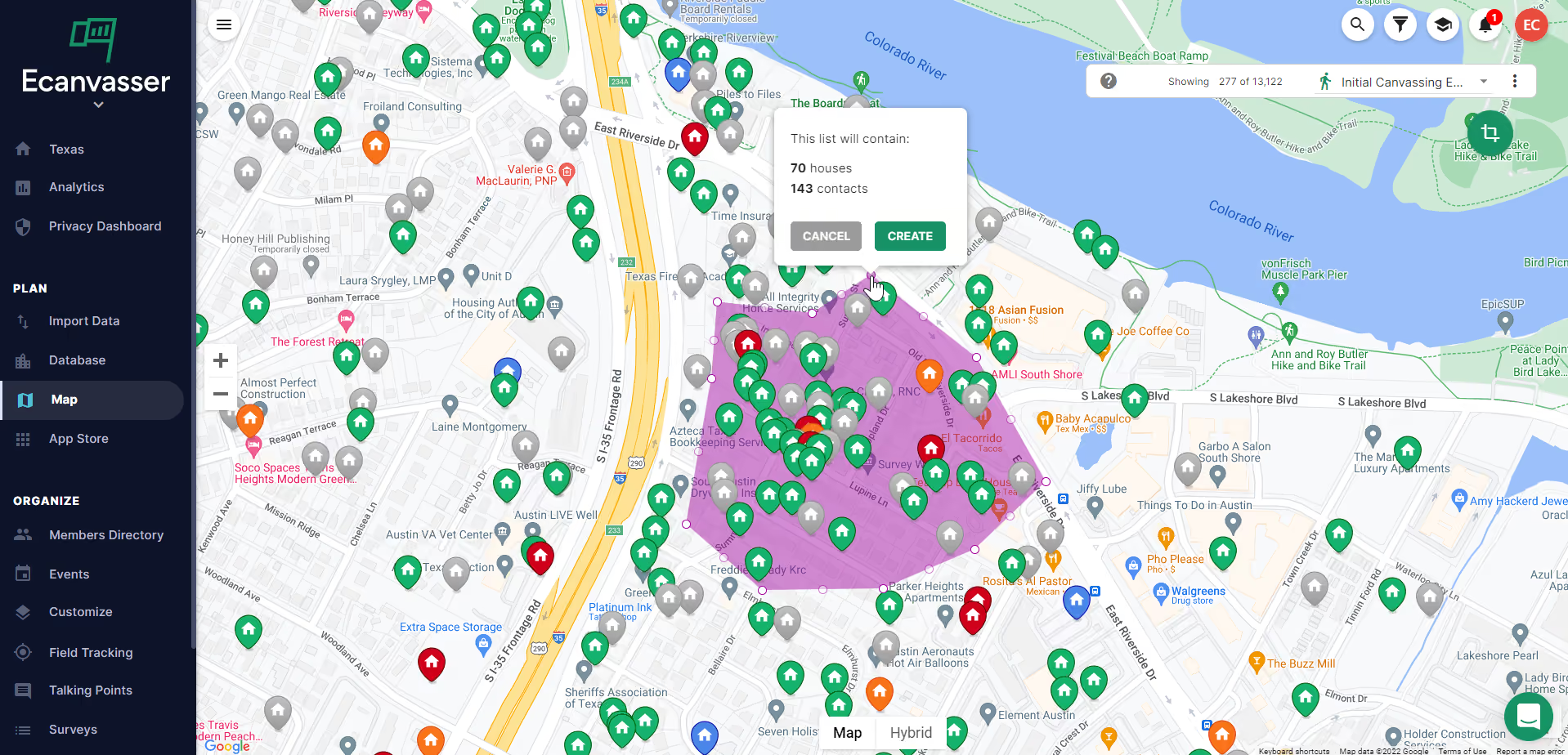
Today’s campaigns rely on mobile canvassing tools, real-time field reporting, centralized dashboards, volunteer management systems, and large-scale territory coordination to keep distributed teams aligned. Features like offline canvassing capabilities and distributed permission controls also help campaigns manage volunteers operating across different regions and leadership levels.
These systems are especially important for statewide coordinated campaigns, rapid-response mobilization efforts, issue advocacy coalitions, and volunteer-led voter outreach programs where communication and reporting need to move quickly.
Many of the systems first developed for political distributed organizing are now influencing other distributed field operations, including advocacy, nonprofits, and field outreach teams.
Many of the operational systems first developed through political distributed organizing are now influencing modern field operations far beyond campaigns. Territory management, real-time field visibility, volunteer coordination, and distributed reporting structures are increasingly being adopted by advocacy groups, nonprofits, and field sales teams managing large outreach operations across multiple regions. The same principles that help political campaigns scale local organizing efforts are now helping distributed field teams improve coordination, accountability, and visibility while maintaining strong local engagement.
Own your territories with Ecanvasser, the most scalable field sales and canvassing solution. Explore our pricing or book a demo.
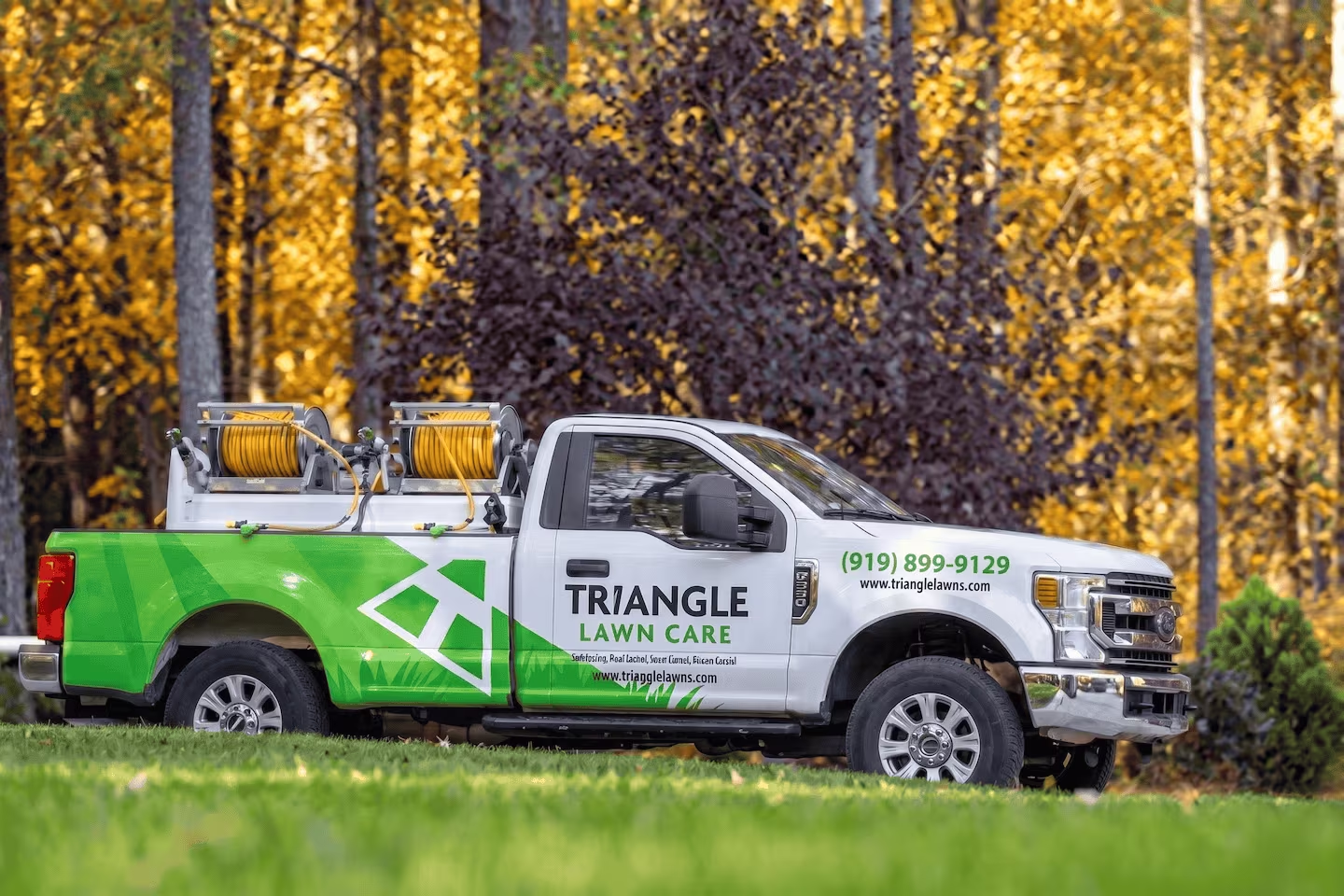
Ecanvasser’s real-time tracking completely transformed our field operations. Through the dashboard, we can plan efficient routes, customize interactions, and monitor our canvas stops in real time to support our team the second they need help. The "verified drops" feature adds an extra layer of accountability, while the reporting tools make it seamless to track hourly visit rates and optimize performance on the fly.




Scale your operations, empower your reps, and deliver predictable, profitable growth with Ecanvasser.
.avif)
.svg)