Short on time?
Pick an AI to summarise this article:
Pick an AI to summarise this article:



When field sales performance dips, the instinct is almost always the same: knock more doors, hire more sales reps, run more shifts.
More activity must mean more results, right?
Unfortunately not.
The teams that consistently outperform know how to get the most out of the volume they already have, before taking on more. They structure the work before a rep ever leaves the house, including which territories they're covering, in what order, and whether the route they're running is actually optimized for conversion or just geographically convenient.
I've seen this with teams of every size. The ones who can't explain why rep A converts at twice the rate of rep B are almost always looking at the wrong variable. The answer is usually territory and route structure, not talent or effort.
This guide covers the practical side of getting that right. I’ll dive into route-planning strategy, how to structure a rep's day, a real before-and-after comparison, and what to look for in software that supports the work.
Most field teams plan routes the same way: a manager sends a list on Monday morning, reps figure out the order themselves, and by Wednesday the coverage is patchy. Some streets have been knocked twice. Others haven't been touched at all. The plan falls apart because it wasn’t really a plan.
Three root causes come up again and again in real operations.
"Managers often believe that if they have good reps, they don't need tight oversight. In reality, this leads to missed areas, duplicated effort, and no clear picture of what's actually working." Aoife Murphy, Customer Success Manager at Ecanvasser
The fix is building a better system around the reps you have.
Route optimization only works if the territory underneath it is sound. A perfectly optimized route through the wrong area is still wasted effort, and this is the step most route planning guides skip entirely.
Before you touch route planning, three territory questions need honest answers.
Not every door on a street is a viable prospect. Lightning Fibre, a UK fibre broadband provider, needed canvassers to visit only homes on their serviceable network and avoid revisiting doors that had been knocked recently. Without clean territory data loaded into the system, reps knock doors that can never convert, which wastes time and creates a poor experience for the homeowner on the receiving end.
Assumed territories (where reps informally cover "their" area based on habit or memory) create invisible overlap. Two reps hitting the same street on the same day is one of the most common and avoidable inefficiencies in field sales. Explicit assignment fixes this: each rep has a defined turf, and the system enforces it rather than relying on reps to self-coordinate.
Over-large territories mean reps can't achieve meaningful coverage within a shift. Under-sized territories mean reps exhaust their doors and start padding routes with low-value stops. Territory sizing should be driven by density, drive time, and conversion potential—not by drawing lines on a map and dividing by headcount.
In my experience, the teams that struggle most with route efficiency almost always have a territory problem, not a route problem. Fix the territory structure first, and the routing becomes significantly easier to get right.
Once the territory is clean, route optimization can do what it's actually designed to do.
Route optimization shapes the entire working day. Here's what that looks like in practice, from start to finish.
The rep's route should be ready before they leave for the field, not something they're building in a car park at 8:30 am. The best-performing teams use the previous day's data to inform the next day's priorities: which doors need a follow-up, which areas haven't been covered yet, and where conversion rates tend to be highest at different times of day.
Priority tiers matter here because not all stops are equal. A route that puts the highest-value, highest-likelihood doors first—and fills the rest of the day with secondary stops—will consistently outperform one that's simply geographically efficient. Geographic efficiency is a starting point, not the goal.
Route optimization is often discussed in terms of cutting drive time, but for door-to-door teams, the bigger efficiency gain comes from reducing dead time—the gap between leaving one door and knocking on the next. That means walking routes sequenced block by block rather than zigzagging across streets, building density into the route so there are more doors per segment, and leaving enough buffer for conversations that run long without unraveling the rest of the day.
A rep who knocks 80 doors in a shift with smooth transitions between stops will consistently outperform one who covers the same geography but loses 20 minutes per hour to disorganized movement.
This is where most teams lose their data. Logging outcomes at the door before moving to the next stop produces clean, consistent records. Leaving it until 6 pm means working from memory, and memory produces approximations you can't act on or trust at scale.
[blockquote] "The moment data becomes consistent, it becomes valuable. The teams I work with simplify what's captured at the door: clear fields, consistent options, minimal free text. Once that's in place, the reporting becomes genuinely usable." - Aoife Murphy, Customer Success Manager at Ecanvasser
End-of-day review should take five minutes, not fifty. Managers with real-time dashboard access throughout the day don't need a lengthy debrief, because they already know what happened. The end-of-shift conversation becomes forward-looking: which areas produced Callbacks, which need revisiting tomorrow, and where to redeploy based on what the data showed.
The clearest way to understand what route optimization delivers is to look at the same team before and after. Same reps, same city, same product. What changes is the system around them.
A broadband rollout team, 15 reps, covering a mid-sized city. Lists go out by email on Monday morning. Reps plan their own routes each day based on whatever feels logical. No territory boundaries are enforced, and managers receive a spreadsheet update on Friday.
In practice, reps gravitate toward streets they know. Newer or harder-to-reach areas get skipped week after week. Double-knocking is common because no one knows which addresses a colleague visited yesterday. When performance dips midweek, managers have no way to see it until Friday, by which point two more days of the same patterns have compounded the problem. Data quality varies wildly between reps, making it nearly impossible to draw reliable conclusions about what's working.
The average doors knocked per rep per shift might be 50 to 60, and the conversion data is too inconsistent to act on.
“Struggling teams assign areas loosely, leading to overlaps, missed streets, and inefficiency. Scaling teams use clearly defined, controlled assignments that are often time-bound.” - Aoife Murphy, Customer Success Manager at Ecanvasser
Same team, same city, same reps, but this time…with structured territory assignment, time-bound list access, and route optimization built into the daily workflow.
Each rep works a clearly bounded area, with the system preventing overlap rather than relying on reps to self-coordinate. Routes are generated directly from their assigned contact lists, already optimized for density and drive time, so the rep opens the app and follows a sequence rather than making it up as they go. Outcomes are logged at the door, giving managers live visibility into coverage and activity throughout the day. Follow-up leads and high-value areas are automatically surfaced for the following shift.
The average doors knocked per rep per shift is 80 to 90. Conversion data is now clean, consistent, and actionable.
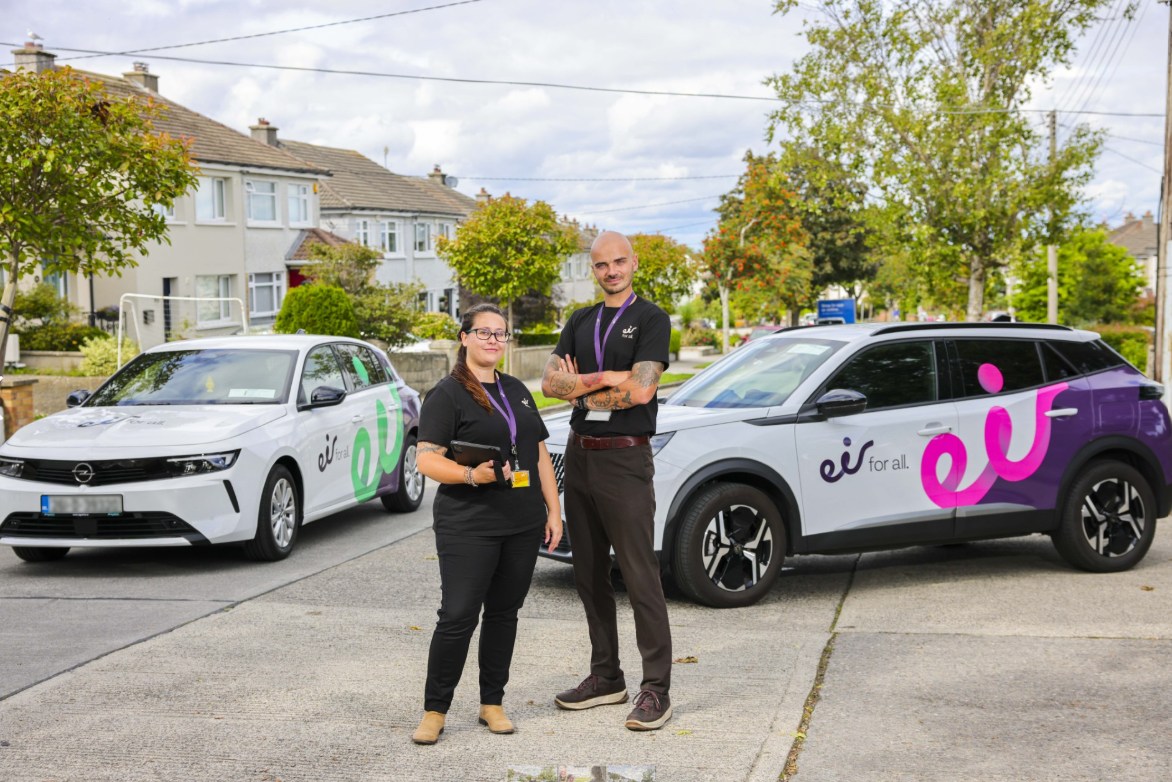
This isn't a hypothetical. eir, a national telecoms provider, ran a near-identical operation before adopting Ecanvasser. They had a 500+ rep field team managed on Excel, with reps knocking at the wrong times and getting drawn into customer support conversations instead of new sales activity. After implementing structured territory assignment and route optimization, daily productivity increased, and managers had visibility into progress every day rather than once a week.
Most buyers evaluate route planning software by looking at the feature list on the product page. The questions that actually matter are different — and most of them only become obvious after you've made the wrong choice.
This is the question most buyers forget to ask. Many route planning tools cap at 25 stops per route, which sounds reasonable until a rep covers a dense residential area and runs out of stops halfway through the shift. Tools that handle 200+ stops per route allow for genuinely ambitious territory coverage in a single sequence, without the rep having to manually build a second route mid-morning.
Field reps work in areas with patchy signal, and a tool that drops out when connectivity does is a liability. Genuine offline mode means full route access and outcome logging that work without a live connection and sync automatically when the signal returns.
Route optimization without territory management is planning without context. The best tools generate routes directly from assigned contact lists, so reps are always working from current, relevant data rather than a manually exported spreadsheet from last week that no longer reflects who's been visited.
The route should be the interface through which reps log outcomes at each stop, not just a navigation tool they use to get to the door. If logging requires switching apps or navigating to a separate screen, it won't happen consistently in the field, and the data that makes route optimization progressively better simply won't exist.
Route data that only the rep can see has limited operational value. Managers need to see planned routes against actual coverage, activity by rep, and outcome patterns across territories—in real time, without chasing anyone for an update.
The tools that are actually adopted in the field are the ones that first make the rep's job easier. If the routing interface requires multiple steps or feels clunky to use between doors, reps revert to Google Maps, and the data disappears entirely.
“Many field sales teams manage their operations with a mix of spreadsheets, paper maps, and sometimes separate CRM tools. This leads to data being misplaced or duplicated. It’s chaotic and impossible to stay on top of. Teams need field sales software with automated route planning based on strategic assignments so everyone’s efforts are coordinated, traceable, and measurable.” Aoife Murphy, Customer Success Manager at Ecanvasser
Route data is more than navigation history. When outcome logging is built into the route, and managers can see results at the territory and rep level, a feedback loop starts running that progressively improves the whole operation.
Which areas produce the most Callbacks? Which generates mostly Not Home responses? Route-level outcome data surfaces performance patterns that aggregate reports can't show, and allows managers to reallocate coverage dynamically rather than waiting for a quarterly review. Concretely, this means:
As territories get refined based on performance data, routes become shorter, denser, and more conversion-focused. The rep who spends less time walking between low-value stops has more actual conversations per shift, and more conversations are where the revenue growth comes from.
When managers can compare routes to outcomes—not just hours worked—the coaching conversation changes entirely:
A UK field marketing agency scaled from 80 to 300+ weekly sales over six weeks by doing exactly this, using territory data and route logging to identify high-value zones and concentrate effort there, rather than simply adding more reps.
Route optimization fails when the underlying habits are wrong. Software can't fix that. These are the five process mistakes we see most often.
Tie together the operational argument: route optimization isn't a feature that saves reps time. It's the foundation of an outside sales operation that gets better over time, because every shift produces data that improves the next one.
Ecanvasser's route planner handles up to 200 stops in a single route, generates routes directly from your territory lists, and feeds outcome data back into your dashboards in real time. Start a free trial or book a demo to see it in practice.

Ecanvasser’s real-time tracking completely transformed our field operations. Through the dashboard, we can plan efficient routes, customize interactions, and monitor our canvas stops in real time to support our team the second they need help. The "verified drops" feature adds an extra layer of accountability, while the reporting tools make it seamless to track hourly visit rates and optimize performance on the fly.




Scale your operations, empower your reps, and deliver predictable, profitable growth with Ecanvasser.