Short on time?
Pick an AI to summarise this article:
Pick an AI to summarise this article:


Let me guess…your cost per lead went up again this quarter and someone in your last leadership meeting suggested putting reps out on the street.
Now everyone is really worried.
Door knocking has a reputation problem it partly earned. It also has evidence behind it that almost nobody asking this question ever sees. Search "does door knocking work" and you get seven articles written for a solo real estate agent farming a neighborhood. That’s useless if you’re trying to decide whether to fund this channel and staff it.
So here is the answer: Yes, Door knocking works. What it does not have is a success rate you can look up, because the channel does not have one. Your operation does.
By the end of this, you will know whether it works for your business, and which number to check before you decide it failed.
Door knocking is effective, and it works at scale. Telecom, solar, home improvement, home security, and pest control teams all build acquisition channels on it, with budgets that keep getting renewed.
Now for the complication…
Two companies in the same category, same city, same price point, will get opposite results from the same channel. One builds a predictable revenue line. The other burns nine months and concludes the whole thing is dead. The variable is almost never the knocking.
The teams that write off door knocking have rarely run a real test of it. Three reps for six weeks, no territory structure, no way to tell a bad neighborhood from a bad rep. That is not a channel that failed. That is a channel nobody measured.
Ask a narrower question. Does door knocking work for a business like yours? Four things decide it:
Those four predict your outcome better than any benchmark will.
Something in your acquisition mix got worse. That is why this question is coming up again, right?
This is what we’re seeing with several industries right now:
You are not imagining the squeeze. Paid costs keep climbing while targeting precision falls. Privacy changes degraded the signal your campaigns run on. The platforms raising your bids are selling you more automation as the remedy.
Treat this as a portfolio problem. When a channel's cost per acquisition climbs past what your unit economics absorb, testing a different cost structure is rational. Door knocking's cost is almost entirely labor. Labor behaves nothing like auction-priced media as you scale. That is why the doorstep gets attractive at the moment your ad account stops cooperating.
A knock cannot be blocked, scrolled past, routed to a promotions tab, or swiped away. For anything needing explanation, a site assessment, or proof that a real local company exists, the doorstep does work an ad cannot.
Leaders underrate the second benefit. Reps come back with intelligence no dashboard produces. Which objection is spreading. Which competitor is discounting on which streets. If you are weighing the door against phone outreach, our guide to cold canvassing versus cold calling covers that comparison.
Every article on this question skips the figures. Here are some you can hold a pilot against.
Doors knocked is the number every pilot reports and the number that tells you the least. It measures effort. You are measuring whether a channel works.
Measure the chain instead: Doors knocked, conversations held, qualified appointments, closed deals. Each drop diagnoses something different.
Run a pilot without that chain instrumented, and it cannot answer your question. Our field sales ROI guide works through the maths.
Industry averages here are mostly guesswork. Verified customer outcomes hold up better.
A UK field marketing agency running fiber campaigns restructured its territories across 179 mapped areas. Weekly sales rose from a floor of 80 to 90 up to a consistent 300-plus over six weeks. Rep attrition fell to 23.1%, against a typical campaign rate of 32 to 34%.
Meanwhile, Triangle Home Services makes the cold start case. They had no door-to-door operation, needed one quickly, and had rejected competitor tools as overpriced for their stage.
"Ecanvasser gave us the power to scale our D2D outbound campaign to over 20,000 homes in just over a month, providing the perfect balance of real-time field tracking, powerful reporting, and budget-friendly scalability." — Alice Bridge, Web Developer, Triangle Home Services
Meet three or four of these and a properly run program is very likely to work. Meet one or none and it will not, however good your reps are.
A knock costs several minutes of a paid rep's time, plus the overhead of getting them onto the street. That cost only clears when the deal value absorbs it. Quick test: if a customer could have bought this from a landing page in ninety seconds, the doorstep is expensive. Home improvement sits comfortably above that line.
Density is the condition teams forget until the pilot underperforms. Reps in a tight suburb spend the shift knocking. Reps across a scattered territory spend it driving. Check the real geography of your serviceable addresses first. Rural programs still work when the tooling handles patchy connectivity, which is how broadband teams operate.
Residential categories work when the buyer is the homeowner and is reachable at home. It breaks in predictable places. High-rise and gated communities. Renter-heavy areas where a landlord decides. Any B2B category where the person answering is not the person deciding. Check the ownership profile of your target areas rather than assuming.
This condition decides whether a working program survives its first budget review. Fail it, and you cannot prove the channel worked even when it did.
You cannot grow and scale profitably without tracking your efforts. Channels that were genuinely working get killed every quarter. Not because the numbers were bad, but because nobody could produce them when the budget was decided.
Measurement means verified activity at the door, outcomes logged against addresses, and reporting a manager can pull without chasing anyone. Real-time field tracking is the mechanism.
If you tried this before and it failed, that experience was real. Here is where the failure usually happened.
Areas get handed out loosely. By email, by spreadsheet, in a car park conversation. Two reps work the same streets while whole blocks go untouched, and nobody notices for weeks.
Poor coverage is the visible symptom. The invisible one is worse: over-knocked households that now associate your brand with nuisance. Structured, time-bound assignment fixes both, and territory mapping is where that starts.
"One of the biggest upgrades is shifting from manual list sharing to clearly defined assignments by user and team and time window. It eliminates overlap and missed areas, creates accountability, and removes the admin of manually reassigning or cleaning up lists." — Aoife Murphy, Customer Success Manager, Ecanvasser
Reps have good conversations. The detail then lives in a notebook, a phone note, or nowhere. Contract end dates and callback times evaporate, and the team concludes the channel does not convert.
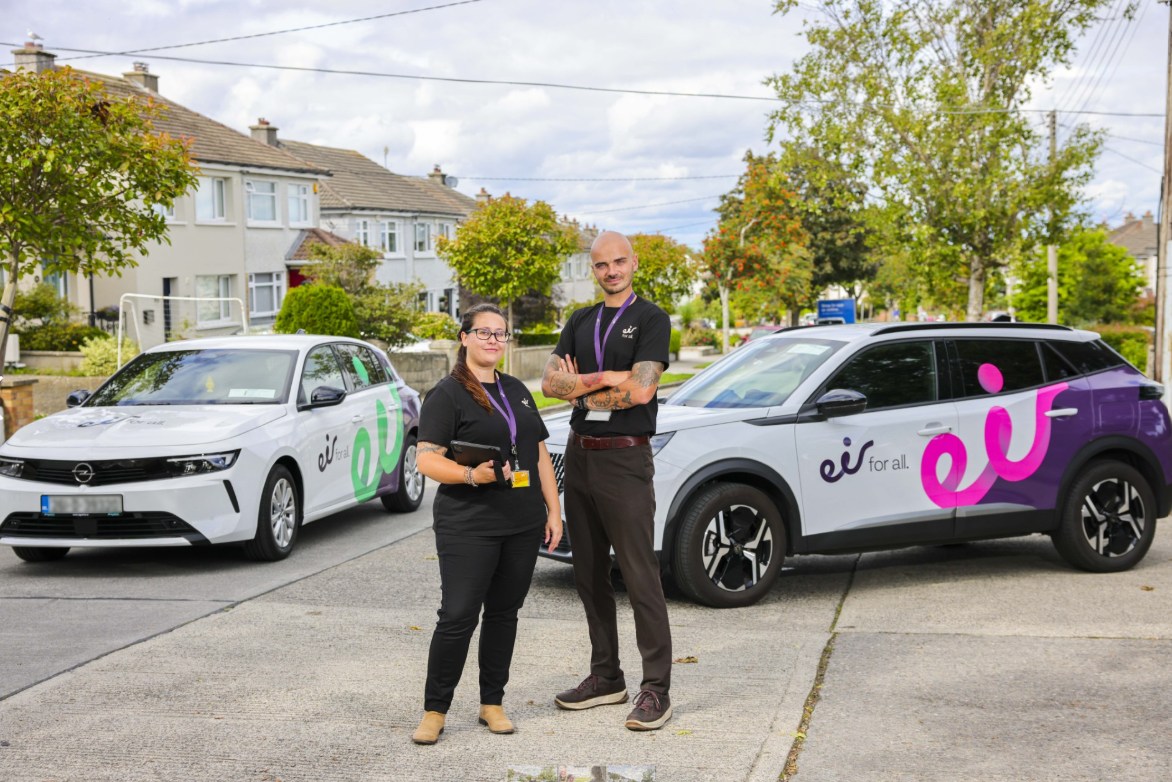
Eir, Ireland's largest telecoms provider, ran a 500-plus-person field sales team on Excel. Contract end dates lived in individual reps' notebooks and were routinely lost. The highest intent opportunities in the whole territory never got a second visit. After moving to centralized capture and structured territories, follow-up became systematic.
{{faq-1}}
{{faq-2}}
{{faq-3}}
The question was never whether door knocking works. It was whether it works for this business, run this way, measured well enough to prove it. Those are the questions worth taking into your next planning meeting. The channel is not the variable. The operation is.
If your four conditions look promising, the next thing to get right is how reps spend the shift. Our field sales prospecting playbook covers territory, routing, and follow-up in order.
When you want to see what measurement looks like in practice, book a demo or start a free trial.

Expect a low rate at the top of the funnel and high quality further down. Ranges vary enormously by category, ticket size and territory, so treat any single published benchmark with suspicion. Build your own baseline across a full pilot instead. Judge the channel on cost per acquisition against your other channels, not on close rate alone.
Yes, with conditions. The FTC's Cooling-Off Rule gives buyers three business days to cancel a sale of $25 or more made at their residence. You must supply the cancellation paperwork at the point of sale. Municipal solicitation permits vary by city, so check locally first. Rules covering door-to-door campaigning for political and advocacy work differ again.
Long enough to separate signal from weather, staffing and seasonality. That usually means a minimum of eight weeks with consistent coverage. Judging at four weeks tells you about your onboarding, not your channel. Decide your success criteria before you start, and write down the result that would make you stop.
Ecanvasser’s real-time tracking completely transformed our field operations. Through the dashboard, we can plan efficient routes, customize interactions, and monitor our canvas stops in real time to support our team the second they need help. The "verified drops" feature adds an extra layer of accountability, while the reporting tools make it seamless to track hourly visit rates and optimize performance on the fly.




Scale your operations, empower your reps, and deliver predictable, profitable growth with Ecanvasser.
.svg)