Short on time?
Pick an AI to summarise this article:
Pick an AI to summarise this article:



Many field sales teams spend their days knocking doors but struggle to generate consistent results. Activity is high, but outcomes are unpredictable. The issue isn’t effort. It’s how that effort is structured.
Door-to-door lead generation works best when it operates as a system. Instead of relying on volume alone, high-performing teams focus on generating better opportunities in the right places, with a clear process for capturing and progressing leads.
Lead generation is the foundation of field sales. It determines the quality of your pipeline and ultimately your revenue. Without structure, even strong activity fails to convert into results.
In this guide, we’ll break down how to generate leads door to door using a practical framework. You’ll learn how to build targeted lead lists, apply effective prospecting strategies, and manage leads from first conversation through to close.
Door-to-door lead generation is a field sales strategy where reps engage prospects in person to identify interest, qualify fit, and capture information for follow-up. The goal is to build a pipeline of opportunities that can be nurtured and converted over time.
This is different from traditional door-to-door selling, which focuses on closing deals during the initial interaction. Lead generation shifts the focus to qualification and next steps rather than immediate revenue. Instead of pushing for a decision at the door, reps aim to understand the prospect’s needs, confirm interest, and move them into a structured sales process.
That distinction matters. Lead generation is about creating pipeline, while closing is about converting it. In many industries, especially those with higher-value or more complex products, separating these stages improves both efficiency and results.
In modern field sales, lead generation is the first stage of a revenue system. It goes beyond collecting contact details. Strong teams focus on capturing qualified leads with clear intent, defined needs, and a realistic path to conversion.
Door-to-door lead generation continues to perform because it creates direct, high-quality interactions. When a rep engages someone in person, attention is focused, and the conversation is immediate. That changes how quickly interest can be identified and qualified.
Face-to-face interaction builds trust faster than most channels. Prospects can ask questions, react in real time, and make decisions with more confidence. Reps can also adjust their approach based on what they hear, which leads to more relevant conversations.
This creates a clear advantage:
As explored in our breakdown of why door-to-door sales still works, face-to-face interaction continues to outperform digital in key areas. Digital channels can reach more people, but often struggle to convert attention into action.
[Blockquote] Conversation quality drives pipeline quality.
That’s where efficiency comes in. Stronger conversations lead to better-qualified leads, which improves conversion rates downstream. Instead of relying on volume, door-to-door lead generation improves outcomes at the point of interaction.
Many teams struggle with door-to-door lead generation because the approach lacks structure. The result is high activity with inconsistent outcomes.
Without a clear targeting strategy, reps end up knocking doors at random. Territory selection is based on convenience rather than opportunity, which leads to low-quality conversations. When the right areas aren’t prioritized, even strong execution won’t produce strong results.
Teams often measure success by how many doors they knock on rather than the quality of the leads they generate. This leads to the collection of contact details without proper qualification. The pipeline fills with low-intent prospects, slowing follow-up and reducing conversion.
Leads are captured but not consistently progressed. Without a structured process, opportunities fall through the cracks.
When follow-up isn’t managed, even strong leads lose momentum.
Without tracking, managers don’t know what’s happening in the field. There’s no clear connection between activity and results, and performance issues go unnoticed. Decisions are based on assumptions instead of data.
Most teams generate activity, not pipeline.
Not all leads carry the same value. High-performing teams focus on generating leads that have a real chance of converting, rather than collecting as many contacts as possible.
A high-quality door-to-door lead typically has three key characteristics:
This is what separates qualified leads from unqualified ones. A qualified lead has enough context and intent to move forward in the sales process. An unqualified lead may show surface-level interest but lacks the urgency, authority, or alignment needed to convert.
That distinction has a direct impact on performance. High-quality leads move through the pipeline faster and convert at a higher rate. Low-quality leads require more follow-up, slow down the process, and often drop off before closing.
Bad leads reduce ROI more than low volume. Strong lead generation focuses on quality first, then scales from there.
Strong door-to-door lead generation comes from a clear, repeatable process. High-performing teams don’t rely on individual reps figuring it out as they go. They follow a structured approach that improves lead quality, consistency, and overall pipeline performance.
This step-by-step framework outlines how to generate leads door-to-door in a scalable way.
Everything starts with clarity on who you’re trying to reach. Without a defined target customer, lead generation becomes inconsistent and inefficient. Reps spend time speaking to people who are unlikely to convert, which lowers both productivity and morale.
Your ideal customer profile (ICP) should guide where reps go and how they approach conversations. It ensures that effort is focused on the right opportunities from the start.
Key elements to define include:
When this foundation is clear, everything else becomes easier. Conversations improve, qualification becomes faster, and lead quality increases.
Defining your target customer is the foundation of effective door-to-door lead generation.
Territory design is one of the most important door-to-door prospecting strategies. It determines where your team spends time, how many conversations they have, and the quality of leads they generate.
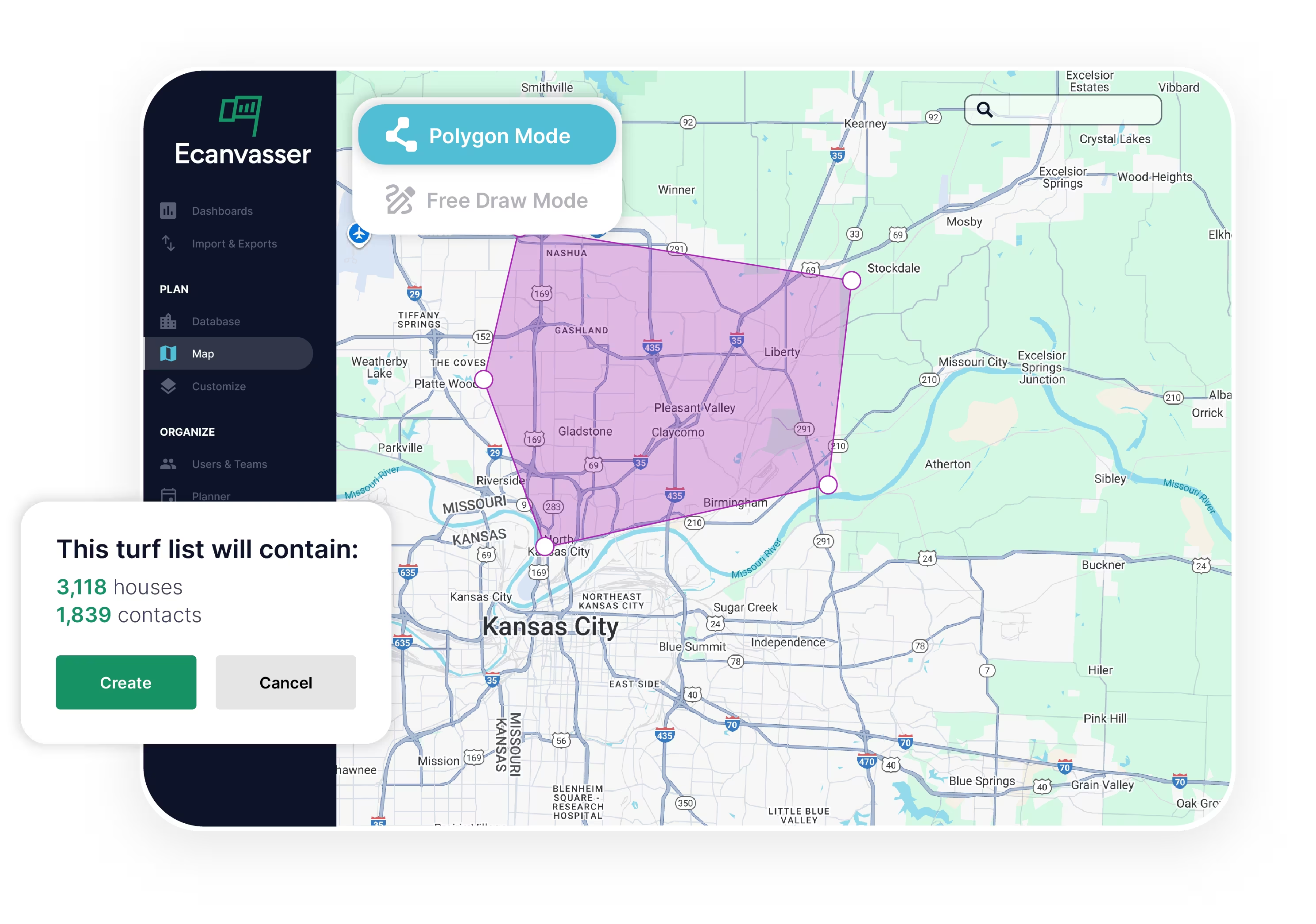
At a practical level, strong sales territory planning focuses on three things: density, demand, and efficiency. High-density areas increase the number of doors per hour. Demand ensures you’re speaking to people who are more likely to need your product. Efficiency keeps reps moving through areas in a structured, repeatable way.
This is where strategy turns into execution. Territory is not just geography—it’s your lead generation approach in action.
Using structured territory mapping ensures reps focus on the highest-value areas, avoid overlap, and maintain consistent coverage. It also allows teams to prioritize better-performing zones and continuously refine where they work.
When territory is designed well, every knock becomes more intentional—and every shift produces stronger pipeline.
Building a strong lead list is a critical step in door-to-door lead generation. When thinking about how to build a door-to-door lead list, the goal is to create a focused, high-quality set of prospects that reps can work efficiently.
There are three main approaches teams use:
The strongest teams don’t rely on one source alone. They start with data, then refine it in the field. Every interaction adds insight—who showed interest, who didn’t, and which areas perform best.
This is where list building becomes dynamic. Instead of working from a static list, teams continuously update and improve their data based on real outcomes. High-performing areas get more focus, while low-performing segments are deprioritized.
The best lead lists evolve daily. They reflect what’s actually happening in the field, not just assumptions made in advance.
Execution is where planning turns into real conversations. The focus here is on how reps approach the door, guide the interaction, and qualify interest in a short window. Strong execution prioritizes conversation quality over volume, because better conversations produce better leads.
A good interaction is simple and direct. Reps introduce themselves, explain why they’re there, and ask a question that invites engagement. For example, “We’re working with homeowners in this area to help reduce energy costs. Have you looked into that before?” or “We’ve been speaking with a few of your neighbors about upgrading their systems. Would that be something you’d consider?”
From there, the goal is to listen, identify need, and determine whether the prospect is a fit. Teams that follow consistent door-to-door canvassing techniques create more meaningful interactions and generate higher-quality leads.
Capturing and qualifying leads is where conversations turn into real opportunities. Every interaction should be logged in a structured way so nothing gets lost and every lead can be progressed.
Strong teams focus on capturing consistent, usable data at the door:
This structure ensures leads are not just collected, but clearly understood and actionable.
Every lead needs a clear next step. Without it, momentum is lost and the opportunity quickly fades. The goal at the door is to move the conversation forward in a defined way, whether that’s booking an appointment, scheduling a follow-up, or handing the lead to a closer.
Strong teams treat this as part of the conversation, not something decided later. When interest is there, the next step is agreed in the moment and captured immediately. This keeps the process moving and increases the likelihood of conversion.
With Ecanvasser’s Appointment scheduling, reps can book follow ups instantly and ensure no lead is lost. It also creates visibility across the team, so managers can see lead quality and track progress.
Strong door-to-door prospecting strategies focus on where reps go, when they knock, and how they prioritize opportunities. The difference comes from applying structure to each of these areas so effort turns into results.
Density increases the number of meaningful conversations in a shorter amount of time. When homes or businesses are close together, reps spend less time moving and more time engaging. For example, a rep working a compact neighborhood can knock twice as many doors in an hour compared to a spread-out rural area, which directly impacts lead volume and efficiency.
High-performing areas tend to stay high-performing. Revisiting zones where reps have already generated interest or leads often produces better results than constantly moving to new areas. For example, going back to a street where multiple homeowners showed interest last week can lead to stronger conversations and quicker conversions.
Timing has a direct impact on contact rates. Knocking when more people are available leads to more conversations without increasing effort. Early evenings or weekends often outperform mid-day slots, especially in residential areas.
Past performance should guide future activity. Reps and managers can use data to identify which areas, property types, or segments generate the best leads. Improving efficiency through better route planning for field sales helps reps reach more high-value prospects and stay focused throughout the day.
Generating leads is only part of the process. What happens after capture is what determines whether those leads turn into revenue. Strong field sales lead management connects every interaction to a clear pipeline, so nothing stalls or gets lost.
In practice, the difference is obvious. You’ll see one rep generate solid leads but never follow through, while another turns similar conversations into booked appointments and closed deals. The gap comes down to structure.
The first few minutes after a conversation matter. High-performing teams treat lead capture as the start of the sales process, not the end.
Follow-up is where most deals are won. Speed keeps the conversation relevant, and consistency keeps opportunities moving. A prospect who showed interest today is far more likely to engage tomorrow than next week. Teams that follow up quickly and consistently build stronger pipelines and higher conversion rates.
Clear ownership keeps leads moving. In many teams, setters focus on generating and qualifying leads, while closers take over to convert them. When that handoff is defined and tracked, the process becomes more efficient and predictable.
A structured system, supported by a field sales app, ensures leads are captured and followed up consistently.
Measuring performance is what turns door-to-door lead generation into a system you can improve. You’ll often see teams tracking how busy reps are, but struggle to explain why results vary. The difference comes from tracking the right metrics and understanding how they connect.
At a basic level, performance should be measured across the full funnel:
These numbers tell a story. For example, a rep knocking 100 doors but having only 10 conversations has a targeting or timing issue. Another rep generating 15 leads but closing none may be qualifying too loosely.
To go deeper, teams should also track leads per rep per day and cost per lead. These metrics connect activity to efficiency and give a clearer view of performance at scale.
Looking at the full picture, supported by broader field sales performance metrics and tied back to field sales ROI, helps teams understand where to adjust and how to improve consistently.
Improving efficiency in door-to-door lead generation comes down to getting more value from the same level of effort. You’ll often see two reps knock a similar number of doors, but one consistently generates stronger leads. The difference is how they target, engage, and qualify.
[Blockquote] Efficiency drives performance more than volume.
Strong teams focus on a few key areas:
These three factors determine how much of your activity turns into usable pipeline.
Beyond that, efficiency improves when wasted movement is reduced. Reps who move through territories with a clear plan spend more time talking to prospects and less time navigating between low-value areas. Over time, this adds up to significantly more opportunities per day.
Increasing conversion is the final piece. When conversations are stronger and leads are better qualified, more of them turn into revenue.
Effective door-to-door lead generation relies on having the right tools in place. When teams move from manual processes to a structured system, performance becomes more consistent and easier to improve.
At a practical level, strong setups include a few core capabilities:
These features work together to create a connected system. Instead of disconnected tools and delayed updates, everything is captured and accessible in one place.
That shift matters. Manual processes rely on rep memory, spreadsheets, and inconsistent tracking. A structured system connects every stage of the workflow—from doors knocked to conversations, leads generated, and revenue closed.
When those pieces are aligned, lead generation becomes predictable, measurable, and scalable.
Knowing when to focus on lead generation versus closing at the door is something most teams learn through experience. You’ll often see reps try to close everything on the spot, only to miss better opportunities that needed a different approach.
In general, the decision comes down to deal size and sales cycle. High-ticket products or services, like solar or home improvement, benefit from lead generation. The conversation at the door is used to qualify interest and book the next step. A rep might say, “It sounds like this could be a fit. Let’s get a specialist out to walk you through the details.” That keeps momentum while giving the prospect time to make a considered decision.
For lower-ticket or simpler offers, direct sales can work well. If the value is clear and the decision is straightforward, closing at the door shortens the cycle and increases efficiency.
Sales cycle length also plays a role. Longer cycles need structured follow-up, while shorter ones can convert immediately.
The best teams don’t choose one approach. They use both. They generate leads where it makes sense, close when the opportunity is there, and build a system that supports both paths.
Lightning Fibre needed a more precise way to run door-to-door lead generation. Without clear visibility, reps risked knocking non-serviceable homes, repeating visits, and missing the right timing for follow-ups.
By introducing structured territories and real-time tracking, the team focused only on serviceable properties and avoided duplicate activity. This improved lead quality, reduced wasted effort, and made field activity more consistent.
The result was a more efficient, data-driven approach to generating leads that directly supported sales growth.
As their Head of Marketing, Emma Pearce, shared: “We love real-time tracking and reporting so we know that we only knock on the doors of the houses we can service.”
Forged from the demands of large-scale political canvassing, Ecanvasser is designed to help field sales teams scale quickly with structured systems, clear visibility, and consistent performance across territories.
Ready to drive better results? Manage your door-to-door efforts with Ecanvasser. Explore our pricing or book a demo.
Ecanvasser’s real-time tracking completely transformed our field operations. Through the dashboard, we can plan efficient routes, customize interactions, and monitor our canvas stops in real time to support our team the second they need help. The "verified drops" feature adds an extra layer of accountability, while the reporting tools make it seamless to track hourly visit rates and optimize performance on the fly.




Scale your operations, empower your reps, and deliver predictable, profitable growth with Ecanvasser.
.svg)