Short on time?
Pick an AI to summarise this article:
Pick an AI to summarise this article:



Most field sales training programs are built for a rep who'll stick around. Someone who has time to absorb weeks of product content, shadow experienced colleagues, and gradually build confidence before their first real conversation.
Door-to-door field sales doesn't work that way. Turnover is high, so reps need to be productive within days. Otherwise, hiring is an ongoing loss.
The skills that actually matter in the field, like handling objections at the door, logging outcomes correctly, and managing a territory efficiently, are learned by doing, not by sitting in a room.
The training programs designed for stable, office-based sales teams consistently underserve field sales managers. The frameworks assume time and stability that most field operations don't have.
This guide covers what effective field sales training actually looks like. I show you how to structure the ramp, how to coach from live data, and how to build a system that holds up regardless of how often the team changes.
Field sales training has different constraints from inside sales training. The learning environment, the timeline, and the failure modes are different. Applying an inside sales framework to a field team is one of the most common reasons training programs underdeliver.
Three distinctions shape everything.
Product knowledge absorbed in a training room doesn't stick until a rep has had a real conversation at a real door. The most effective field sales training front-loads the minimum needed to get started, then builds knowledge through coached field experience. Loading the early days with content before a rep has any context just delays their first productive shift.
An inside sales rep who takes three weeks to get productive has cost three weeks of salary. A field sales rep in the same situation has cost three weeks of territory coverage. And by then, many reps have already decided the role isn't right for them. Speed to first productive shift is as much a retention strategy as a training goal.
In operations where reps cycle through regularly, training can't depend on experienced reps passing knowledge down informally. The process needs to be:
"The teams that train well build the process into the platform from day one. The teams that struggle rely on a manager or a senior rep to carry that knowledge. When that person is unavailable, the whole thing breaks down. We see it consistently in the deals we work on." Thomas Hollingsworth, Account Executive, Ecanvasser
Effective field sales training runs in three phases, each with a distinct goal. The mistake most managers make is running all three simultaneously. This produces information overload, slow ramp times, and early drop-off before a rep has generated any return.
The goal of phase one is field-ready. Reps leave with exactly what they need to knock on doors and nothing else.
What to cover in phase one:
Deeper product knowledge, advanced objection handling, and company history all belong in phase two. Every additional topic added to phase one is a reason a rep spends another day not generating field activity (and another day closer to deciding the role isn't for them).
Phase two is where real training happens. The rep is in the field, generating real data, and the manager is using that data to coach in real time.
Daily coaching in phase two should be brief and specific. Ten minutes reviewing dashboard data—like coverage rate, contact rate, and outcome distribution—produce more useful coaching than a general debrief. The data tells the manager exactly where to focus. A rep with high door knock counts but a low contact rate has a timing or targeting problem. That's a different conversation than a rep with strong contact rates but weak conversion, who likely needs script coaching.
Waiting for end-of-week summaries to identify these patterns means five days of compounding before anyone intervenes.
By the end of week one, a rep's GPS data, contact rate, and outcome distribution create a coaching baseline. Phase three involves comparing the baseline to team benchmarks and identifying specific development priorities.
This is where field sales coaching software changes what's possible. When managers can benchmark rep performance against territory-level data—not just general expectations—coaching conversations become specific, evidence-based, and actionable. Reps understand exactly what improvement looks like and why. The Ecanvasser field sales app surfaces this data in real time, so phase three coaching starts the moment week one data comes in:
Door-to-door sales training has a different set of requirements from B2B field sales. The sales cycle is short, often a single conversation. The physical environment is variable. And the rep is making dozens of independent decisions throughout each shift about how to manage their time, territory, and energy.
Generic field sales training consistently misses three things that door-to-door specifically requires.
Door-to-door reps need a script they can follow in a real conversation, not just recite from memory in a training room. That means training in how to open, handle early brush-offs, read buying signals quickly, and close without losing momentum in the conversation. The best door-to-door training develops this through supervised field time rather than role-play. The real environment—with real people, real distractions, and real objections—is the best teacher available. Role-play produces polished recitation. Supervised field time produces adaptable reps.
Door-to-door is physically and psychologically demanding. A rep's conversion rate at door 10 of the day and door 60 of the day should be comparable, but for most new reps, it isn't. Training should address how to maintain energy and focus across a full shift. Managers should also track outcome patterns by time of day to identify when individual reps begin to lose effectiveness. That data often reveals more about a rep's development needs than conversion rate alone.
Double-knocking, meaning visiting addresses that have already been worked, is one of the most common and most preventable inefficiencies in door-to-door operations. Training should establish from day one that territory discipline is non-negotiable. The platform should enforce it automatically, using GPS-verified visit logs that make overlaps visible, rather than relying on reps' memory to prevent them.
Field sales coaching fails when it's based on end-of-week summaries, general impressions, and manager intuition. By the time a weekly report surfaces a problem, the behavior has already been repeating for five days. The reps who improve fastest are the ones whose managers catch issues on day two, not day seven.
Here's what effective coaching actually looks like across three time horizons.
Daily coaching doesn't need to be long. Five to ten minutes reviewing dashboard data at the start or end of each shift is enough to surface specific patterns and inform targeted conversations.
Ask yourself as a manager:
This data-first approach transforms the coaching conversation. Instead of "how did it go today?", you're saying: "Your contact rate in Zone B is running 12% below your Zone A rate. Walk me through how you're working that area." That's a specific, actionable conversation. The rep knows exactly what you're looking at and exactly what needs to change.
That level of specificity is only possible when managers have live dashboard data rather than reps' self-reports.
Weekly coaching zooms out from daily patterns and looks at trends. Is the rep's conversion rate improving as they gain experience? Is territory coverage becoming more systematic over time? How is the outcome distribution shifting? Are callbacks converting, or stacking up?
Weekly reviews should also include script coaching. Observing or joining a rep for even twenty minutes in the field gives managers the most valuable coaching material available: what the rep actually says at the door, not what they report saying in a debrief. The gap between the two is often where conversion problems live.
One practical technique that works well is to review outcome logs from doors where a rep logged "not interested" and probe what actually happened in the conversation. Reps who are losing conversations early often log "not interested" as a catch-all. A manager who digs into that pattern can identify whether the rep is losing the conversation on the open, the value proposition, or the close. Then, they can coach specifically on the right thing.
By day 30, a rep's data tells a story. Their GPS trail shows whether they're systematic or opportunistic in how they work a territory. Their contact rate benchmarked against comparable territory data shows whether they're performing above or below what the territory should realistically produce. Their outcome distribution shows whether they're qualifying leads effectively or defaulting to "callback" to avoid a difficult conversation.
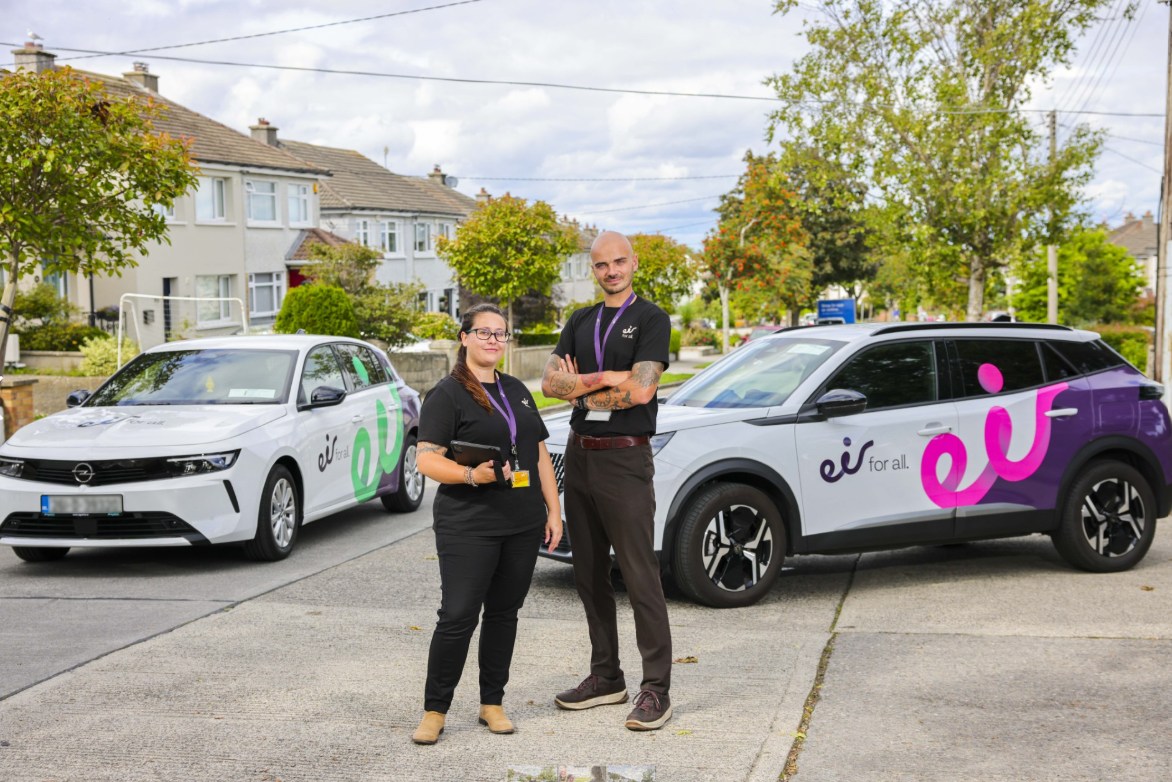
eir, one of Ireland's largest telecoms providers, made exactly this shift with its 500-plus-rep field team. Moving from end-of-week summaries to live dashboard data meant managers could identify which reps were underperforming in specific zones—and intervene while the pattern was still correctable, rather than discovering it in a Friday report.
In high-turnover operations, individual coaching relationships are hard to sustain. A rep might be with the team for four weeks. The coaching system has to produce value in that window.
That means focusing on behaviors that improve immediately. Coverage discipline, logging accuracy, and contact rate are all coachable in the short term and directly linked to conversion performance. Advanced objection-handling and closing techniques develop over months. They're secondary to getting the fundamentals right in a rep's first few weeks.
The goal in high-turnover coaching isn't to develop a rep into a top performer over six months. It's to get them to a consistent standard quickly, extract useful territory data from their activity, and use that data to make the next rep's onboarding even more targeted.
"When managers start coaching from dashboard data, the conversations become specific. They're showing reps exactly where coverage dropped off and what the contact rate looked like by zone. That specificity creates rapport and trust. Reps know exactly what to fix and why, and the improvement happens faster." Aoife Murphy, Customer Success Manager, Ecanvasser
A field sales training program that relies on managers' time, verbal knowledge transfer, or senior-rep mentorship doesn't scale when reps cycle through regularly. Every time someone leaves and a new person joins, the process restarts from scratch. Management capacity goes with it. If three reps join in the same week, a manager-dependent process results in three parallel onboarding conversations rather than a single system running in the background.
The teams that solve this problem don't work harder at training. They build a system that runs without them.
Three things make a training system durable enough to survive high turnover.
When scripts are accessible in the same tool reps use to log outcomes, new reps don't need to memorize everything before their first shift. The script is available in the field as a reference, reducing cognitive load during the first few shifts and producing more consistent conversations than memory-dependent delivery.
Think about what this means in practice. A rep on their second day, standing at a door, facing an objection they haven't encountered before, can pull up the relevant talking point in seconds. That's a completely different experience from trying to recall what they heard in a training session 48 hours ago. The script becomes a safety net rather than a memory test, and safety nets produce more confident reps.
When coaching is grounded in dashboard data, it doesn't require a manager to be physically present. A manager reviewing GPS coverage, contact rate, and outcome data can deliver specific, useful coaching from the office across multiple reps simultaneously, without check-in calls or end-of-day debriefs that eat into everyone's time.
This is the difference between a coaching process that scales and one that doesn't. A manager with five new reps joining the same week can review all five dashboards in twenty minutes and have five targeted coaching conversations. The same manager trying to observe all five reps in the field is stretched beyond what's practically possible.
Performance milestones, coaching notes, and development priorities should live in the platform, not in a manager's notebook. When a rep leaves and a new one joins the same territory, the historical data from that territory informs how the new rep is trained:
That territory intelligence doesn't walk out the door when a rep leaves. It stays in the system, making every subsequent rep's training more targeted from day one.
For a deeper look at how to structure the onboarding process that feeds into this system, see our guide to onboarding sales reps.
The right software makes the difference between coaching that happens after the fact and coaching that changes outcomes while operations are still running. Here's what to actually evaluate.
The most useful field sales coaching software surfaces the metrics that indicate coaching opportunities without requiring the manager to look for them. The right tool shows you:
If a manager has to build a report to find a coaching opportunity, the tool is too slow. By the time the report is ready, the window for timely intervention has closed.
Coaching based on self-reported activity is coaching based on incomplete information. GPS-verified visit logs give managers a factual foundation for every coaching conversation, You can confirm territory coverage, identify timing patterns, and flag gaps between what a rep reports and what the data actually shows. That factual foundation fundamentally changes the quality of coaching conversations. The manager and rep are looking at the same data, which removes defensiveness and focuses the conversation on what to do differently.
Coaching without context produces generic feedback. A tool that benchmarks rep performance against territory-level data—accounting for density, lead quality, and coverage history—gives managers fair, specific points of comparison.
A rep generating a 15% contact rate in a dense urban territory is performing differently from a rep generating the same rate in a sparse rural territory. Treating those numbers identically produces unfair assessments and misdirected coaching effort. Territory-level benchmarking surfaces the real signal.
Coaching data is only as good as the logging that produces it. If outcome logging is slow or complicated, reps stop doing it consistently. Then, the coaching signal disappears. The interface needs to work:
Ecanvasser's dashboards and reporting give managers real-time visibility across all of these dimensions: territory coverage, contact rates, outcome distribution, and GPS-verified activity.
In working with field sales teams across industries, I've seen the same training mistakes recur.
Most of them are avoidable once you see them for what they are.
Get any one of these wrong consistently, and the downstream effects show up in drop-off rates, coaching conversations that go nowhere, and training effort that has to be repeated every time the team changes.
{{faq-1}}
{{faq-2}}
{{faq-3}}
{{faq-4}}
{{faq-5}}
Field sales training works when it's designed around the real constraints of the job, like high turnover, fast ramp requirements, and a learning environment that is the field itself, not a training room.
The managers who build high-performing door-to-door teams treat training and coaching as a connected system. Training gets reps into the field fast. Live data makes coaching specific. And a platform that supports both ensures the system holds up regardless of how often the team changes.
That's the shift worth making. From program to system. From intuition to data. From rebuilding every time someone leaves to having something that runs without you.
Ecanvasser gives field sales managers the tools to train reps faster and coach from live data.
Get territory assignment, in-app scripts, real-time dashboards, and GPS-verified activity tracking all in one platform. Book a call or start a free trial to see it in action.
For door-to-door and territory-based field sales, the target is to be field-ready within one to two days: script-confident, territory-familiar, and logging correctly. Deeper product knowledge and advanced objection handling develop through coached field experience over the following two to four weeks.
Coverage discipline, logging accuracy, and contact rate. These three metrics show whether a rep is working their territory systematically, capturing usable data, and generating real conversations. They're all coachable in the short term and all directly linked to conversion performance as the rep develops.
Daily for new reps in their first two weeks. Brief data reviews rather than lengthy debriefs. Weekly for established reps, using dashboard data to identify trends. Monthly for performance benchmarking against territory and team averages.
Build the training into the platform rather than relying on the manager or senior rep's knowledge transfer. When scripts, territory assignments, and logging instructions are accessible in the app, training quality stays consistent regardless of how frequently reps cycle through.
Ecanvasser’s real-time tracking completely transformed our field operations. Through the dashboard, we can plan efficient routes, customize interactions, and monitor our canvas stops in real time to support our team the second they need help. The "verified drops" feature adds an extra layer of accountability, while the reporting tools make it seamless to track hourly visit rates and optimize performance on the fly.




Scale your operations, empower your reps, and deliver predictable, profitable growth with Ecanvasser.