Short on time?
Pick an AI to summarise this article:
Pick an AI to summarise this article:



You need five reps by spring, so you grab an outside sales template and swap in your company name. It asks for a bachelor's degree and Salesforce experience. It promises "unlimited earning potential" and talks about forecasting sales and attending trade shows. Then it lands in front of someone who'll spend six hours a day on doorsteps.
That posting does two kinds of damage. It pulls in candidates who pictured a desk and a company car, and it misleads the people who'd actually be good at the door. Both leave early. You find out around week two, after you've paid for their training.
This field sales job description guide fixes the problem from the hiring side. You'll get a clear definition of the role and the four numbers that belong in every posting. You'll also get a template to copy today, and the reason an honest posting keeps more of the reps you hire.
Who do you picture when you write "field sales rep"? A field sales representative sells in person, at a prospect's home or business, across a territory you've assigned. They have the conversation, handle the objection, and log the outcome before walking to the next stop. For the longer version, start with what field sales actually means.
Candidates search for this job under several titles: field sales rep, outside sales rep, door-to-door sales rep, and in some teams, canvasser. Use the title your market uses in the posting, then mention a second one in the opening line so both searches find you.
Draw one boundary early. If you're staffing a political campaign's field operation, the role and the posting look different. Everything below is for the commercial rep.
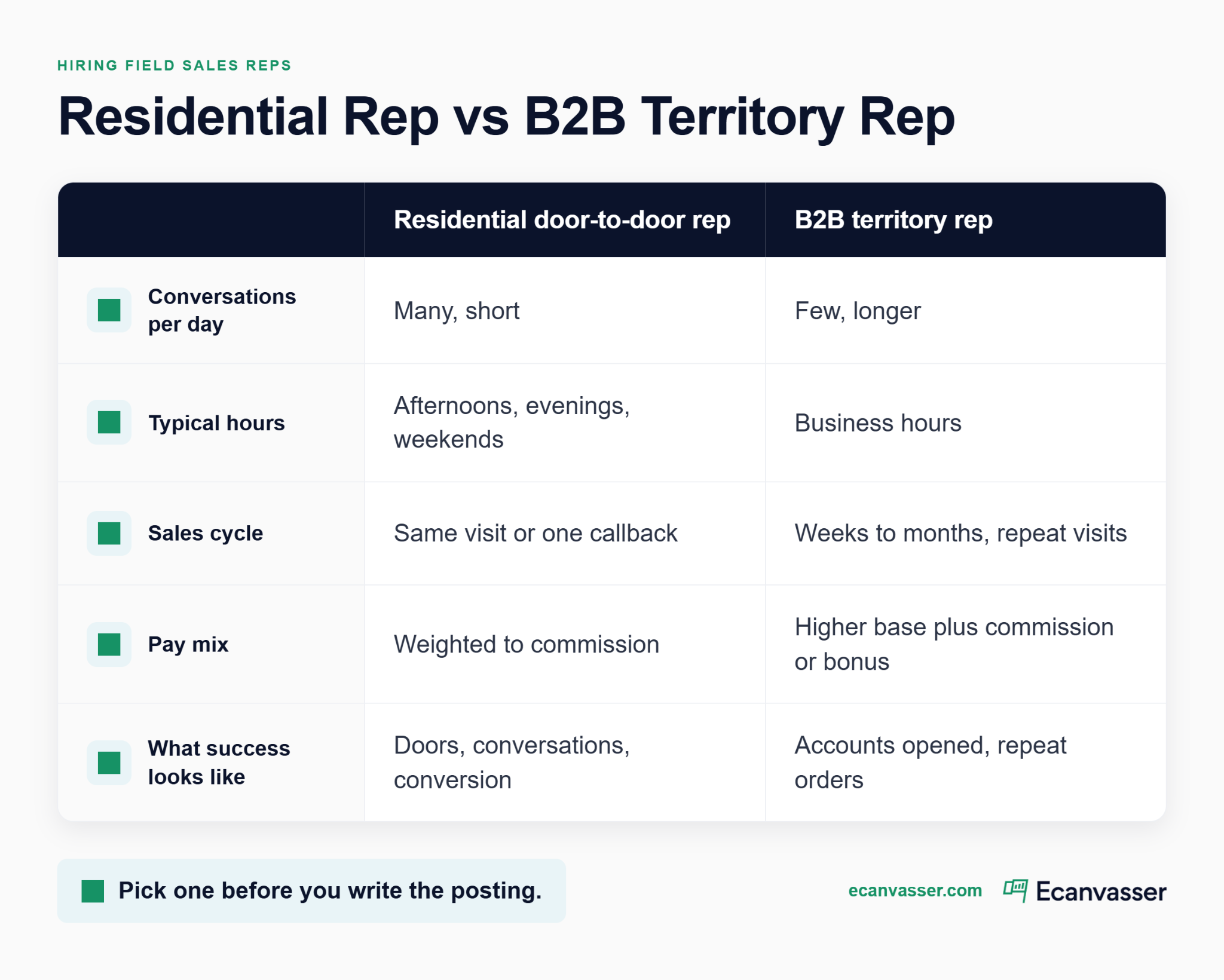
One job title covers two different jobs, and a blurred posting attracts the wrong one.
A residential door-to-door rep works volume. Picture dozens of short conversations a shift, plenty of closed doors, and hours that run into evenings and weekends, when homeowners are in. Pay leans toward commission.
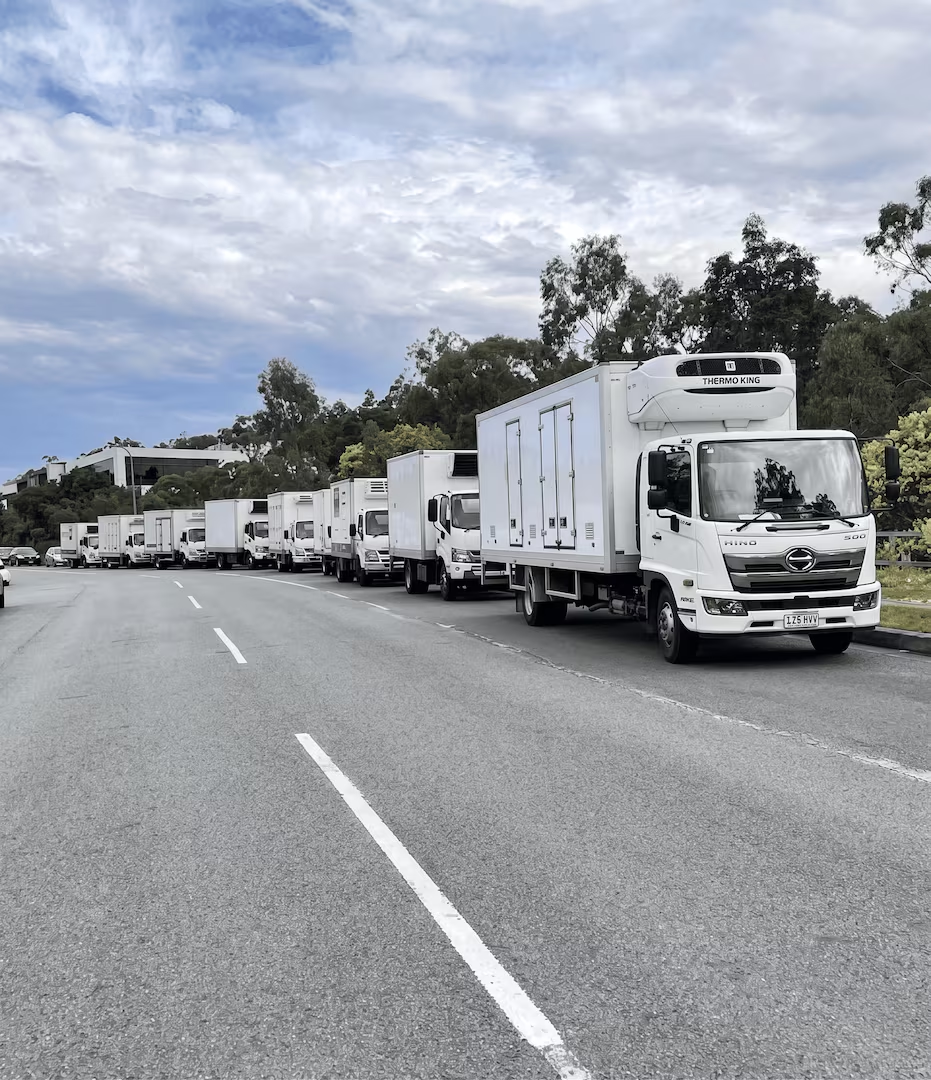
A B2B territory rep works accounts. Visits are fewer and longer, relationships repeat, and a sale can take weeks. HTC Foods is a good picture of this version. Their reps visit restaurants and food businesses across Queensland, selling recurring supply contracts, with commercial accounts pinned as locations rather than homes.
Pick one before you write a single bullet. Responsibilities, requirements, and pay all follow from that choice.
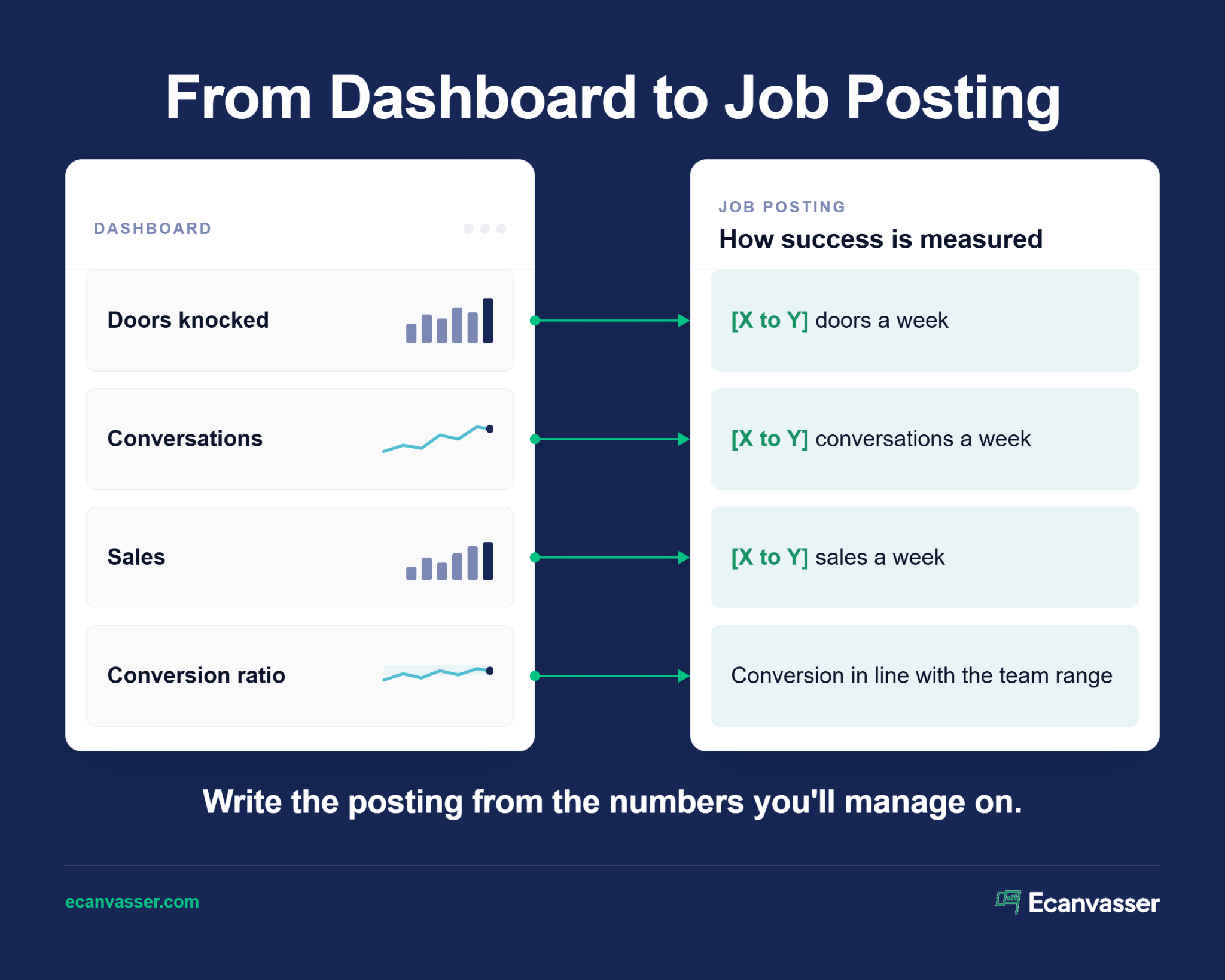
You'll judge this rep on four numbers from their first week. So why aren't those numbers in the posting?
Write the job description backward. Decide what you'll measure, then describe the job that produces it. For a door-to-door role, that means doors knocked, conversations, sales, and the door-to-close ratio that ties them together. For a B2B role, swap doors for account visits.
Put those four figures in a "How success is measured" block, with weekly ranges pulled from your own tenured reps. An industry average tells a candidate nothing about your turf. Your team's real range shows them exactly what a good week looks like.
When I review a job posting for a field team, I read the measurement section before the responsibilities. If the posting can't tell a rep how they'll be judged, the manager usually can't either.
"The daily, weekly, and monthly reports save me a tremendous amount of time. We get monthly reports back with the number of doors knocked, the number that answered, and the number of sales. That allows me to look at the conversion ratios and know how the team will perform based on previous data." Neil R, Head of Residential Sales
Once the rep starts, the same numbers live on your scoreboards and dashboards. The candidate reads them in the posting, then meets them again on day one.
Here's the template, built one block at a time. Copy it, replace every bracket, and delete anything that isn't true for your team. The brackets matter more than the prose, because the numbers are what make it honest.
Your summary should describe the shift, not the company mission. Name the territory, the hours on doors, when the day starts and ends, and roughly how many conversations a good shift includes.
Then name the uncomfortable parts. Most doors won't open. Most conversations end in a no. The work runs into evenings, because that's when people are home, and light drizzle doesn't cancel it.
Does that scare people off? Some of them, and that's the point. A candidate who opts out at this paragraph was going to opt out in week one.
For a B2B role, replace doors and evenings with visit counts and drive time.
Keep the list short. Every line should describe something you can check on a dashboard or see on a ride-along:
Leave out "forecast sales," "attend trade shows," and "develop out-of-the-box strategies." Those lines come from B2B account templates, and a residential rep will never do any of it. They also tell an experienced door-to-door rep that whoever wrote the posting has never worked a street.
For a B2B role, add account reviews and reorders.
This is where good field reps get filtered out. The usual culprits are a bachelor's degree and "Salesforce or CRM experience," and neither predicts success at a door.
Even for B2B sales reps, the U.S. Bureau of Labor Statistics says a high school diploma is generally enough to enter roles selling nontechnical products.
Ask for what actually predicts performance: comfort talking to strangers, the resilience to hear no and knock the next door, stamina for long shifts, and basic confidence with a smartphone. The field sales app handles the logging, so you can teach the software in an afternoon.
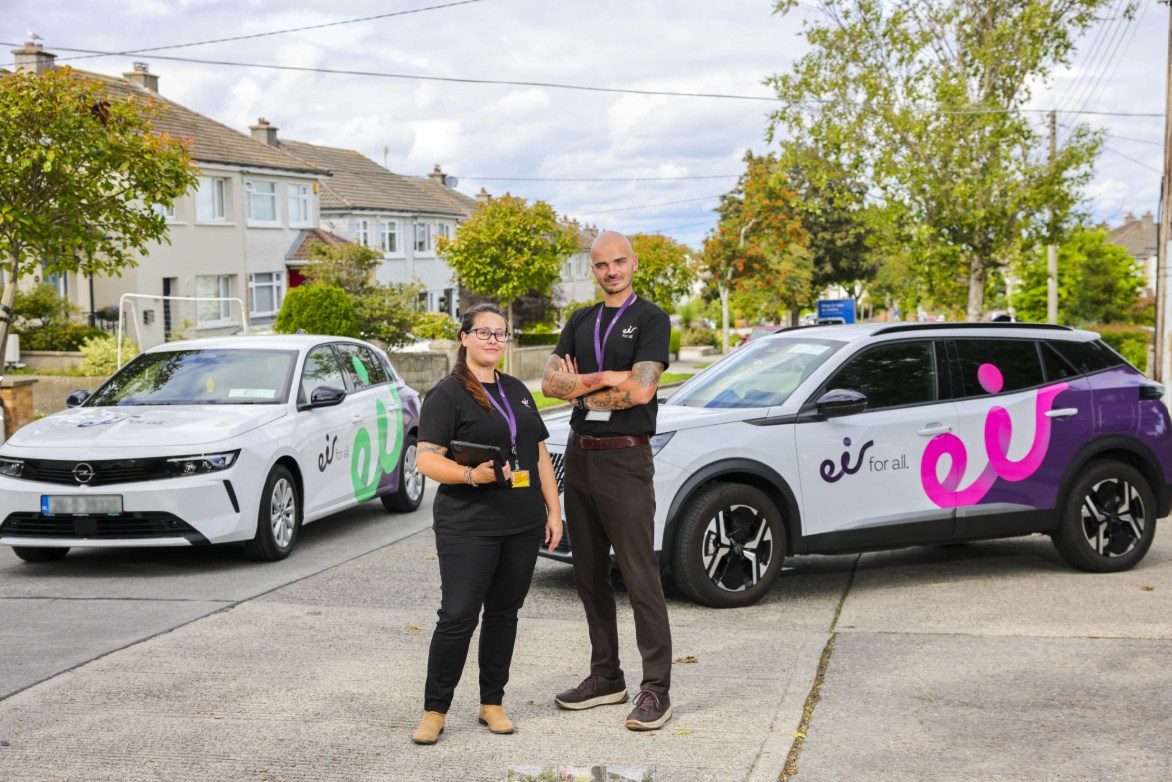
"You don't need to be a whiz kid to use it, so we have a much better buy-in than we would have had on previous systems." Alan O'Reilly, Head of Sales Optimization, eir
Experienced reps read this block first. Your copied template probably skipped it. State the structure: commission-only, base plus commission, or a draw against commission. Say what triggers payment (a sale or an install) and whether chargebacks apply. Then give a first-year range from your own reps.
Candidates now expect it. As of February 2025, 60% of US job postings on Indeed included salary information, up from 18% in 2020.
UK employers are moving the other way, which makes an honest posting stand out. In July 2026, just 43.29% of UK job ads included pay details, down from 45.02% a year earlier (Adzuna, 2026)
For B2B roles, the median wage for sales reps selling nontechnical products was $72,080 in May 2025. Higher field sales figures elsewhere, including on our blog, are self-reported Glassdoor total pay, not BLS median wages.
In the UK, median weekly earnings for full-time employees were £766.60 in April 2025. That's a useful reference point when you set the first-year range in your posting.
California requires commission agreements in writing (Labor Code section 2751), and Ireland has drafted rules requiring pay in postings. In England, Scotland and Wales, the government is consulting on requiring pay information in job adverts, or in writing before interview, until 27 October 2026. This isn't legal advice, so check the rules where you hire.
When you're ready to set the actual rates, design a commission plan reps trust.
Tell the candidate who they report to, how territory gets assigned, and what support looks like in the first weeks. A posting that names the manager and books the first ride-along reads like a team that coaches. Add the day 30 checkpoint as well, so the candidate knows when the first honest conversation happens. Each of those costs you a single line to write.
The field sales manager guide covers the other side of that relationship. If the rep joins one of several teams, how to structure a sales team shows where the role sits and who owns which addresses.
For a B2B role, name the accounts or region they inherit.
Here’s a template you can use as is or customize.
Field Sales Representative ([Door-to-Door Sales Rep])
[Company] | [Territory]
The role
You'll sell [product] door to door across [territory],
[afternoons and evenings]. Most doors won't open.
A good shift includes [X] conversations.
What you'll do
- Work your assigned territory to the end
- Log every outcome at the door in our app
- Follow up on callbacks within [48 hours]
- Ride along with your manager for coaching
How success is measured (weekly)
- Doors knocked: [X to Y]
- Conversations: [X to Y]
- Sales: [X to Y]
- Conversion: within our team range
What you'll need
Comfort with strangers, resilience, stamina, a smartphone.
Pay
[Structure], paid per [sale / install]. Chargebacks: [terms].
First-year reps earn [range].
Support
Reports to [manager]. First ride-along: week [X].
To apply: [how]
For a B2B territory rep, swap doors for account visits, drop the evenings, and weight the pay toward base.
Think about the last rep who quit in their first fortnight. Did they struggle, or did they discover a different job from the one you advertised?
The reps I've seen quit fastest weren't the weakest. They were the ones promised a different job than the one they met on day three.
An honest posting works as a preview of the job. It shows the shift, the numbers, and the pay before anyone signs. You'll get fewer applications, but more of the people who apply will still be there at day 30. That's the trade worth making if you want to keep the reps you hire.
A home services team hiring for its spring push rewrote a borrowed outside sales template. The new version described a real shift and listed the weekly door and conversation ranges its tenured reps hit. It also spelled out when commission paid and when it clawed back. Applications dropped, but fewer new hires walked away in the first fortnight. Managers spent their first ride-alongs coaching instead of re-explaining the job.
The posting also sets up the next step. With the job clearly written down, you can interview for the job you just described instead of hunting for a generic sales personality.
Hiring the reps this attracts shouldn't cost you software seats, either. Ecanvasser prices by leads rather than per user, so adding a rep never adds a license fee. See pricing for how that works.
{{faq-1}}
{{faq-2}}
{{faq-3}}
{{faq-4}}
Three moves make a field sales job description work. Pick residential or B2B before you write. Put the numbers in before the prose. State the pay in plain figures.
Then carry those same numbers forward. The guide to onboarding sales reps covers the first week, and the 30-60-90 day sales plan sets the gates that follow. When the gates match what the posting promised, nobody is surprised at day 30, including you. And when the next hiring push comes around, you won't be starting from a borrowed template again. You'll be starting from your own numbers.
Want to see the dashboards those four numbers come from? Start a free trial.
Include a role summary that describes a real shift, five to seven specific responsibilities, and a "How success is measured" block with weekly ranges. Add requirements that predict performance at the door, the pay structure with a realistic first-year range, and the reporting line. A field sales representative should finish reading it knowing what a good week looks like and how they'll be paid for it.
For most residential roles, no. A degree doesn't predict whether someone can hold a conversation on a doorstep or keep going after a string of rejections. Federal labor data points the same way for B2B roles selling nontechnical products. Screen for resilience, communication, and stamina instead, and teach the product and the software once they start.
Yes. State the structure, what triggers a payment, whether chargebacks apply, and a first-year earnings range drawn from your own reps. Experienced candidates skip postings that hide pay behind "unlimited earning potential." In some places, including California, commission terms must also be written down, so check the rules where you hire.
Ecanvasser’s real-time tracking completely transformed our field operations. Through the dashboard, we can plan efficient routes, customize interactions, and monitor our canvas stops in real time to support our team the second they need help. The "verified drops" feature adds an extra layer of accountability, while the reporting tools make it seamless to track hourly visit rates and optimize performance on the fly.




Scale your operations, empower your reps, and deliver predictable, profitable growth with Ecanvasser.