Short on time?
Pick an AI to summarise this article:
Pick an AI to summarise this article:



You know the candidate. They’re sharp in the interview, have a firm handshake, and a pretty good story for every question. But after one wet afternoon of closed doors, they've handed back the tablet and quit with a smile.
They didn’t lie in the interview. You simply tested for the wrong job. The sales interview questions you found online were written for candidates rehearsing answers, or for office roles built on discovery calls.
Your rep works alone, hears no dozens of times a day, picks the next street, and logs it all with nobody watching. A good interview has to test for exactly that.
Below are 13 field sales interview questions, sorted by the four things that job tests, with what a strong answer sounds like.
A standard sales interview shows how well someone talks about selling. A field sales interview has to predict what they'll do at 3pm on a street where nobody answers.
That comes down to four traits:
You won't spot these by feel. Ask every candidate the same questions and score them against the same anchors. General hiring research, covering all kinds of jobs, backs this up. A review by Sackett, Zhang, Berry and Lievens found structured interviews had the highest average validity of any common hiring method (.42). Cognitive ability tests scored .31.
Every candidate tells me they can handle rejection. I stopped asking that question and started asking what they did after their last bad day. The ones who can name a time and a street are the ones I hire.
These are the field sales representative interview questions to put to every candidate. Ask all 13 in the same order, so the scorecard compares like with like.
Your rep's manager is a phone notification, at best. Find out how they run a day alone.
Listen for: times, places and a sequence. A real day, in order.
Worry about: "I'm very self-motivated" with nothing behind it.
Your rep will hear dozens of nos before lunch. Ask about the bad street, and skip the bad door.
Listen for: an adjustment to the opener, the time of day or the street. On question 7, naming rain, rejection or a lonely afternoon, with a plan for it.
Worry about: "I just stay positive," blaming the homeowners, or "nothing would make me quit."
You won't find this set on a recruiting template. Print a map of a real patch and give them four hours.
Listen for: who's home at that hour, which homes can buy, and a route that doesn't double back. Asking for knock history is a great sign.
Worry about: "I'd just knock every door."
Their questions are the ones your territory data answers once they start.
Big numbers are easy to say. Make them show you how theirs fit together.
Listen for: ratios that hang together, and a conversion they can explain.
Worry about: a huge door count with no conversion attached.
"They tend to measure success by how busy teams look, doors knocked and hours worked, rather than the quality of conversations and conversion rates. The shift is realising that structured activity and good data drive results, not just volume." Aoife Murphy, Customer Success Manager, Ecanvasser
The same trap waits in your interview room.
Two managers interview the same candidate. One loved them, one didn't, and neither can say why. A scorecard fixes that.
Keep these interview questions for field sales reps fixed. Score each trait from 1 to 4 while the answer is fresh. Each interviewer scores alone, then you compare. Agree your hire threshold before the first candidate arrives. Your field sales job description should name the same four traits, so candidates know what you'll test them on.
A firm handshake never overwrites a 1 on resilience.
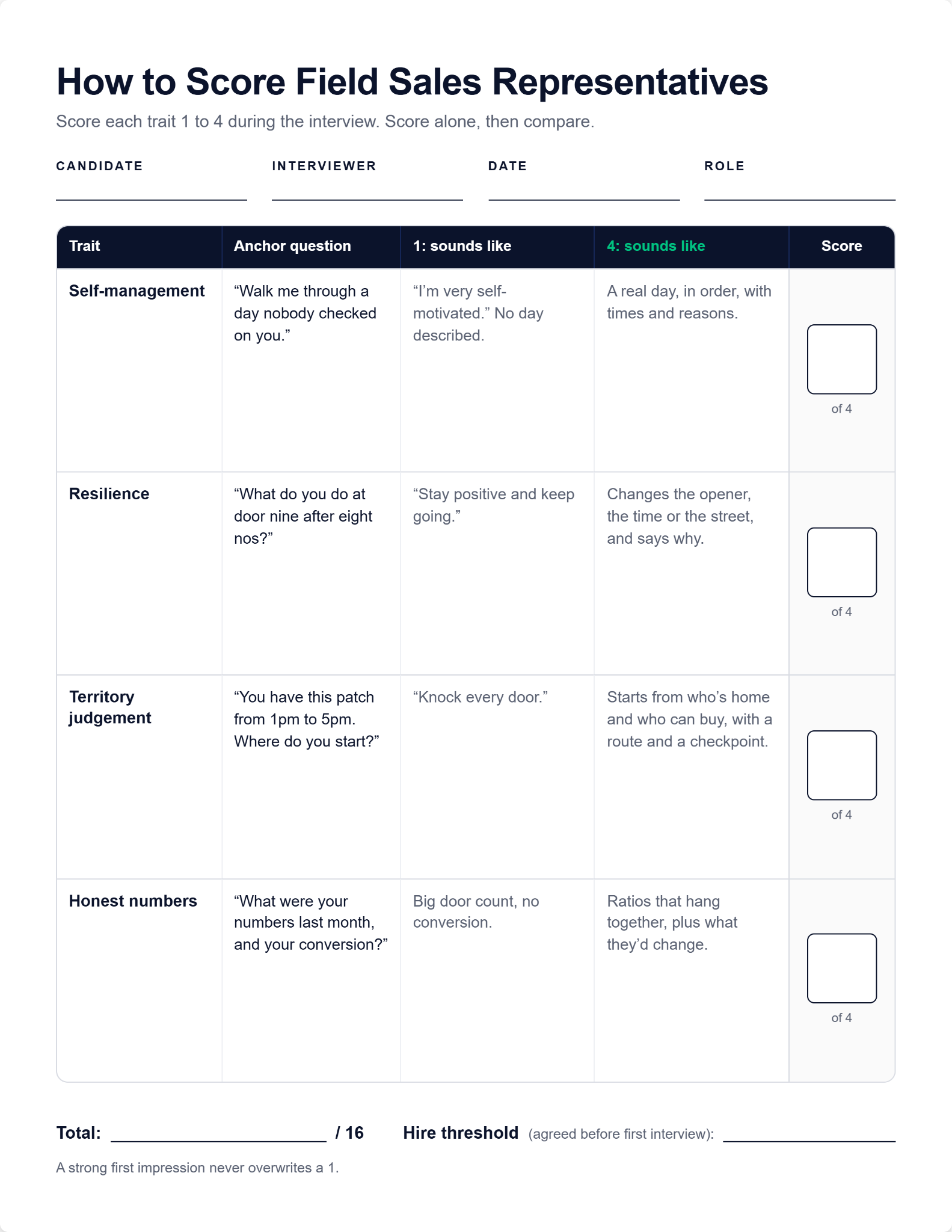
That's one anchor question per trait. Want all 13? Our free field rep interview scorecard puts every question in one Google Sheet, each with its own 1 and 4 anchors. Trait scores and your total out of 16 add up as you type. A second tab flags any question where two interviewers land 2 or more points apart.
Download it for free as an Excel file, or make a copy to edit the spreadsheet in Google Sheets.
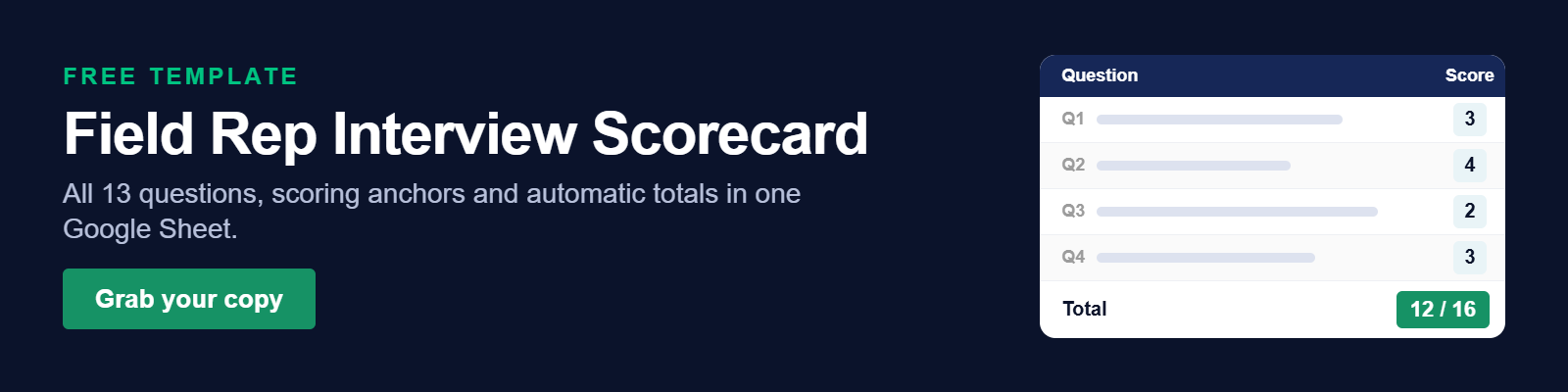
If two interviewers score the same answer a 1 and a 4, the question was the problem. I rewrite it before I interview anyone else.
The job happens on a doorstep, so end there. Hiring a field sales rep without seeing them at a door is a guess.
Pair each finalist with an experienced rep for half a shift on a real patch, and pay them for the time. Check your local employment rules on paid trials first.
In their review of hiring research, Sackett, Zhang, Berry and Lievens ranked work sample tests, where candidates do part of the actual job, among the strongest predictors of job performance (.33 validity). They also note these tests work best for people who already have the skills.
With a first-time rep, watch behaviour rather than closes:
Half a shift in the field tells me more than an hour across a desk. I'm not watching for a close. I'm watching what they do at the fourth closed door in a row.
Brief the rep running the half-shift on the scorecard too. It's good practice for anyone moving toward managing a field sales team.
Your interview is a prediction. The first two weeks tell you whether it was right.
Set each hire's scorecard beside their week-one coverage, contact rate and outcomes logged. A 4 on self-management should show up as a fully worked patch. A 4 on honest numbers should show up as clean logging. Where they disagree, fix the question.
A new rep should be field-ready in a day or two. Week one becomes the baseline for your 30-60-90 day sales plan. Real-time field tracking shows you that activity without calling the rep mid-shift.
Triangle Home Services built a door-to-door program from scratch and hired a full field team. Managers used real-time tracking to confirm interactions were logged at the door, not from the car. The team canvassed 20,000+ homes in just over a month, with software costs flat as headcount grew.
"We can plan efficient routes, customize interactions, and monitor our canvassing stops in real time to support our team the second they need help. The 'verified drops' feature adds an extra layer of accountability." Alice Bridge, Web Developer, Triangle Home Services
Ecanvasser prices by lead volume, so a trial hire doesn't add a seat to your bill.
Test the four traits. Score every answer the same way. End on a doorstep, then let week one confirm the call. The scorecard gets sharper with every hire you check against their first week.
A good hire, checked against real data, already fixes part of why field reps leave. The next decision is how you'll pay them.
{{faq-1}}
{{faq-2}}
{{faq-3}}
Ecanvasser shows you each new hire's first week, from coverage to outcomes logged, without chasing anyone for updates. Start a free trial to see it with your own team.
Keep all 13 questions and change the evidence you ask for. Swap sales figures in question 11 for any job with a target, like covers served or retail sales. Hospitality and canvassing backgrounds answer the resilience questions well. Score them on the same four traits as everyone else. The paid half-shift shows the rest.
Two rounds cover it. First, a structured interview of about an hour, using the same field sales hiring questions and scorecard for everyone. Second, a paid half-shift with an experienced rep. Extra rounds slow you down without adding new evidence. Keep the gap between the two short, so strong candidates stay interested.
Vague answers to specific questions are the biggest tell. Watch for claims with nothing behind them: "self-motivated" with no example, big door counts with no conversion, and blaming homeowners. The same flags apply to outside sales interview questions for B2B roles. Keep your own questions job-related, and ask about a driving licence only if the role requires driving.
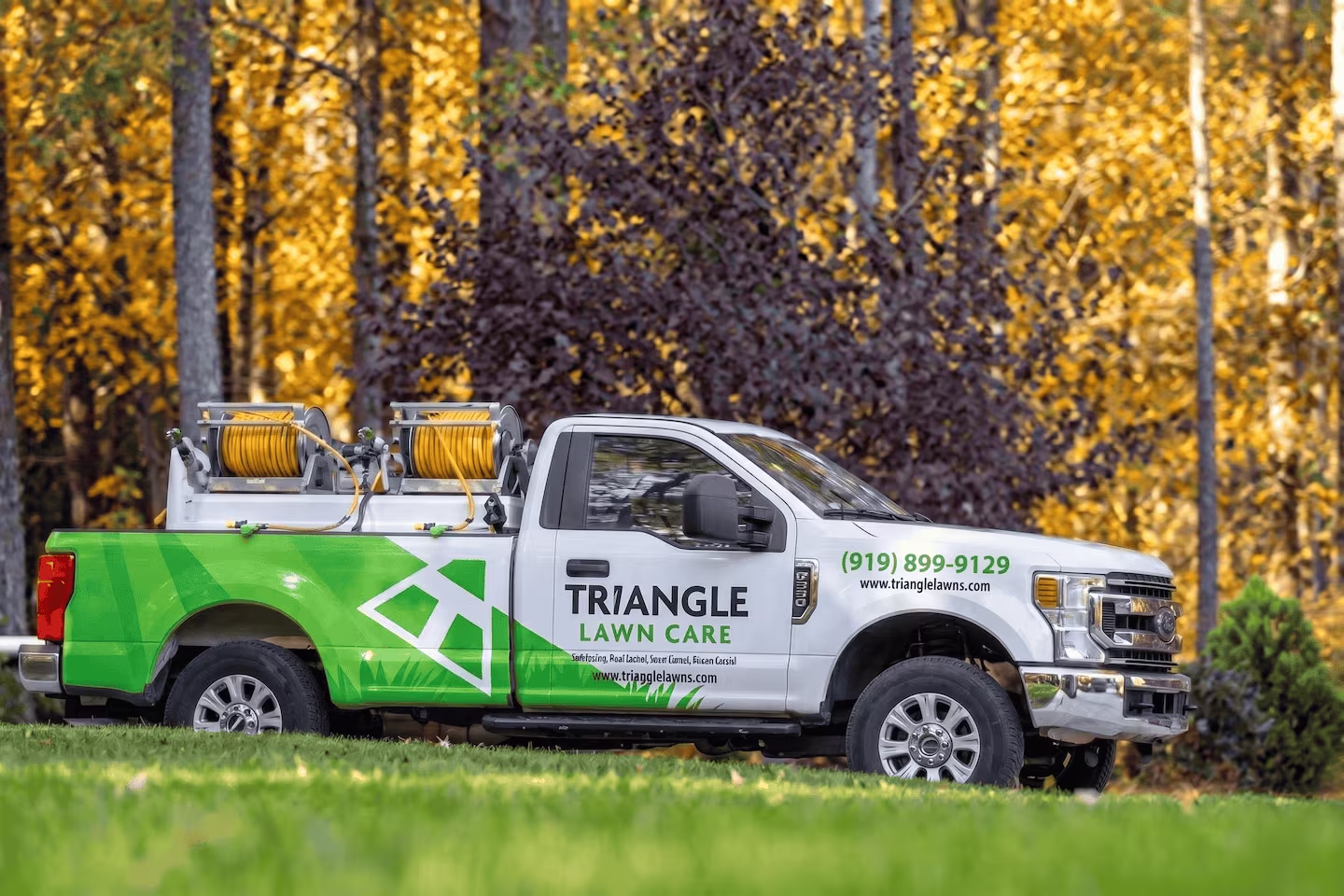
Ecanvasser’s real-time tracking completely transformed our field operations. Through the dashboard, we can plan efficient routes, customize interactions, and monitor our canvas stops in real time to support our team the second they need help. The "verified drops" feature adds an extra layer of accountability, while the reporting tools make it seamless to track hourly visit rates and optimize performance on the fly.




Scale your operations, empower your reps, and deliver predictable, profitable growth with Ecanvasser.