Short on time?
Pick an AI to summarise this article:
Pick an AI to summarise this article:


Roofing lead generation works best when you run a few channels on purpose and judge each by what a signed roof from it costs. The main channels are storm response canvassing, referrals from finished jobs, and a well-reviewed Google Business Profile. Paid or bought leads round out the mix, kept to a set budget.
Look at last month's signed jobs and try to say where each one came from. Some came through Google, some from a neighbor's referral, and some from a door-to-door rep. If nobody recorded the source, you can't tell which channel deserves more budget next month.
The best roofing leads come from channels where the homeowner already has a reason to trust you. That reason might be a recent storm, a referral, or strong local reviews.
Our roofing solution page shows how Ecanvasser supports roofing teams that sell door to door.
Canvassing after hail or wind damage is the fastest lead channel you fully control. You choose which streets get knocked and when. Every lead your reps capture belongs to your company and isn't sold to any other contractor. It does take planning, because a crew that grows quickly after a storm can end up knocking the same doors twice and frustrating homeowners. The next section walks through the full process, from mapping the damage to the first knock.
Referrals are still the lead source roofers rely on most. In Roofr's Roofing by the Numbers 2025 survey, 71% of roofers said they rely on word-of-mouth referrals from past customers to win new business.
You can get more referrals by building a few habits into every job. Put a yard sign on each finished roof, and have a rep knock on nearby homes while the crew is still on site. At handover, ask the homeowner a specific question, such as whether any neighbors have mentioned leaks this year. Homeowners find it easier to name someone when you ask a specific question than when you ask for referrals in general.
Homeowners check your reviews before they call, and some look you up while your rep is still at the door. According to BrightLocal's Local Consumer Review Survey 2026, 47% of consumers won't use a business with fewer than 20 reviews.
That matters for canvassing as well as search. If a rep suggests the homeowner look you up, your profile needs enough recent reviews to support what the rep said. Ask for a review at every handover, and send a direct review link the same day.
Google Local Services Ads charge you for each lead rather than each click. Paid search reaches homeowners who are already looking for a repair or replacement. Both channels depend on someone answering the phone. Google's Local Services Ads help center says a missed call during business hours is charged as a lead. That applies when the caller stays on the line for more than 20 seconds.
After a storm, when the phones are busiest, those unanswered calls still cost you money. Make sure the phones are staffed before you raise your ad budget, or cap spending at the number of calls your office can handle. Our guide to speed to lead covers response times in more detail. Booking leads through Local Services Ads are only available in the US and Canada.
Marketplace leads are quick to buy, but a shared lead goes to several contractors at once. You end up competing with other roofers for the same homeowner. Exclusive leads cost more and face less competition. Our post on cost per lead for home services compares buying leads with generating your own. A sensible approach is to use bought leads to fill gaps in the schedule. Judge them the same way as every other channel, by what each signed job costs.
Storm damage roofing leads come from a simple sequence. Find where the hail fell, and give each rep a small part of that area. Take your current customers off the list, then knock before homeowners sign with another contractor. State Farm alone paid more than $5.6 billion in hail claims in 2025, including $1.4 billion in Texas.
Hail mapping applies to hail-prone markets in the US and Canada. Assigning streets and earning trust at the door apply anywhere.
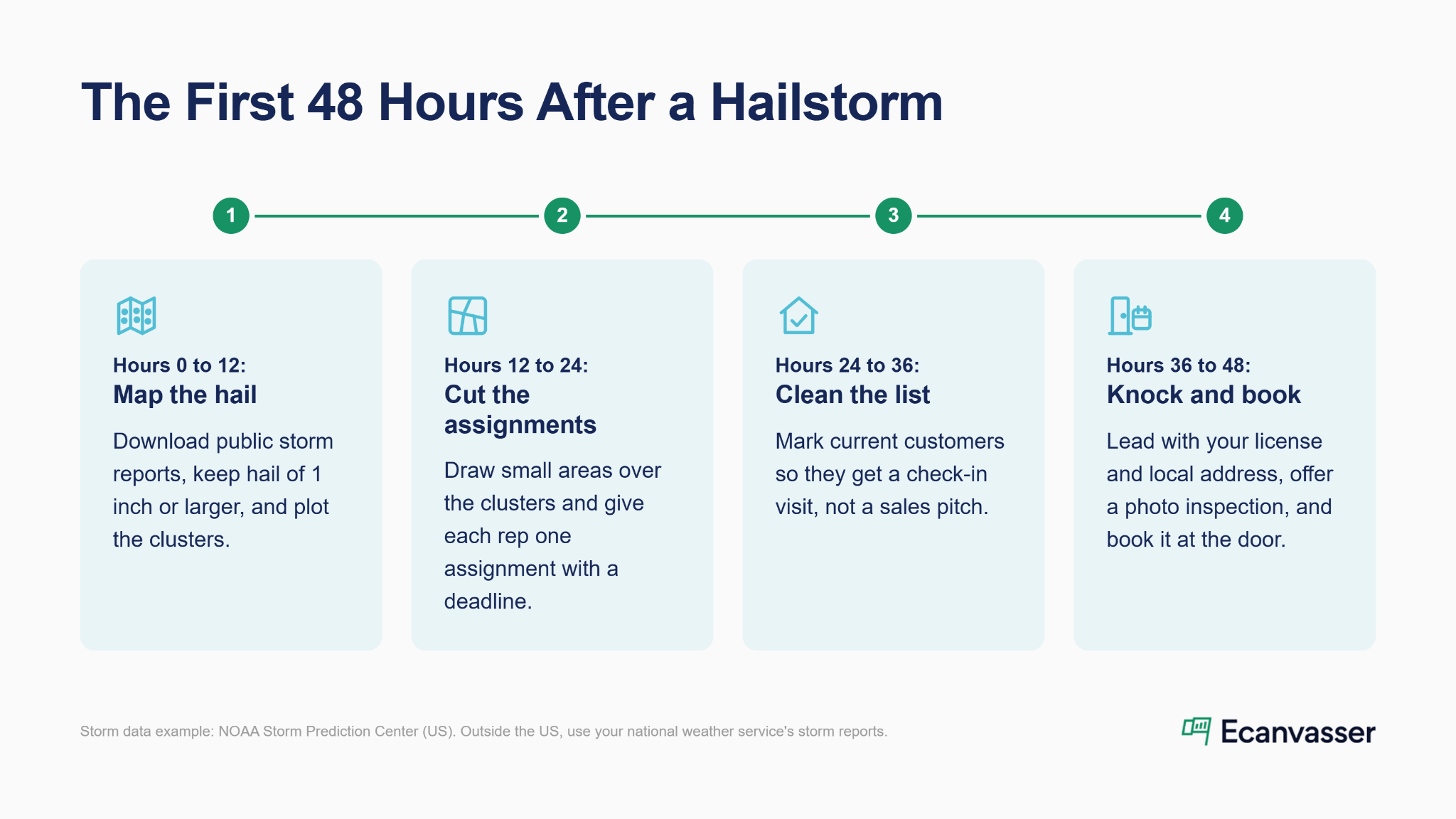
In the US, the NOAA Storm Prediction Center publishes free daily storm reports. Each hail report lists the hail size, the nearest town, and the latitude and longitude. You can download a full day of reports as a CSV file. NOAA's Storm Prediction Center logged 5,432 hail events of 1 inch or larger in 2025, up from 5,373 in 2024.
To turn the reports into a storm area:
NOAA labels these reports preliminary. Each one also marks a single point where hail was observed, so the actual damage usually covers a wider and less even area. Paid hail-mapping services can outline the whole affected area if you need more precision. In the UK or Canada, you can use your national weather service's storm reports the same way. Once you have the outline, our door to door roofing sales guide explains how to rank streets inside it by damage and roof age.
After a big storm, it's tempting to give each rep a large area and let them work it however they like. That is how some streets get knocked twice while others are missed. A rep with a whole subdivision usually works the easiest streets first and moves on before finishing.
A better approach is to draw small areas over the hail clusters and give each rep one assignment with a deadline. If a rep hasn't finished a street by the deadline, that street goes back on the unassigned list for another rep to pick up. With territory mapping, you can draw assignments over the storm area using polygon or free-draw tools and reassign them as new reports come in. Some hail-mapping services provide a KML, KMZ, or GeoJSON outline. You can load that file as a map overlay and cut assignments on top of it. Time-bound lists return unfinished streets to the unassigned list automatically.
"If a user just has a lot of lists and assignments, it might look like a good thing. But oftentimes they find that they need to give less territory in order to control it and the activity better." - Jay Lipscomb, Customer Success Manager, Ecanvasser
Small assignments also make progress easy to check. When every assignment is on one map, a manager can see the same day which streets haven't been knocked.
Without a customer list on the map, a rep may pitch a new roof to someone whose roof you replaced two years ago. That wastes an hour of selling time and makes your company look disorganized. Before you assign storm territory, import your customer list onto the map so those addresses are marked. When Sky Manor Roofing launched its Denver team, it imported 4,500 past customer records from JobNimbus so reps could see every past job on the map. Reps can then visit those homes to check for damage or warranty issues, which is a useful service after a storm.
In the US, verified household data from Lead Prospector lets you narrow the list further by filtering for owner-occupied homes and older build years. Those are the homes most likely to need work.
Broadband provider Lightning Fibre faced a similar problem and built its territories only from addresses its network could serve. Its visit history shows whether each door was last knocked a week ago or six months ago. That stopped reps from knocking the same homes too often. The Lightning Fibre story explains how the team set this up.
Homeowners in hail-hit areas are warned to be careful with contractors who knock on their doors. State Farm's April 2026 hail report advises them to check a contractor's license and reputation and to talk to their insurer before signing.
To earn that trust, have your reps:
The deductible point can also be a legal issue. The Texas Department of Insurance says Texas contractors can't waive, rebate, or absorb a policyholder's deductible. Rules differ by state, so check the ones that apply to you.
How you organize the team also affects how homeowners see you. After a hailstorm, we recommend telling every rep exactly which streets they own before anyone knocks. If several of your reps turn up at the same house in one morning, homeowners understandably group you with the crews they were warned about.
Before your team goes out, check local solicitor permits and No Knock lists (our homeowner lists guide covers both). For what to say at the door, see our posts on door-to-door roofing sales and door-to-door sales scripts.
During storm season, roofing canvassing software should help you assign a storm area quickly and see which doors have been knocked. Reps should be able to book inspections from the doorstep. It should keep working where there's no phone signal.
Look for these features when you compare tools:
Sky Manor Roofing, a roofing and exteriors company based in Denver, started 2026 with no field reps and used Ecanvasser to build its door-to-door team. After a storm hit part of Omaha, its reps knocked around 5,000 doors and logged about 2,600 outcomes. The team then sent only the answered doors into its JobNimbus CRM for follow-up. Because Ecanvasser doesn't charge per seat, Sky Manor can hire and rotate reps without managing licenses. Read the Sky Manor Roofing story for the full rollout.
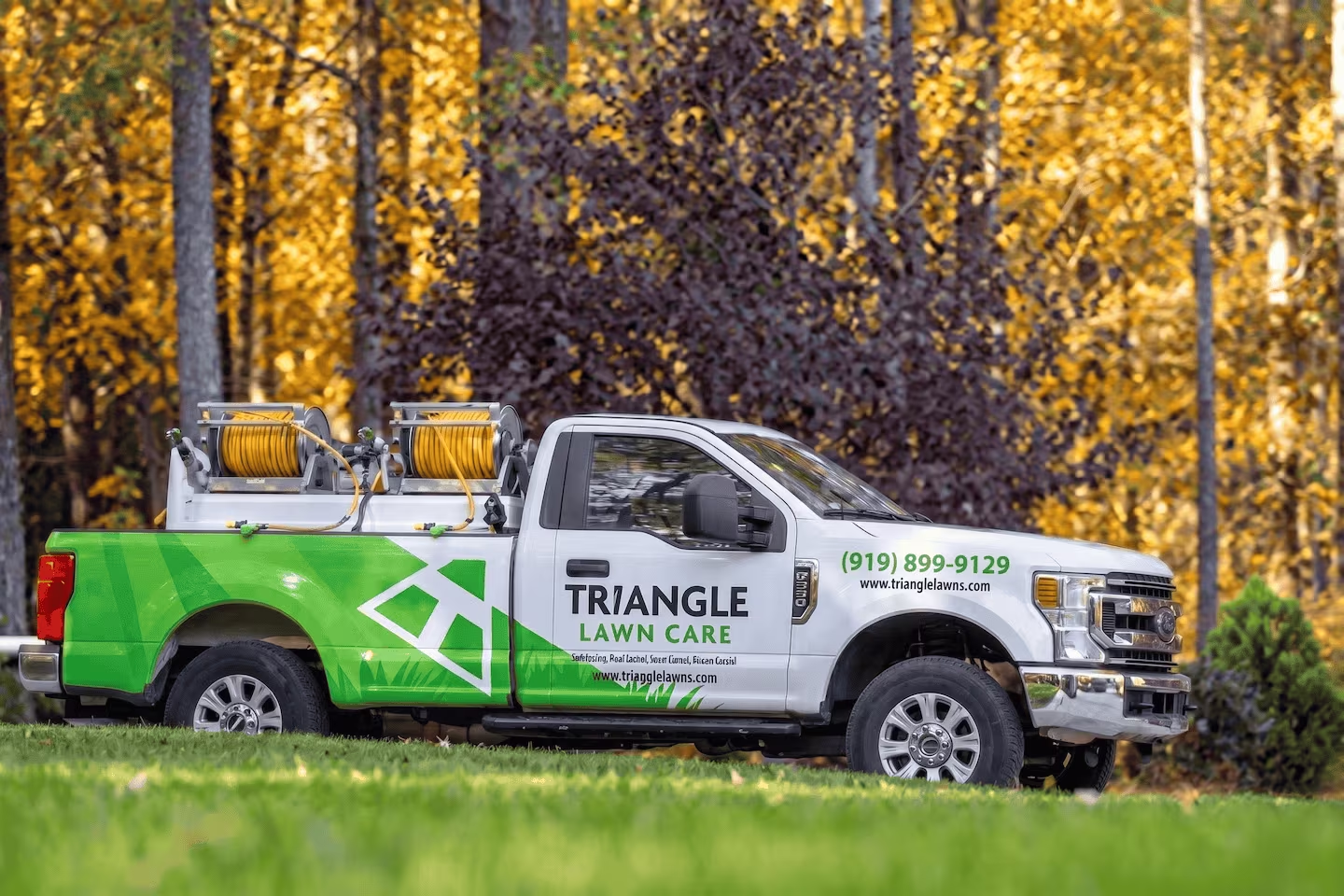
Triangle Home Services, a home services company, also launched a door-to-door program from scratch and canvassed more than 20,000 homes in just over a month. Several teams worked the same neighborhoods without overlapping, and real-time tracking confirmed reps logged interactions at the door. Software costs stayed flat as the team grew. That gave the company the confidence to plan the same approach for a new market in Houston. More detail is in the Triangle Home Services story.
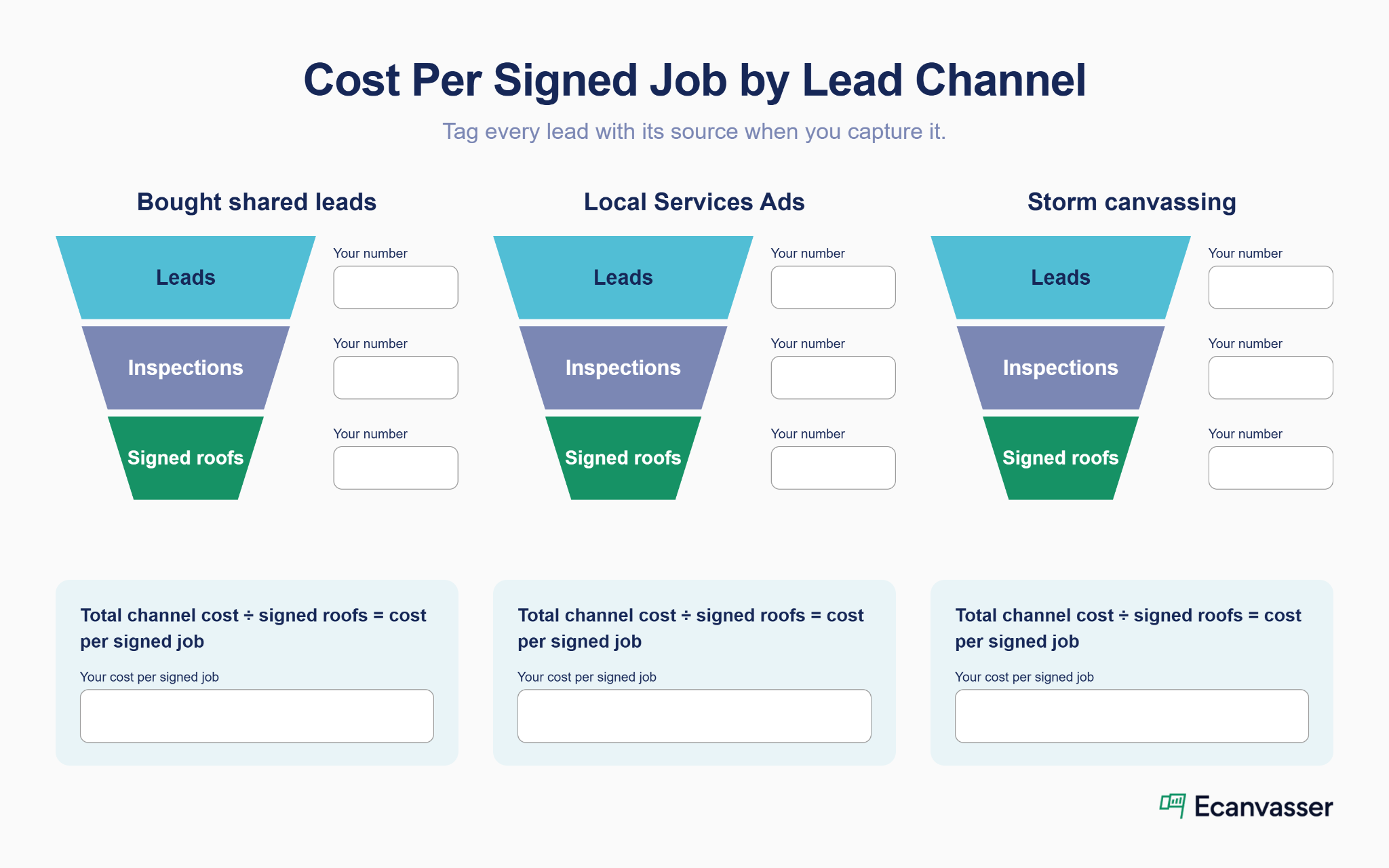
To compare lead channels fairly, tag every lead with its source when you capture it. Then divide each channel's total monthly cost by the number of roofs it signed. The result is your cost per signed job for that channel.
Canvassing leads are the ones most likely to be missing from this calculation. When reps record them on paper, or not at all, canvassing looks either free or impossible to measure. Include its real costs in the same table as your ad spend: rep pay, commission, software, and vehicles. Roofr's Roofing by the Numbers 2025 found only 28% of roofers use a CRM to track leads.
The figures in this worked example are invented to show the calculation. Replace them with your own.
In this example, storm canvassing has the highest monthly cost but the lowest cost per signed roof. Your results may look different, and you'll only know once canvassing leads are tagged the same way as leads from every other source.
We recommend that you don't rank a lead source until you know what each signed roof from it cost. The price of a single lead tells you very little, because a cheap lead that never books an inspection still has to be paid for.
To set up the tracking, see our guide to sales tracking software. Our upcoming guide to customer acquisition cost looks at channel costs in more depth.
To get roofing leads between storms, focus on homes with aging roofs and the streets around your recent jobs. Keep asking for reviews, and build referral relationships with insurance agents and real estate agents.
Retail replacement, where the homeowner pays for a new roof directly rather than through an insurance claim, is the steadiest work outside storm season. In the US, verified household data lets you filter by build year and owner occupancy. That shows you streets where roofs are near the end of their life. Plan to canvass those streets in the quieter months, when crews have time and homeowners aren't hearing storm pitches from other contractors. Homes near your finished jobs are another reliable source, and our solar marketing ideas post explains how to work those streets.
Keep asking for reviews through the winter too. BrightLocal's 2026 survey found 74% of consumers only pay attention to reviews written in the last three months. A winter without new reviews can make your profile look out of date by spring.
In my experience, the roofing companies we work with that grow most steadily keep canvassing through the quiet months, especially on streets with older roofs. That winter work keeps crews busy between storms. Sky Manor Roofing, for example, now holds about 16,000 leads in Ecanvasser, including homes without damage it can return to after the next hail event.
In the UK and Canada, winter wind, snow, and ice can also damage roofs, and the storm process above works after those events too.
Ecanvasser helps with roofing lead generation by putting your canvassing work on one shared map. You can draw and assign storm areas, see current customers and verified household data before reps knock, and book inspections at the door. Every canvassing lead is tagged with its source when it's captured, so you can compare it with your paid channels. See how roofing teams use Ecanvasser.
You can also start a free trial to set up a storm area in your own service region.
{{faq-1}}
{{faq-2}}
{{faq-3}}
{{faq-4}}
The cost of roofing leads depends on the channel, your region, and whether the lead is also sold to other contractors. Exclusive leads cost more per lead but face less competition. When you compare sources, look at what each signed job costs rather than the price of a single lead. Our cost per lead for home services post compares buying leads with generating your own.
Door-to-door canvassing for roofing is legal in most places, but many US towns require a solicitor permit. Some also have No Knock lists or set hours for knocking. A few states, including Texas, restrict what contractors can offer on insurance jobs, such as covering the deductible. In the UK or Canada, check your local council or municipal rules before your team goes out.
Roofers should start knocking once the storm has passed, it's safe to be outside, and the hail area is mapped and assigned. Homeowners often sign with the first credible contractor who inspects their roof, so speed matters. Organization matters as well. A team that arrives a few hours later with clear assignments is likely to do better than reps who arrive first and overlap.
Ecanvasser’s real-time tracking completely transformed our field operations. Through the dashboard, we can plan efficient routes, customize interactions, and monitor our canvas stops in real time to support our team the second they need help. The "verified drops" feature adds an extra layer of accountability, while the reporting tools make it seamless to track hourly visit rates and optimize performance on the fly.




Scale your operations, empower your reps, and deliver predictable, profitable growth with Ecanvasser.